
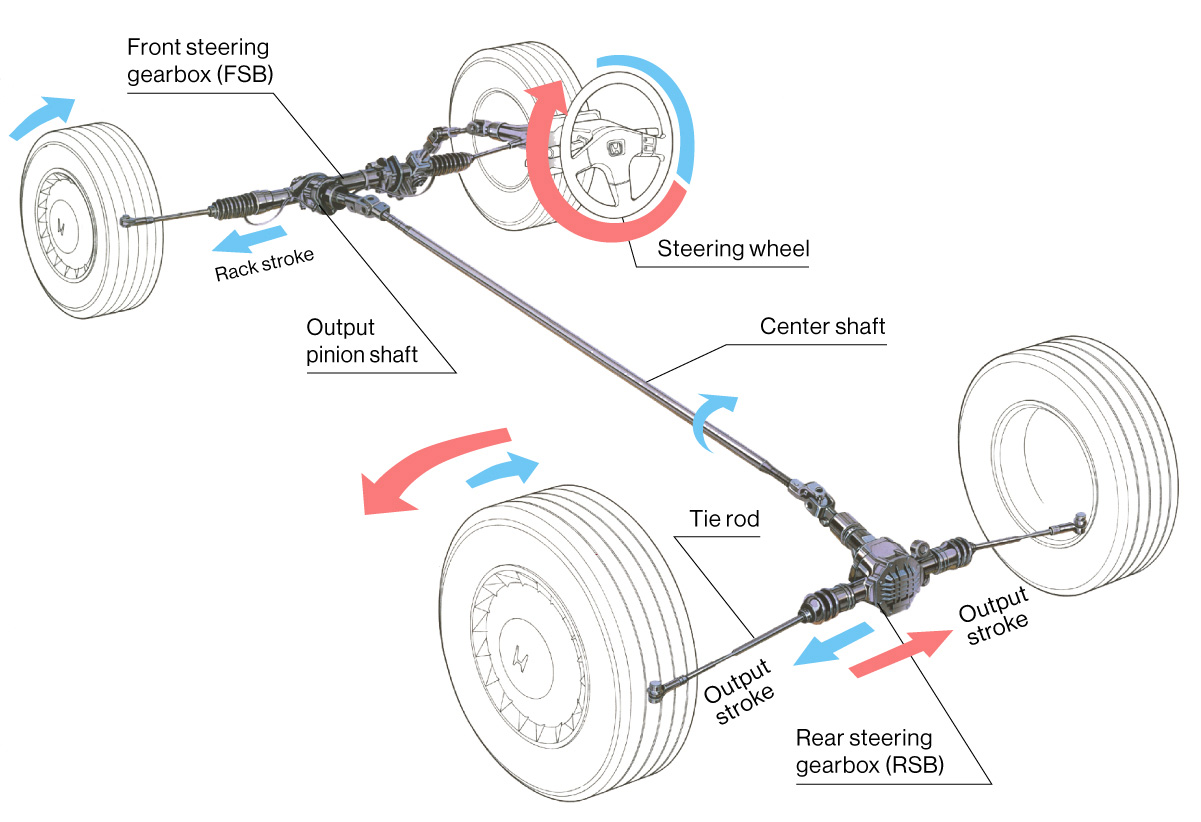
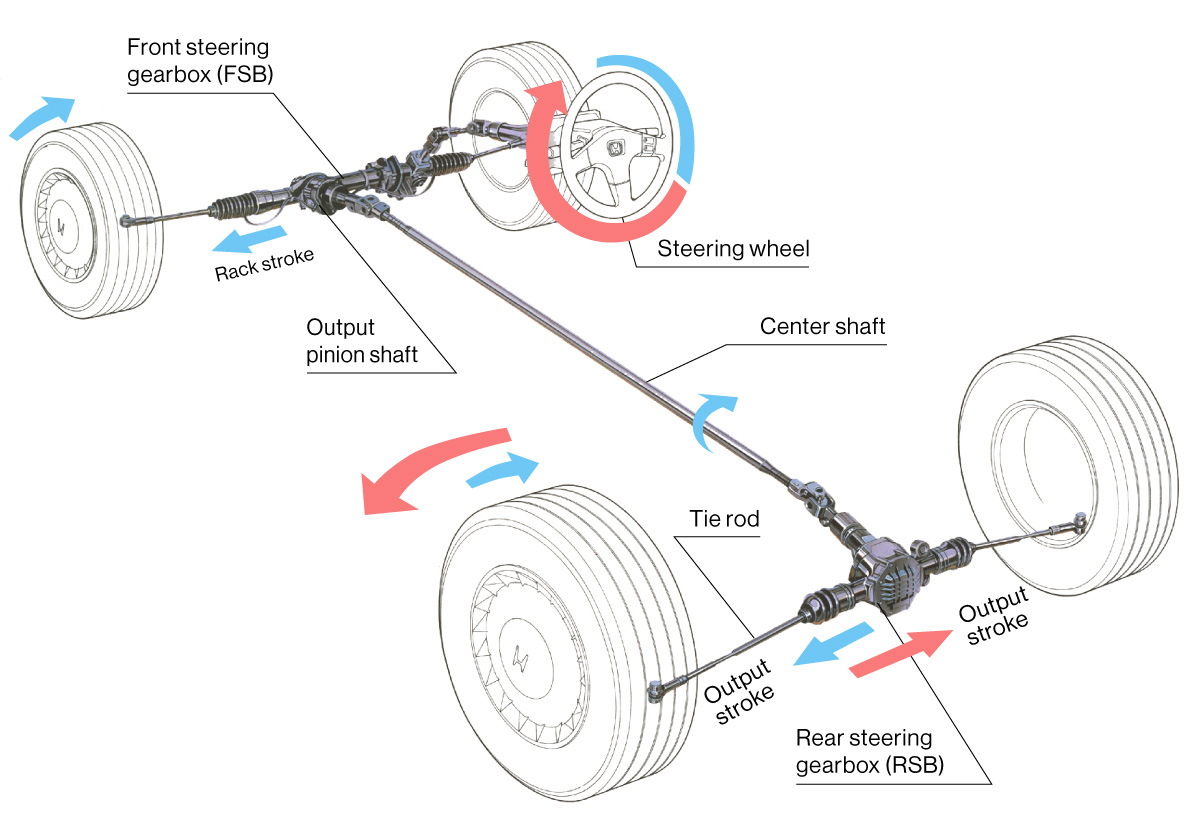
Available through 1996, this generation also closed the book on an experiment. Four-wheel steering, once the Prelude’s signature technology, vanished without ceremony. It was a harbinger of what lay ahead.
A final shot over the bow
When the fifth-generation Prelude debuted for 1997, its design felt like a bridge between eras — a return to Honda’s earlier, sharper lines modestly softened for late-1990s tastes. It looked contemporary but restrained. Under the bodywork, however, something had shifted.
Credit:
Honda
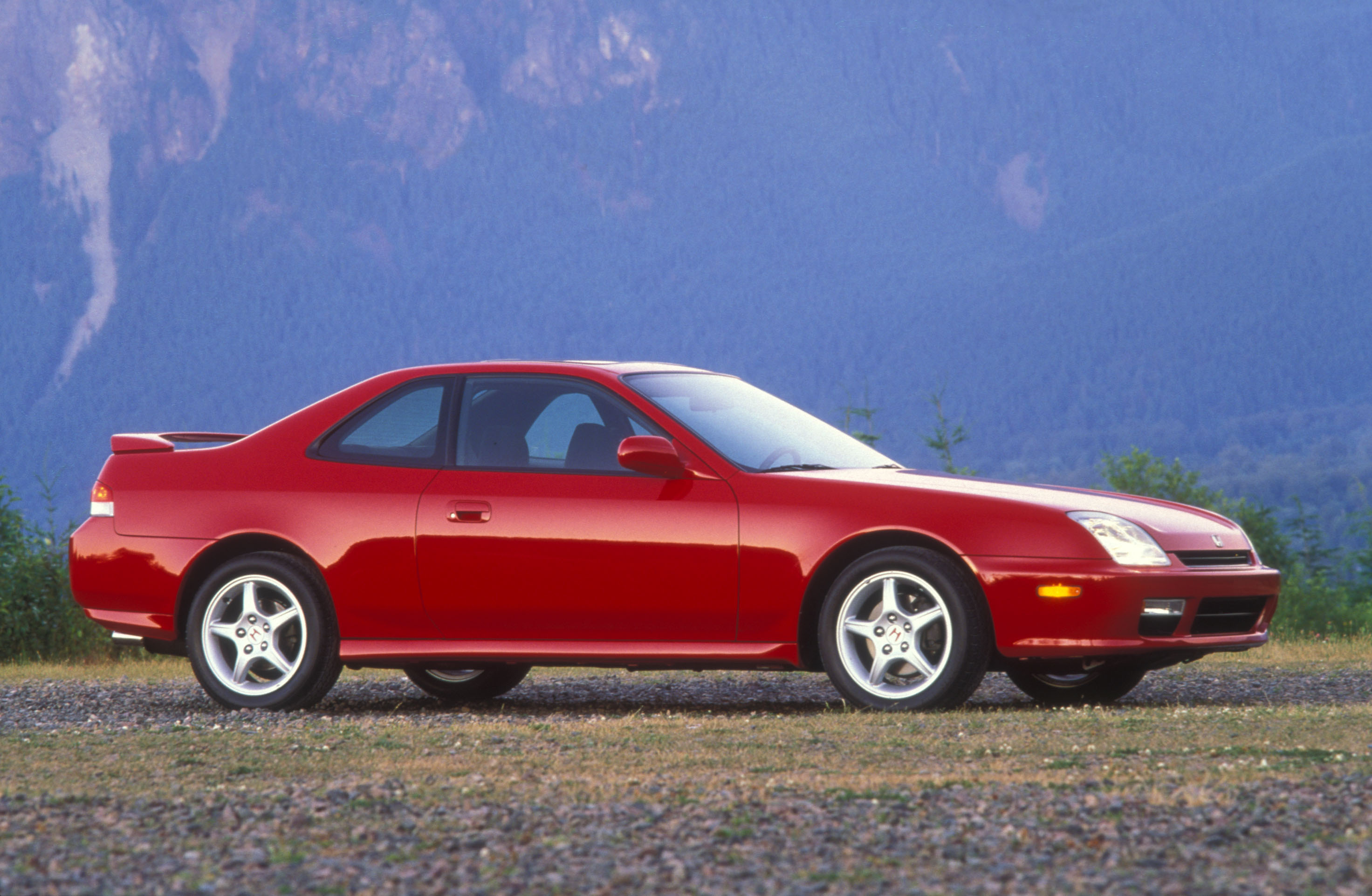
1998 Honda Prelude Type SH.
Credit:
Honda
For the first time in years the Prelude’s focus tightened. Only one engine was offered: a 2.2 L four-cylinder making 195 hp (145 kW), available with a five-speed manual or a four-speed automatic. The options list was pared back, perhaps by design.
Four-wheel steering disappeared. On Type SH models it was replaced by Honda’s Active Torque Transfer System (ATTS), a set of electromechanical clutches that send extra torque to the outside front wheel during a turn to sharpen initial turn-in and approximate the handling balance of rear-wheel drive. Today we call that torque vectoring; at the time it was an expensive, heavy trick that proved too niche for most buyers. Few chose it, and the Prelude gradually faded.
In June 2001, after selling 826,082 Preludes in the United States, Honda stopped production. The model’s high point came in 1986, when 79,841 were sold. After that sales declined steadily, squeezed by internal rivals such as the Accord Coupe, Civic Coupe, and Acura Integra, and by a market shifting decisively toward SUVs. By the first five months of 2001 only about 3,500 Preludes were sold. The car that once showcased Honda’s tech left quietly — not so much a failure as a victim of changing tastes, its ideas eventually absorbed into the mainstream it had helped create.
The Prelude’s second chance
Now, roughly 25 years later, Honda has revived the Prelude — not as a nostalgic throwback but as a strategic move in an industry that looks very different from the one the Prelude once left behind.
