
At this point, the earliest Artemis III now appears to be pushed to late 2027.
“Both vendors, SpaceX and Blue Origin, have provided responses indicating they can support a late‑2027 rendezvous, docking, and an interoperability test of their landers ahead of a landing attempt in 2028,” Isaacman said Monday.
Each company holds multibillion‑dollar agreements to design and deliver human‑rated landers to NASA for Artemis flights. Both platforms will need on‑orbit refueling to travel to the Moon, a complexity not required for missions confined to Earth orbit.
“Taxpayers are making a substantial investment in the Human Landing System (HLS) capabilities of both SpaceX and Blue Origin,” Isaacman testified to the House Appropriations subcommittee that oversees NASA’s budget. “I’d also emphasize that both firms are investing significantly more of their own resources as well.”
Starship and Blue Moon are much larger than the Apollo lunar lander and could eventually be refueled at the Moon to carry out repeated trips between the surface and orbiting crew and cargo vessels.
“That capability enables not just a return to the Moon, but the actual construction of a lunar base, delivering large amounts of mass to the surface affordably and at scale, along with all the other benefits of a reusable rocket,” Isaacman said. “We’re very thankful for that.”
Preparing Starship and Blue Moon for crewed missions presents major hurdles. On Apollo 9, two astronauts flew the lunar module on a test sortie, separating from the command module with the third crewmember for over six hours before docking again in low Earth orbit. To perform a comparable test on Artemis III, Starship or Blue Moon would need an advanced independent life‑support system, human‑rated engines, a proper cockpit and flight controls, and a docking interface. SpaceX and Blue Origin have disclosed few specifics about the status of those systems in development and production.
Credit:
NASA/SpaceX
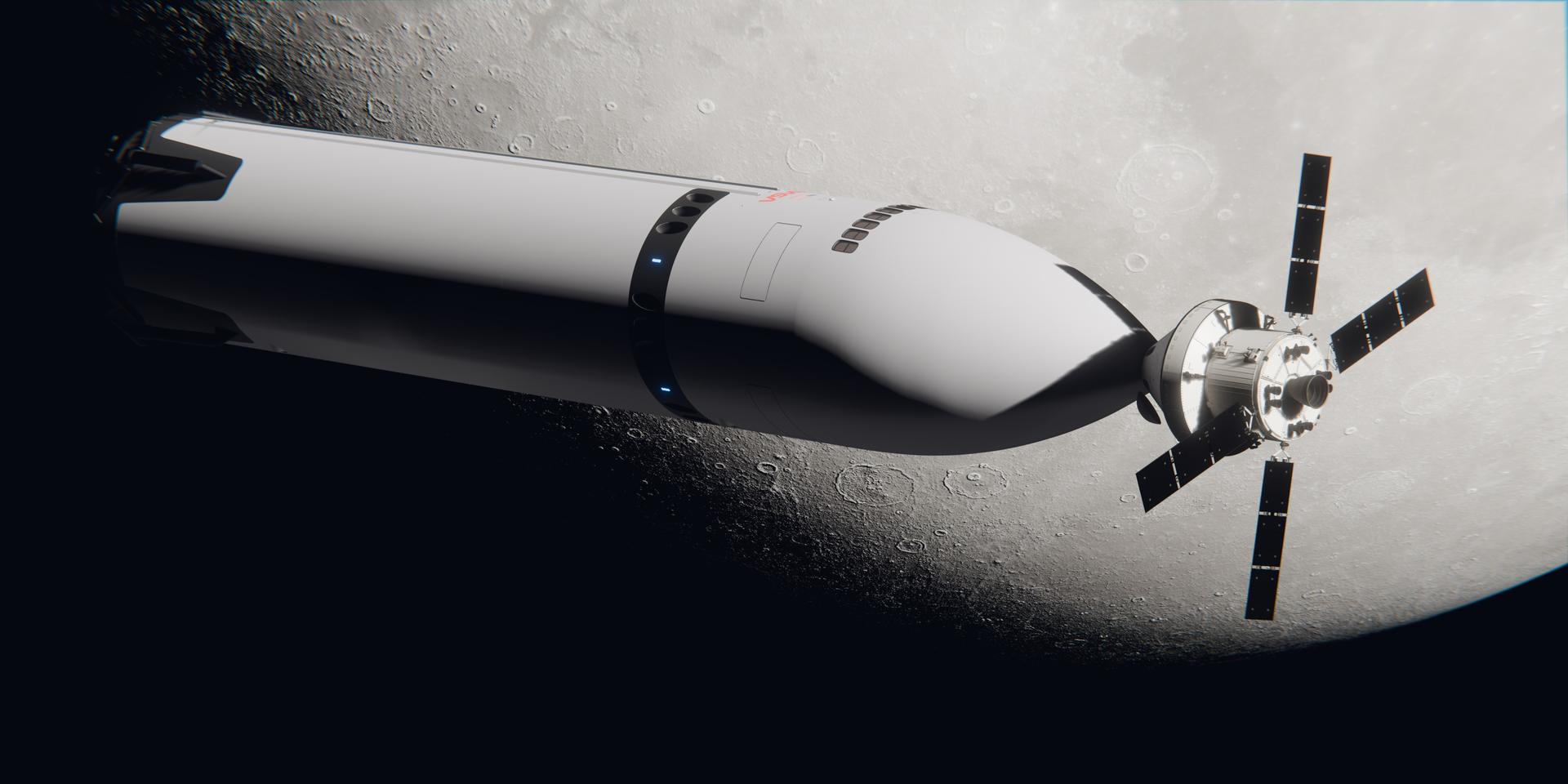
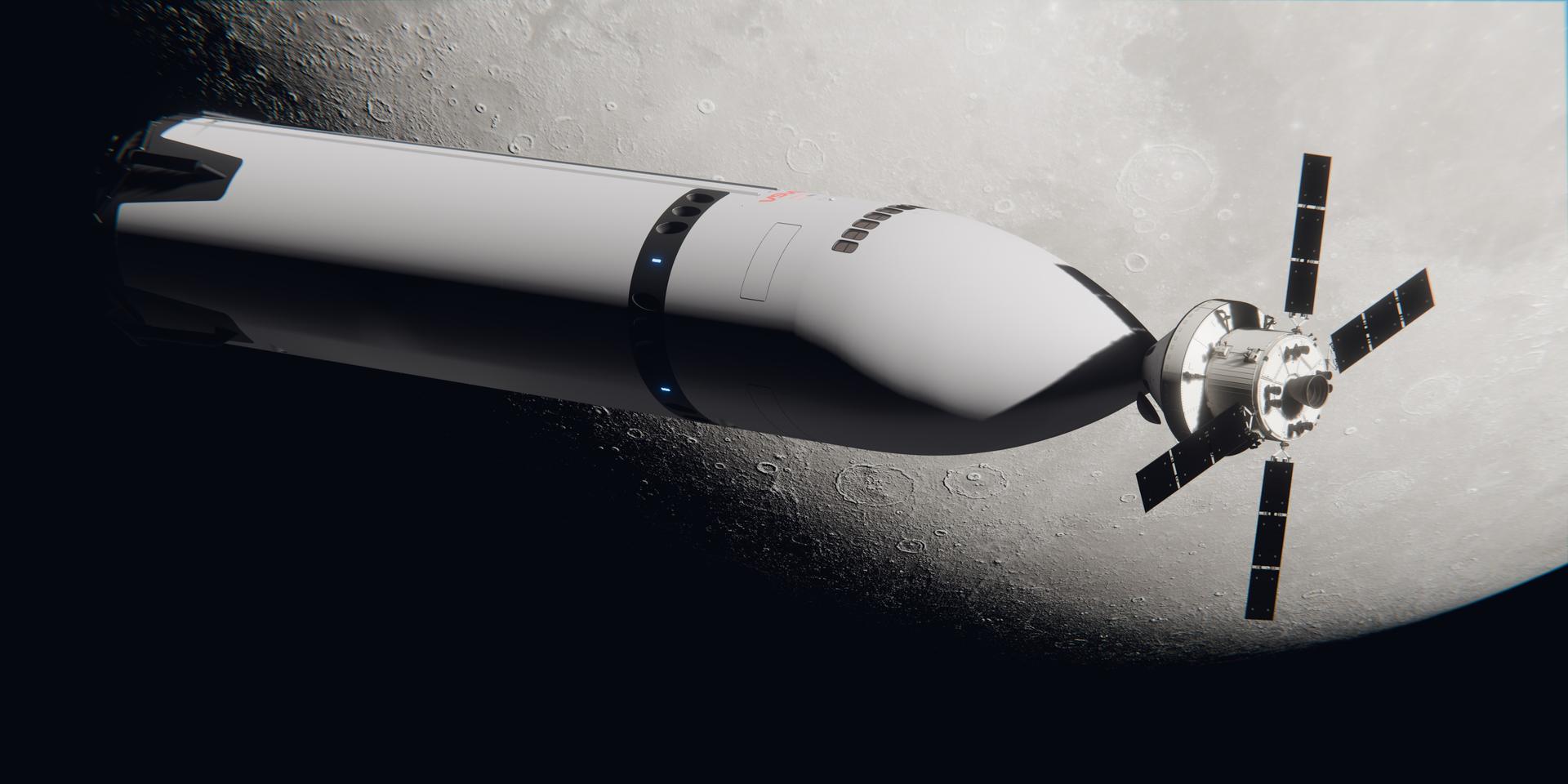
An artist’s depiction of NASA’s Orion docked to SpaceX’s Starship lunar lander near the Moon.
Credit:
NASA/SpaceX
NASA could opt for a scaled‑back Artemis III that includes a rendezvous and docking but omits an independent crewed flight of the lunar lander. Agency leaders must weigh those choices in the coming months, guided by how rapidly and successfully SpaceX advances Starship Version 3 flights and by Blue Origin’s planned uncrewed Blue Moon cargo landing near the Moon’s south pole.
