
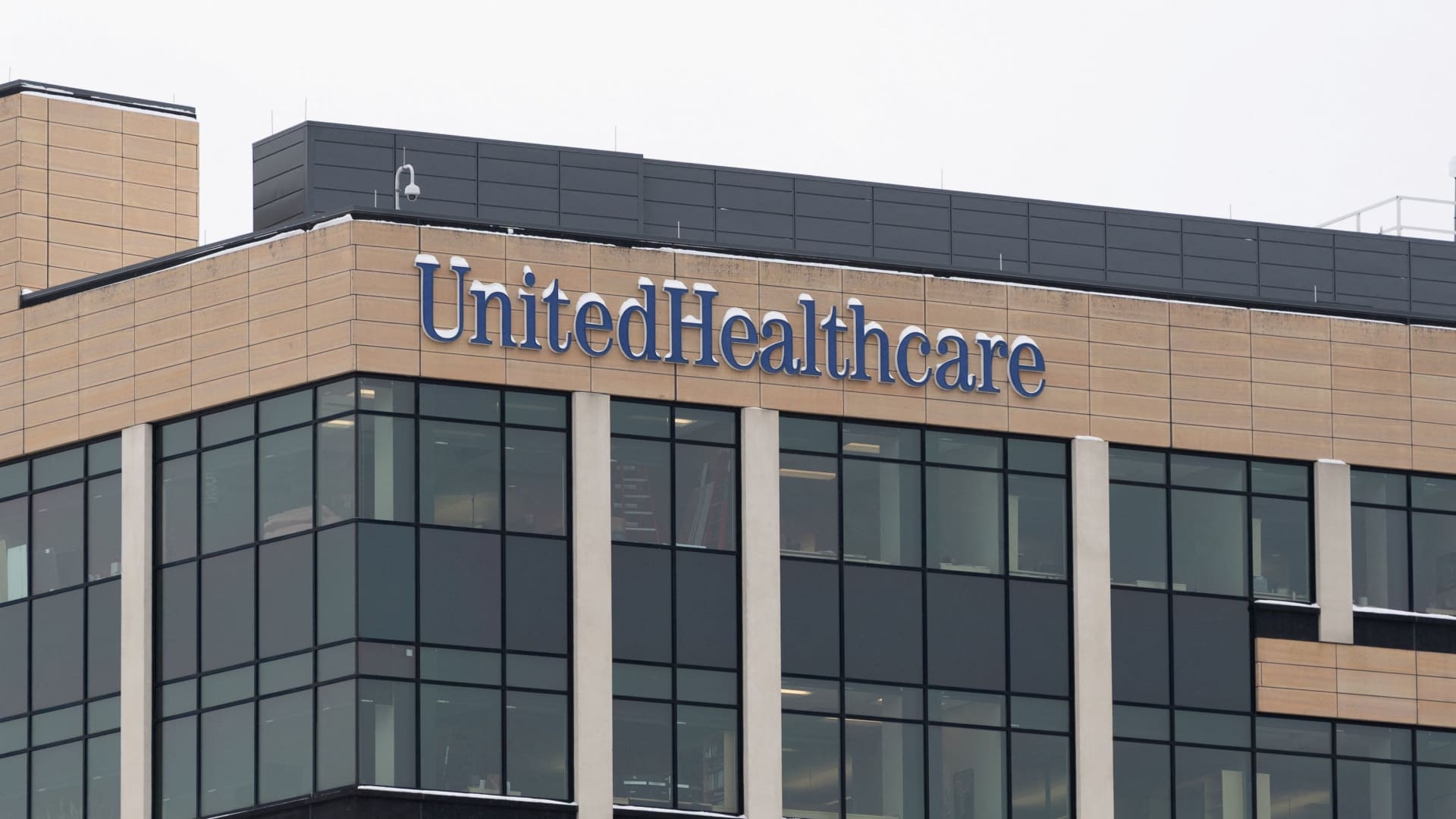

UnitedHealth Group announced on Tuesday its first-quarter earnings exceeded forecasts and raised its 2026 profit expectations, as the organization manages elevated medical expenses and optimizes its processes.
The largest private insurer in the country projected 2026 adjusted earnings of over $18.25 per share, an increase from a prior estimate of over $17.75 per share. UnitedHealth remains committed to its full-year revenue target of exceeding $439 billion, which the company reported in January reflects “right-sizing across the enterprise.”
Here’s how the company’s results for the first quarter stacked up against Wall Street’s predictions, according to a survey of analysts conducted by LSEG:
- Earnings per share: $7.23 adjusted vs. $6.57 anticipated
- Revenue: $111.72 billion vs. $109.57 billion anticipated
UnitedHealth is relying on a new leadership group to execute a recovery strategy. This plan includes reducing membership numbers, selling the UK division of its Optum healthcare unit, making substantial investments in artificial intelligence, improving care access, and enhancing transparency to restore profitability—alongside the company’s reputation—after facing numerous challenges over the past two years.
The company recorded first-quarter net income of $6.28 billion, or $6.90 per share, in comparison to $6.29 billion, or $6.85 per share, in the same timeframe last year. When adjusting for factors such as business sales, restructuring, and anticipated reductions in reserves for unprofitable contracts, UnitedHealth achieved earnings of $7.23 per share.
Revenue rose to $111.72 billion from $109.58 billion in the same quarter the previous year. Both UnitedHealthcare, the company’s insurance arm, and Optum exceeded analysts’ revenue forecasts for the quarter, as reported by StreetAccount.
Significantly, UnitedHealth seems to have improved its management of rising medical costs—an issue that has plagued the broader insurance sector for over two years. Insurers, particularly those that run private Medicare plans, have been stressed by an influx of patients seeking care that was postponed during the pandemic and high-cost specialty medications like GLP-1s, among other reasons.
UnitedHealth’s medical benefit ratio—a measure of total medical expenses paid against premiums collected—was recorded at 83.9% for the first quarter. This marks an improvement from the 84.8% seen in the same period last year. A lower ratio generally indicates that the company collected more premiums than it disbursed in benefits, resulting in greater profitability.
Analysts were projecting a ratio of 85.5% for the quarter, according to StreetAccount.
In a statement, UnitedHealth indicated that the first-quarter ratio reflects its effective management of medical costs and the release of previously reserved funds for unprofitable Optum contracts. However, that enhancement was somewhat tempered by “consistently elevated” medical expenses, the company noted.
“We continue to work on simplifying and modernizing health care for the individuals and providers we support, delivering enhanced value, affordability, transparency, and connectivity,” UnitedHealth CEO Stephen Hemsley stated in the announcement.
The results arrive shortly after the Trump administration finalized an increase in payment rates for Medicare Advantage plans for 2027 that significantly exceeded initial proposals, providing a boost to UnitedHealth and other health insurance stocks.