
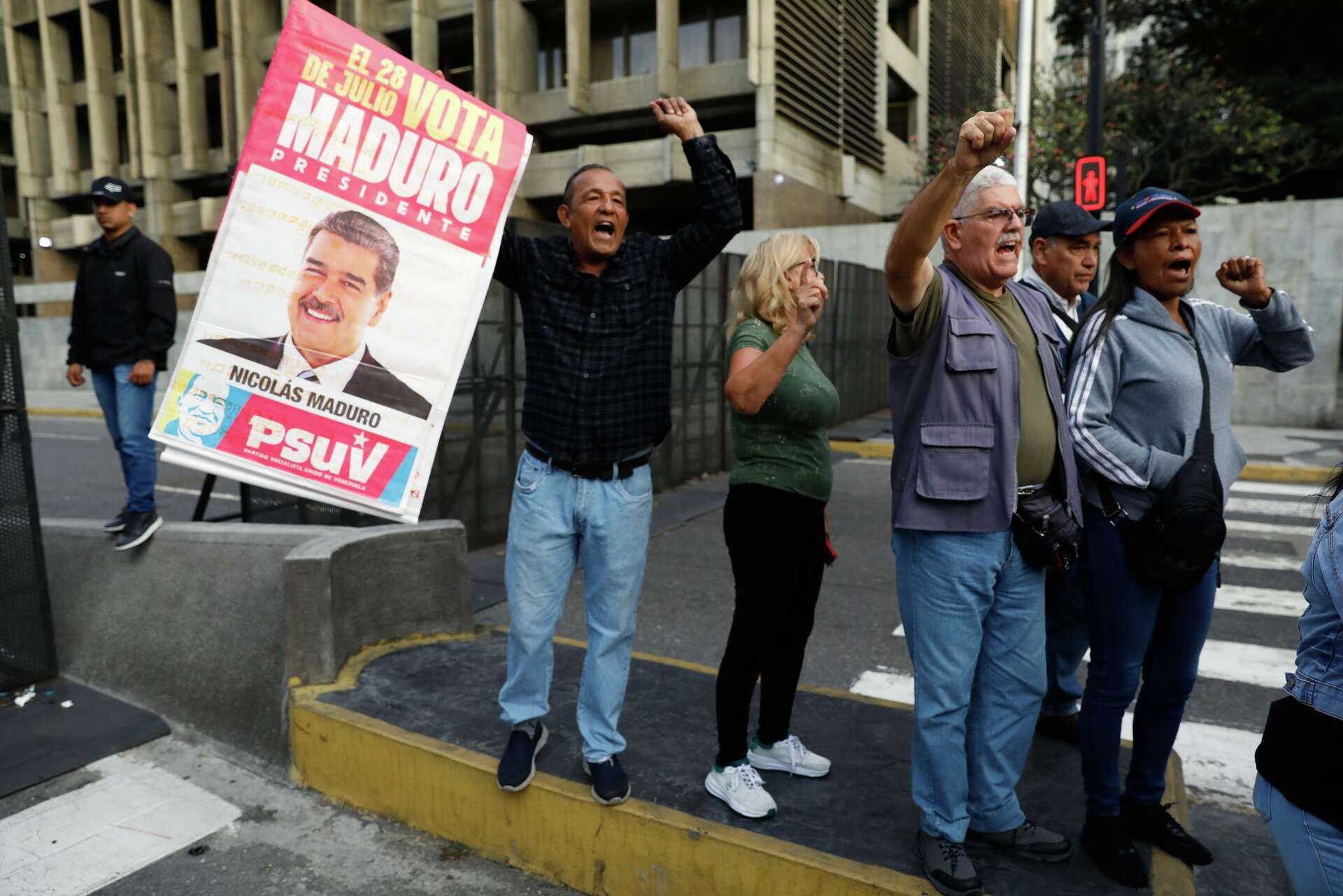
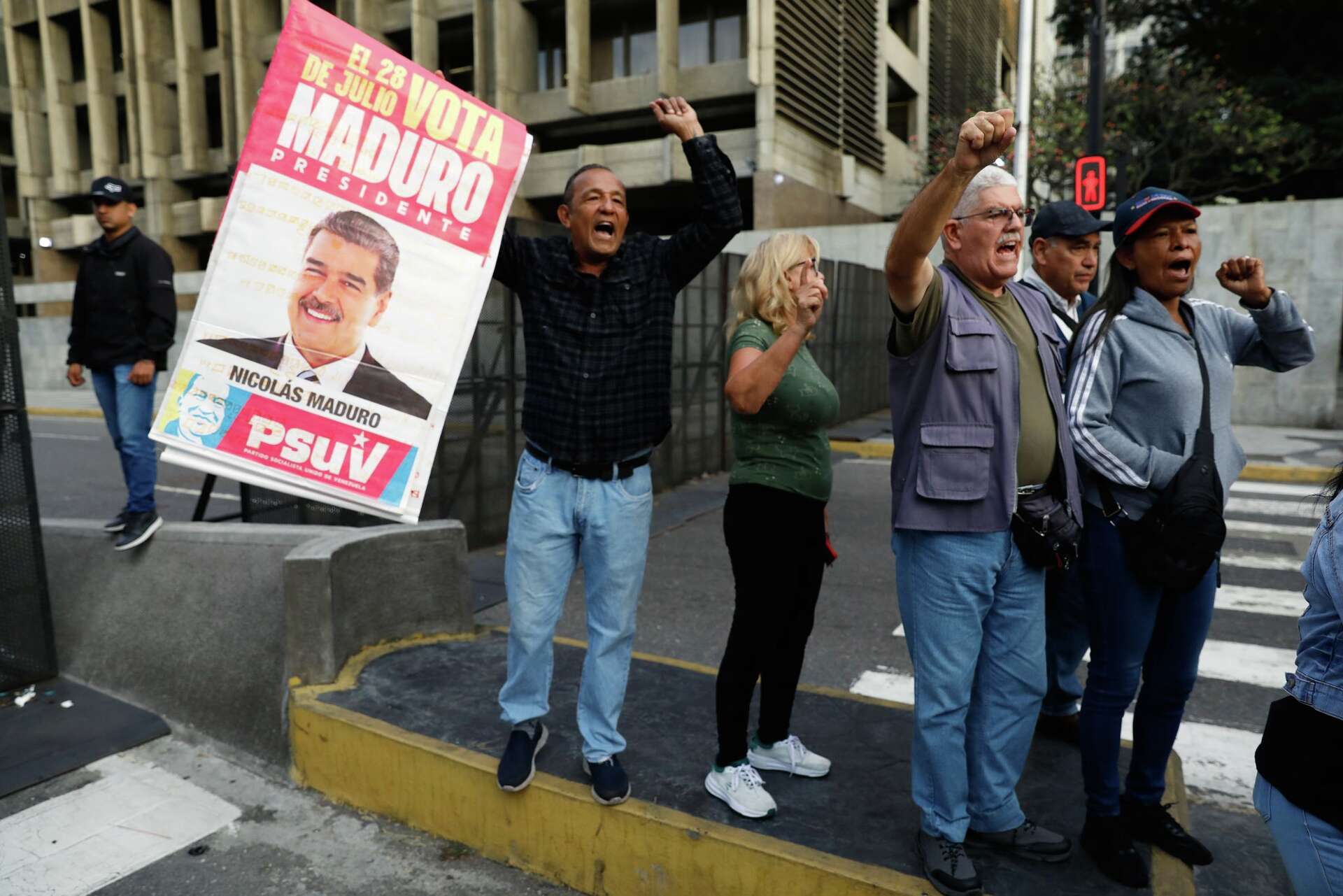

As reports circulated on Saturday regarding President Donald Trump‘s ousting of Venezuelan leader Nicolas Maduro, reactions in Congress showcased a divide: Republicans predominantly lauded the military operation, whereas Democrats criticized the president’s actions and questioned their legitimacy.
Following months of pressure on Maduro, Trump declared on Truth Social that the U.S. had aided in a “large-scale strike” against the country and its leader, who was apprehended alongside his spouse, Cilia Flores, and is being transferred to the U.S.
“Trump bypassed our required constitutional approval process for military action because the administration understands that the American populace largely opposes the risks of dragging our nation into another war,” Senator Andy Kim, D-N.J., stated in a post to X on Saturday.
The Constitution stipulates that Congress holds the primary power to declare war. The War Powers Resolution, enacted in 1973 following the Vietnam War, restricts the president’s ability to initiate military action unilaterally and mandates that the president consult Congress when deploying troops.
Nevertheless, lawmakers indicated that the president did not seek approval and failed to inform Congress of his intentions.
Trump is anticipated to convene with House Republicans on Tuesday at the Kennedy Center, as reported by MS NOW, citing two sources. Trump is expected to make an appearance at the event, though the duration of his stay remains uncertain, according to MS NOW.
The lawmakers had initially been scheduled to gather at the center for a policy discussion regarding the agenda for the latter half of the 119th Congress, based on an invitation received by MS NOW.
Senate Minority Leader Chuck Schumer, D-N.Y., described the military action in Venezuela without congressional approval as “reckless” in a statement.
“The administration has assured me on three separate occasions that it was not pursuing regime change or military intervention in Venezuela. Clearly, they are not being truthful with the American public,” Schumer commented.
Representative Gregory Meeks, D-N.Y., who ranks on the House Foreign Affairs Committee, informed MS NOW that he had received “no briefing or prior notice. All information has come to me via the media at this stage.”
Additionally, Senator Tom Cotton, R-Ark., who serves on the Senate Armed Services Committee, was among those who welcomed Maduro’s apprehension, but noted that Congress had not received any prior warning.
“And that could be one reason it did not leak over these four days,” Cotton remarked in an interview on “Fox & Friends” on Saturday. “Congress isn’t notified when the FBI makes an arrest of a drug trafficker or cyber criminal here in the United States. Nor should Congress be informed when the executive branch conducts arrests of indicted individuals.”
Attorney General Pam Bondi stated on Saturday in a post on X that Maduro and his wife have been indicted in the Southern District of New York.
They face charges of conspiracy to commit narco-terrorism, cocaine trafficking conspiracy, possession of weapons and destructive devices, and conspiracy to possess machine guns and destructive devices against the U.S., as detailed in Bondi’s post.
Trump appeared to dismiss concerns regarding the constitutionality of the strike during a call-in to “Fox & Friends.”
“The Democrats might take a shot… all they do is complain,” Trump remarked. “They ought to say, ‘great job.’ They shouldn’t be saying, ‘Oh dear, perhaps it isn’t constitutional.’ You know, the routine complaints we’ve heard for years.”
The president further stated that the operation was originally set for earlier in the week but was postponed due to weather conditions. He noted that no U.S. military personnel were killed during the operation.
During a press conference at Mar-a-Lago on Saturday, Secretary of State Marco Rubio reported that Congress members were notified immediately post-mission, which he characterized as “primarily a law enforcement action.” Alerting Congress in advance could have endangered the mission, he commented.
“This mission isn’t the type that allows for congressional notification. It was a trigger-based operation… it’s simply not something you can alert people to and say, ‘Hey, we may carry this out in the next 15 days,” Rubio stated.
“Congress often leaks information. This isn’t advisable. If they leaked… the outcome could have been very different,” Trump said during the press conference.
“Congress will leak, and we need to avoid leakers,” he added.
The Trump administration has increased pressure on the Venezuelan government in recent months, accusing Maduro of leading a narco-terror organization. He recently enforced a total blockade on sanctioned oil tankers entering and leaving the country and has targeted alleged Venezuelan drug vessels.
House Speaker Mike Johnson, R-La., stated in a release that he had conversed “within the last few hours” with Rubio and Defense Secretary Pete Hegseth, and mentioned that the White House was coordinating to schedule briefings with members of Congress when they reconvene next week.
“President Trump is prioritizing American lives, succeeding where others have faltered, and under his guidance the United States will no longer allow criminal regimes to profit from creating chaos and devastation in our nation,” Johnson noted.
Senate Majority Leader John Thune, R-S.D., referred to the operation as an “important initial step to bring [Maduro] to justice for the drug-related offenses for which he has been indicted in the United States.” Neither Thune nor Johnson, through their representatives, responded to inquiries regarding whether Republican leaders were briefed prior to the strike.
“I spoke to Secretary Rubio early this morning, and I anticipate receiving further briefings from the administration on this operation as part of its comprehensive counternarcotics strategy when the Senate reconvenes next week,” Thune remarked.
As news of the Venezuelan operation emerged early Saturday, some Republican skepticism was evident.
“I look forward to understanding what, if anything, could constitutionally authorize this act in the absence of a declaration of war or permission for military force,” Senator Mike Lee, R-Utah, posted to X.
Hours later, and after a conversation with Rubio, Lee adjusted his stance.
“This action likely falls under the president’s inherent authority provided by Article II of the Constitution to safeguard U.S. personnel from an actual or imminent threat,” Lee stated in a follow-up post.
Representative Marjorie Taylor Greene, R-Ga., a past Trump supporter who has since distanced herself from him and plans to resign from Congress on January 5, was part of a small faction within the GOP that doubted the strike.
“(W)hy is it permissible for America to militarily invade, bomb, and apprehend a foreign leader while labeling Russia as evil for invading Ukraine and condemning China for its aggression against Taiwan? Is it only acceptable when we do it? (I’m not advocating for Russia or China),” Greene posted to X on Saturday.
Additionally, Representative Thomas Massie, R-Ky., a regular critic of Trump, raised concerns about the legality of Trump’s ousting of Maduro.
“If this operation were constitutionally valid, the Attorney General wouldn’t be tweeting about the arrest of the leader of a sovereign nation and his wife for firearm violations under a 1934 U.S. law,” Massie posted to X.
Democrats, for their part, demanded further clarification and articulated concerns over the future of Venezuela, where Maduro has held power for over ten years.
“Maduro is an illegitimate ruler, but I have yet to see convincing evidence that his presidency poses a threat warranting military action absent Congressional authorization, nor have I encountered a strategy for the aftermath to prevent Venezuela from descending into chaos,” Representative Jim Himes, D-Conn., the ranking member on the House Permanent Select Committee on Intelligence, commented in a statement.
“Secretary Rubio repeatedly assured Congress that the administration did not intend to force regime change in Venezuela. The administration must provide Congress with an immediate briefing on its strategy to ensure regional stability,” Himes asserted.
House Minority Leader Hakeem Jeffries, D-N.Y., stated on Saturday that Trump failed to adequately inform Congress regarding the military operation. He questioned how many U.S. troops would remain deployed and who would govern Venezuela following Maduro’s ousting.
“According to the Constitution, the framers granted Congress the exclusive power to declare war as the governmental body closest to the American public,” Jeffries remarked. “Both the House and Senate must receive immediate briefings, and compelling evidence should be promptly presented to clarify and justify this unauthorized military action.”
