
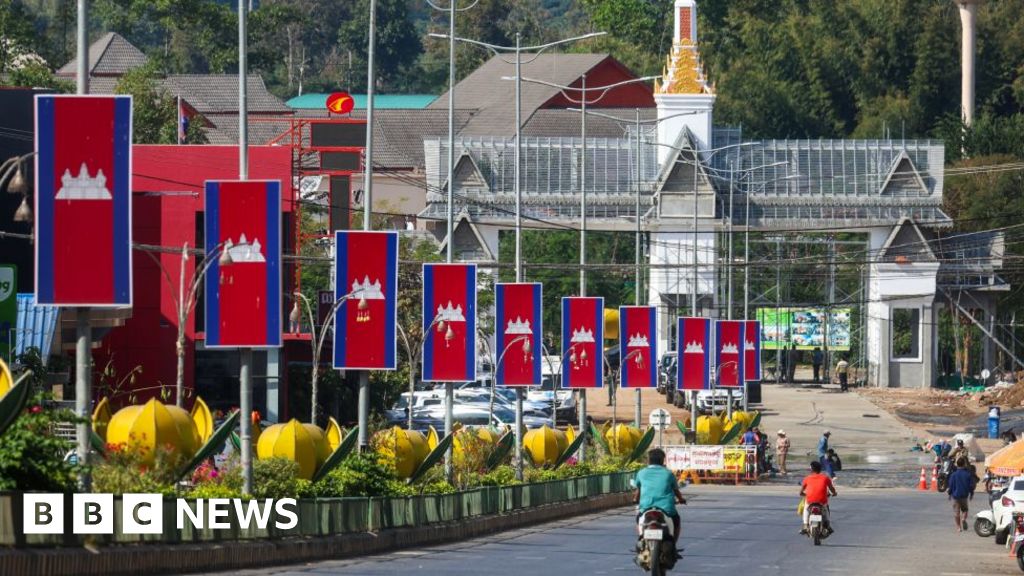
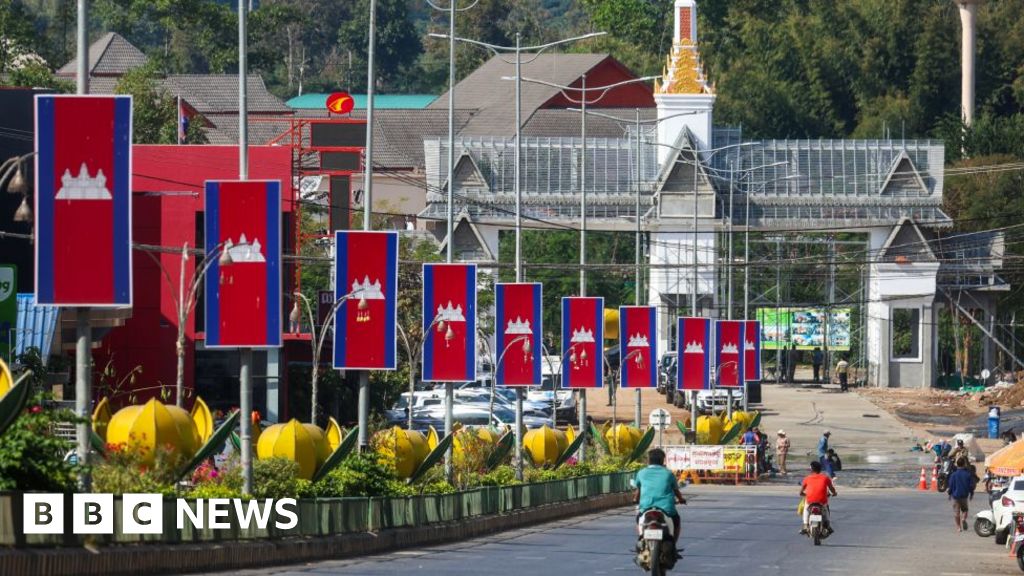
A truce has been initiated between Thailand and Cambodia along their border, where nearly three weeks of violent confrontations have led to almost one million individuals being displaced from their homes.
In a unified statement, the defense ministers from both nations concurred to maintain the current front lines, prohibit reinforcements, and facilitate the return of civilians residing in the border zones at the earliest opportunity.
The truce became effective at noon local time (05:00 GMT) on Saturday. According to the statement, 18 Cambodian soldiers who have been in Thai custody since July will be freed once the ceasefire holds for 72 hours.
This significant development followed days of discussions between the two nations, bolstered by diplomatic support from China and the US.
The accord focuses on returning those displaced to their residences and also encompasses a commitment to eliminate landmines.
Thailand’s Defence Minister Natthaphon Narkphanit characterized the truce as a measure of the “other party’s sincerity”.
“If the ceasefire does not materialize or is breached, Thailand reserves its rightful entitlement to self-defense as per international law,” he informed reporters.
UN human rights chief Volker Türk expressed hope that the ceasefire would “clear the way” for peace, while a spokesperson for the EU urged “good faith” in its execution.
Thailand had hesitated to embrace the truce, citing the inadequate implementation of the previous one. They also expressed discontent over perceived attempts by Cambodia to internationalize the dispute.
In contrast to the previous truce in July, US President Donald Trump noticeably did not participate this time, though the US State Department was involved.
That ceasefire arrangement unraveled earlier this month, ensuing renewed conflicts. Both parties accused each other of causing the failure of the agreement.
The Thai military stated its personnel reacted to gunfire from Cambodian forces in Thailand’s Si Sa Ket province, which resulted in injuries to two Thai soldiers.
Cambodia’s defense ministry claimed it was the Thai forces who initiated the attack in Preah Vihear province and asserted that Cambodia did not respond.
Conflicts persisted throughout December. On Friday, Thailand executed additional air strikes within Cambodian territory.
The Thai Air Force reported it targeted a Cambodian “fortified military position” after civilians had vacated the area. Cambodia’s defense ministry described the strikes as “indiscriminate attacks” against civilian residences.
The durability of the ceasefire largely hinges on political will. Nationalist fervor has surged in both nations.
Cambodia, notably, has suffered significant losses in soldiers and military assets. It has been pushed back from positions it held at the border and has endured severe damage from Thai air strikes, grievances that could complicate the pathway to lasting peace.
Disputes concerning the border trace back over a century, but tensions escalated earlier this year when a group of Cambodian women performed patriotic songs at a contested temple.
A Cambodian soldier lost his life in a confrontation in May, and two months later, in July, there were five days of fierce combat along the border, resulting in numerous casualties among soldiers and civilians. Thousands more civilians were displaced.
After the intervention of Malaysia and President Trump, a delicate ceasefire was brokered between the two nations and ratified in late October.
Trump labeled the deal the “Kuala Lumpur Peace Accords”. It obliged both parties to withdraw heavy artillery from the disputed area and to set up a temporary observer team to monitor it.
However, the agreement was put on hold by Thailand in November after Thai soldiers suffered injuries due to landmines, with Thai Prime Minister Anutin Charnvirakul stating that the security threat had “not actually diminished”.