
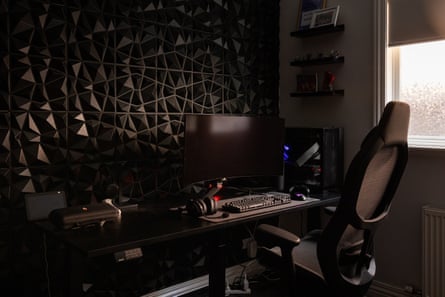
In the center of Cherie Clonan’s vibrant Melbourne residence is a space plunged into darkness, “for our son to escape to,” she remarks. “It’s entirely black inside. You wouldn’t guess it’s the same house!”
This area, equipped with sound-dampening panels, serves as a refuge for her autistic son: a tranquil cocoon for unwinding after school. “He enjoys going in there to play online with his friends,” Clonan shares.
Diagnosed with autism at 37, Clonan resides in a weatherboard cottage with her spouse, Chris, and their two neurodivergent teenagers. Since acquiring the house five years prior, she has been reconfiguring it to accommodate their needs. “Our family is split 50-50 – 50% sensory-seeking and sensory-avoidant,” she states. “I’m drawn to light. I adore everything that is filled with light. However, my son is quite the contrary.”
As autism and ADHD diagnoses increase, Clonan is part of a growing community in Australia reevaluating how their residences can cater to neurodivergent needs. “We each deserve to inhabit a space that is designed for how our minds operate,” Clonan asserts. “We invest so much of our lives attempting to fit into environments that were never intended for us.”
This sentiment is mirrored by architect and design psychology researcher Dr. Jan Golembiewski, who explores the impact of the built environment on mental health. “It can alleviate symptoms, even promote healing,” he notes. “For individuals with ADHD, it’s about integrating positive elements – aspects that encourage focus, tranquility, and ease.”
He compares it to “creating the stage for the behavior you want to encourage”: organizing a space to support requisite activities. “Even in a compact apartment, you can establish defined areas for work and relaxation,” he states.
A balanced home
Clonan’s redesign launched from a family discussion, charting each member’s “sensory quadrant” using the Dunn Model of Sensory Processing, which aids in grasping how individuals react to sensory input. Two family members seek stimulation; two favor calmness.
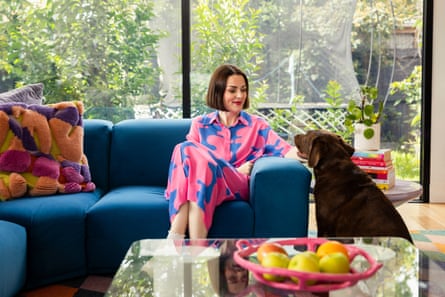
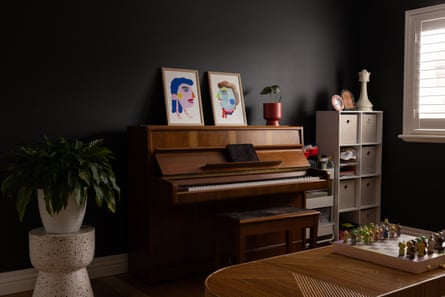
The outcome is a home in equilibrium. Their vibrant, colorful, open-design living space caters to her sensory-seeking daughter and partner, while their additional living area offers a serene contrast, with dark-painted walls, light-filtering shutters, and soothing, gentle fabrics. “Both my son and I are sensory avoidant,” Clonan explains. “The sole distinction for me is that I can tolerate a substantial amount of light, as long as it is natural daylight. I cannot endure fluorescent lighting.”
Her approach is also pragmatic. “It’s an extremely organized house,” she notes. “It has to be since we have many forgetful individuals. If we can’t spot something, we forget it exists. There’s one tray in our fridge that isn’t transparent. We refer to it as the Bermuda Triangle, because anything that goes in never comes out.”
Minimizing the daily burden
Eddie Page, an architect based in Newcastle and co-founder of Maxwell & Page, was diagnosed with ADHD at 13. He claims it provides him a sharper intuition regarding how environments affect people.
This philosophy informed the J-Pod, a compact studio he crafted in a suburban backyard for 22-year-old Josie, who has ADHD and autism. The 16 square meter space had to serve multiple purposes. “Sleeping, cooking, washing, resting, all within the confines of a singular room,” he explains.
To prevent sensory overload, Page maintained a straightforward color scheme. “With ADHD and autism, clutter can be detrimental,” he says. Walls are clad in hoop pine plywood, which he describes as “like a cozy cocoon, akin to a hug.” Storage is cleverly concealed. “The kitchen and storage are hidden so when you’re in bed you can’t observe the clutter,” he states.
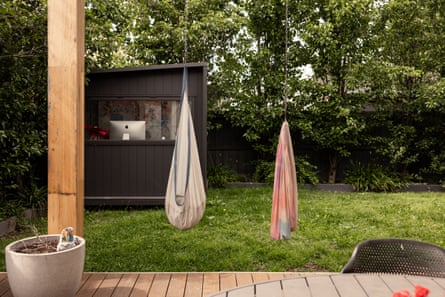
Light and climate were adjusted to Josie’s preferences. “She’s somewhat of a cold frog,” Page shares. “She desired a sealed, air-conditioned box with the blinds down constantly.” Blockout blinds and insulation maintain the environment cool and tranquil, while a high window permits in filtered northern light.
Page designs around the rhythm of daily living. “We’re not merely ticking off a list of rooms – we’re crafting around how someone genuinely lives: their sequences, their rituals, their sensory patterns. It’s about uncovering methods to alleviate the daily load of completing tasks.”
For Josie, transitioning to a specialized space has been life-changing. “Having the autonomy of living independently has greatly benefited my wellbeing… and while it’s small enough to lack numerous separate rooms, it still has distinct areas so I can delineate my mental space.” She describes the studio as exuding a “natural and soothing vibe.”
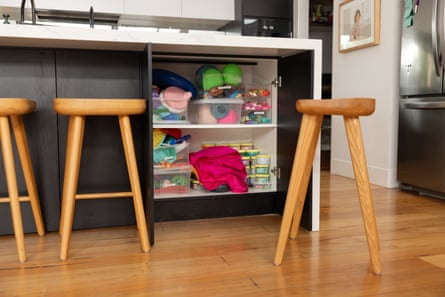
Clinical psychologist Luisa Livingstone notes that many individuals with ADHD or autism often “mask” – exerting considerable effort to concentrate, filter out distractions, and engage socially – and frequently return home mentally exhausted. “Routine tasks can seem insurmountable when your motivation has depleted,” she remarks.
“The design and layout can significantly impact this. If all your necessary items are in one location and you don’t need to search or deliberate, it becomes much more feasible.”
Clonan believes that tailoring a home to accommodate her family’s sensory requirements has strengthened their bond. “My son is a teenager yet he holds us in high regard because he feels secure here. Regardless of what transpires beyond these walls, you have the safest space to return to, and it’s a home that understands your mind. It won’t judge you for the necessities that your brain has.”
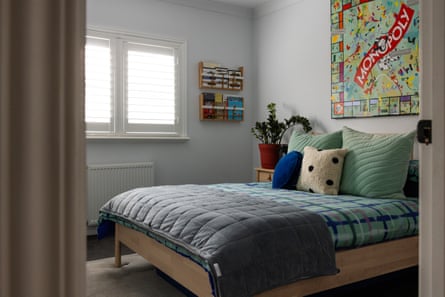
Page shares a similar perspective. He emphasizes creating a future where uniqueness is integral to the design process rather than an afterthought. “I believe the best designers are empathetic,” he remarks.
“You’re crafting for someone else, you’re designing for their experience. You’re striving to view the world through their perspective. That’s the essence of quality design.”