
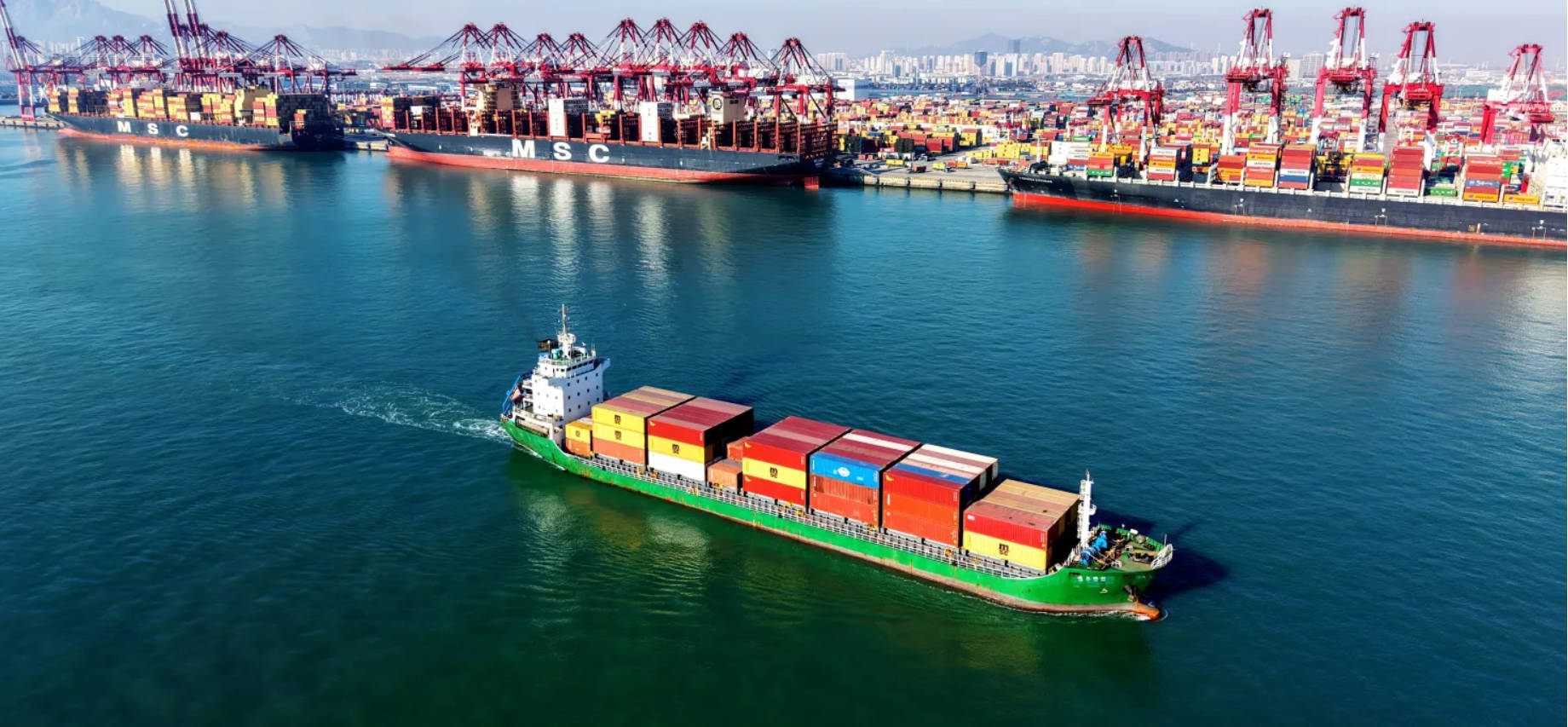
China’s exports destined for the U.S. dropped for the eighth consecutive month despite a new trade agreement between the two nations, even as overall exports exceeded market predictions in November due to manufacturers increasing shipments to other regions.
Exports surged 5.9% last month in U.S. dollar terms compared to the previous year, according to China’s customs statistics released on Monday, surpassing economists’ expectations for a 3.8% increase in a Reuters survey. This rise marks a recovery from an unexpected 1.1% decline in October — the first drop since March 2024.
Imports grew by 1.9% last month, falling short of the anticipated 3% increase, as a prolonged housing recession and increasing job uncertainty continued to hinder domestic consumption. This growth was better than the 1% recorded in October.
Chinese authorities have reiterated commitments to increase imports and strive for trade balance amid widespread critique of its aggressive export strategies.
Shipments to the U.S. plummeted by 28.6% in November, reflecting the eighth month in a row of double-digit declines in exports to the world’s biggest consumer market, even following President Xi Jinping and U.S. President Donald Trump reaching an agreement in late October in South Korea. Imports from the U.S. decreased by 19% compared to the previous year.
“Even with the trade agreement, the U.S. still enforces higher tariffs on China than on [many] other nations,” stated Gary Ng, senior economist at Natixis, noting that Chinese exporters may still be using their facilities in third countries to export to the U.S. “This could become a future norm,” Ng added.
Tariffs on Chinese products remain around 47.5% per Peterson Institute for International Economics. China’s tariffs on U.S. imports are approximately 32%.
This year, China’s exports to the U.S. have decreased by 18.9% year-on-year, while imports have fallen by 13.2%.
The decline in U.S. exports in November was more than offset by rising shipments to other markets, particularly China’s two primary trading partners: the European Union and the Association of Southeast Asian Nations. Exports to ASEAN and the EU increased by over 8% and nearly 15%, respectively.
In the first 11 months of this year, China’s total exports grew by 5.4% compared to the same timeframe in 2024, whereas imports shrank by 0.6%, resulting in a trade surplus of $1.076 trillion as of November, an increase of 21.6% year-on-year.
Slow start under trade agreement
After the trade agreement reached in October, Beijing and Washington consented to reduce steep tariffs on each other’s goods, export restrictions on critical minerals and advanced technology, with China promising to purchase more American soybeans and collaborating with Washington to address fentanyl trafficking.
China’s shipments of rare earths increased in November, exporting 5,494 tons of these essential minerals, a rise of 24% compared to the previous year and up from 4,343.5 tons in October. The Ministry of Commerce has allegedly been creating a new licensing system for rare earth exports that might hasten shipments.
Overall soybean imports rose by 13% compared to a year earlier, reaching 8.1 million metric tons in November, though down from the October figure, suggesting a slow initiation to fulfilling its commitment of purchasing 12 million metric tons of U.S. soybeans by the end of the year.
Upcoming policy meeting
Chinese policymakers are anticipated to convene later this month for the annual Central Economic Work Conference to discuss economic growth objectives, budget, and policy priorities for the forthcoming year. The specific objectives will only be publicly disclosed during the “Two Sessions” meeting in March next year.
A rebound in export growth would alleviate the strain from weak domestic demand, putting the economy on course to achieve the “around 5%” growth target this year, stated Zhiwei Zhang, president and chief economist at Pinpoint Asset Management.
Goldman Sachs predicts that Beijing will maintain the 2026 growth target at “around 5%,” which would necessitate gradual policy relaxation early next year to assure a growth boost from what is likely to be a sluggish reading in the fourth quarter of 2025.
China’s manufacturing activity contracted for the eighth month in November, as indicated by an official manufacturing survey, with new orders remaining in contraction. A private survey focused on exporters unexpectedly signaled that manufacturing activity fell into contraction.
The Wall Street bank expects Chinese authorities to raise the expanded fiscal deficit limit by 1 percentage point of GDP, reduce policy rates by a cumulative 20 basis points, and escalate stimulus actions to address the housing downturn.
The recent strengthening of the yuan has not seemed to halt the momentum of China’s exports. The offshore yuan has appreciated nearly 5% since April, reaching 7.0669 per dollar at market opening on Monday, based on LSEG data.
Despite a consistent 5% annual GDP growth since 2023, China “critically needs to reduce its reliance on exports and shift towards domestic consumption to guarantee sustainable growth,” remarked Weijian Shan, chief executive of private equity firm PAG, in an opinion piece last month.
A stronger yuan could enhance consumption’s impact on economic growth from the 2023 level of 86% to the current 53%, as it would lower import costs and boost household purchasing power, Shan continued.
