
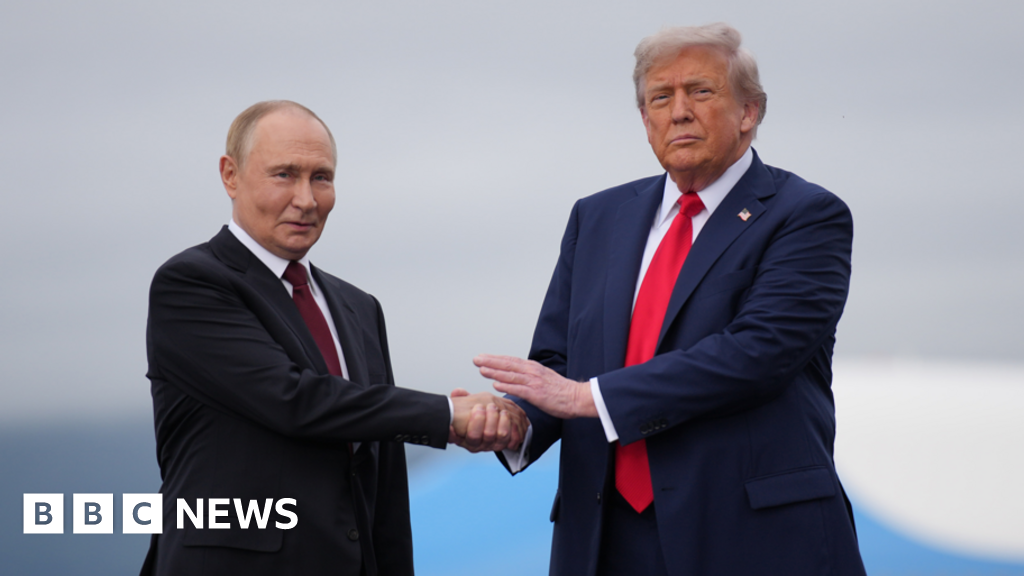

Russia has expressed approval of US President Donald Trump’s latest National Security Strategy, describing it as “mostly aligned” with the perspective of Moscow.
The 33-page paper, released by the US administration this week, claims Europe is undergoing “civilisational erasure” and does not categorize Russia as a threat to the US.
Addressing foreign interference, curtailing mass migration, and opposing the EU’s alleged practice of “censorship” are highlighted as additional key focuses in the report.
Multiple EU officials and experts have criticized the strategy, questioning its emphasis on freedom of speech and comparing it to rhetoric employed by the Kremlin.
“The modifications we’re observing… largely reflect our perspective,” Kremlin representative Dmitry Peskov remarked in an interview published by Russia’s state news outlet Tass on Sunday.
“We view this as an encouraging development,” he added, indicating that Moscow will further assess the document before making definitive judgments.
The strategy employs a gentler tone regarding Russia, which concerns EU officials who fear it may undermine their stance toward Moscow amid ongoing efforts to resolve the Ukraine conflict.
The document attributes blame to the EU for obstructing US attempts to resolve the conflict and asserts that the US must “re-establish strategic stability with Russia” which would “stabilize European economies”.
It seems to endorse initiatives aimed at influencing policymaking across the continent, emphasizing that US actions should prioritize “opposition to Europe’s current direction within European countries”.
The new document also advocates for the revival of “Western identity” and asserts that Europe will be “unrecognizable in 20 years or less”, with its economic challenges being “overshadowed by the more severe threat of civilisational erasure”.
“It remains uncertain whether certain European nations will possess economies and military forces sufficient to be dependable allies,” the document observes.
In sharp contrast, the report lauds the impact of “patriotic European parties” and states that “America urges its political allies in Europe to foster this resurgence of spirit”.
As the EU continues discussions with the Trump administration to establish a peace agreement in Ukraine, some officials reiterated their enduring bond with the US, while raising “concerns” regarding the document.
“The US will continue to be our most vital ally in the [Nato] alliance. This alliance, however, is centered on tackling security policy matters,” stated German Foreign Minister Johann Wadephul on Friday.
“I maintain that matters of free speech or the organization of our democratic societies do not fit [in the strategy], especially not in the case of Germany.”
In a social media message directed at his “American friends”, Polish Prime Minister Donald Tusk remarked that “Europe is your closest ally, not your concern” and highlighted their “shared adversaries”.
“This represents the only logical framework for our mutual security. Unless circumstances have altered.”
In the meantime, former Swedish Prime Minister Carl Bildt noted that the document “positions itself to the right of the far-right”.
The Trump administration has cultivated connections with the far-right AfD party in Germany, which has been labeled as extreme right by German intelligence.
Advocating an “America First” agenda, the strategy indicates that the US aims to target purported drug-trafficking vessels in the Caribbean Sea and the eastern Pacific Ocean, contemplating potential military engagement in Venezuela.
The US also urges increased defense expenditure from Japan, South Korea, Australia, and Taiwan.
Democrats in Congress cautioned that the document could disrupt US international relations.
Representative Jason Crow from Colorado, who is involved in House committees overseeing intelligence and military affairs, labeled the strategy as “disastrous for America’s reputation on the global stage”.
New York Representative Gregory Meeks asserted that it “rejects decades of value-driven, US leadership”.
