
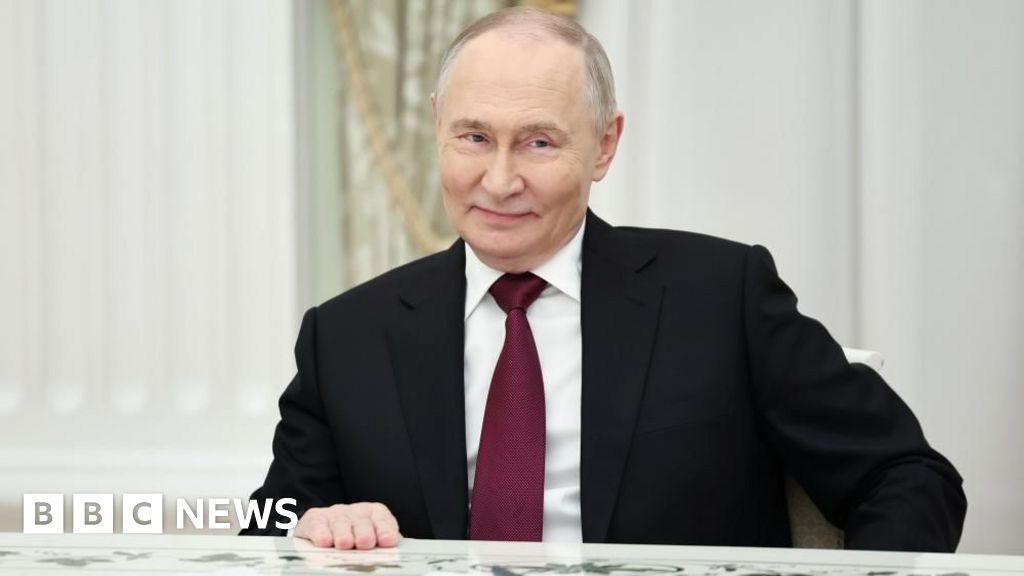
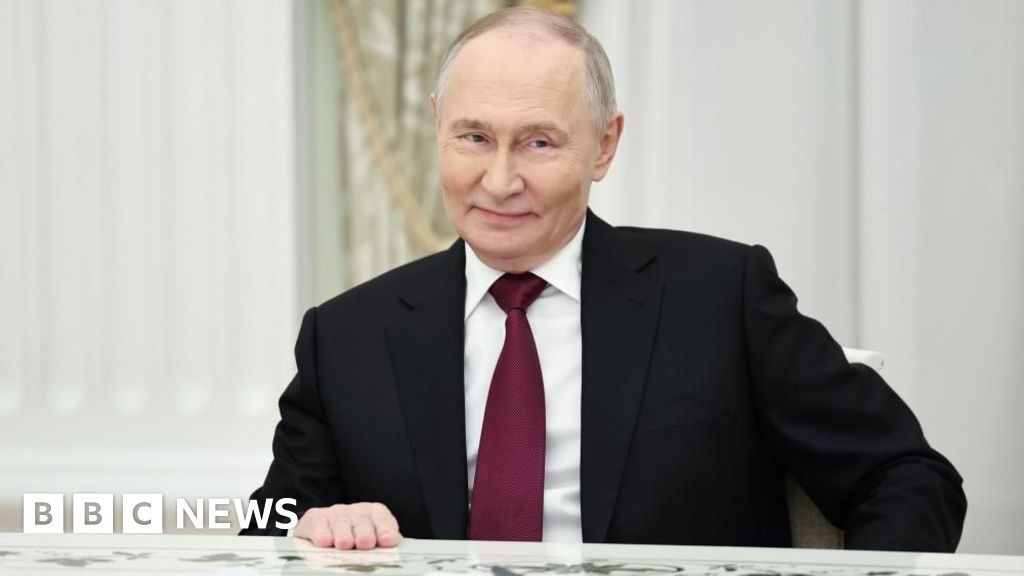
After five hours of discussions between Russian President Vladimir Putin and senior negotiator for US President Donald Trump, it seems no significant progress was made toward reaching a peace agreement regarding Ukraine.
A spokesman for the Kremlin described the Moscow meeting as “constructive,” though he noted that some aspects of the proposal were still unacceptable to Russia.
Attendance at the talks included Trump’s envoy Steve Witkoff and son-in-law Jared Kushner, following several weeks of intensive diplomatic efforts to conclude the conflict. The US delegation has not made any statements since departing Moscow.
Earlier on Tuesday, Putin stated that the amendments suggested by Kyiv and European nations to a US-supported draft peace plan were unacceptable, warning that if Europe “chooses to engage in war and initiates one, we are prepared right now.”
Ukraine and its allies have been urging the US to revise its draft peace agreement, which the White House has attempted to finalize quickly, and which the Kremlin had previously suggested it was open to.
This plan, widely perceived as favorable to Russia after being leaked to the press in November, has seen multiple revisions in the past few weeks.
In response to questions regarding the proposal after the Moscow meeting, Putin’s chief aide Yuri Ushakov mentioned that the Kremlin “agrees with certain points… but criticized some elements.” He added: “We have yet to formulate a compromise version… A lot of work remains.”
Significant disagreements persist between Moscow and Kyiv, particularly related to Ukraine’s acceptance of giving up territory it still controls and the security assurances offered by Europe.
Moscow and Ukraine’s European allies also hold sharply divergent views on their expectations for a peace agreement.
Before the talks, Putin criticized leaders across Europe who have supported Kyiv’s military operations since Russia’s extensive invasion began in 2022.
He stated that European leaders were under the misconception that they could achieve a strategic defeat of Russia. He affirmed that his nation “was not intending to go to war with Europe – but if Europe suddenly desires conflict and initiates it, we are ready right now.”
Ukrainian President Volodymyr Zelensky expressed that he anticipated receiving a briefing on the Kremlin discussions from the US team following the meeting, though it was uncertain if Witkoff and Kushner would travel to Kyiv or other European capitals for further negotiations in person.
Prior to the Kremlin discussions, the Ukrainian leader remarked on Tuesday that there was a chance to conclude the war “now more than ever,” but emphasized that aspects of the proposals still required further deliberation.
“Everything relies on today’s discussions,” Zelensky stated during a news conference while visiting Ireland.
Zelensky reiterated that there were “no easy solutions,” restating his country’s demand for active participation in peace negotiations and for definitive security guarantees, such as NATO membership – a proposal long opposed by Russia and dismissed by Trump.
“We must conclude the war in such a way that in one year, Russia cannot resume hostilities,” Zelensky added.
Ukrainian representatives have engaged in two rounds of high-level discussions regarding the draft plan recently, attended by Witkoff, Kushner, and US Secretary of State Marco Rubio.
The White House indicated that the proposals had been “considerably refined” as a result, though specifics of the revised plan have not been verified.
Putin – who is confident that Russia holds the upper hand in military operations – has appeared steadfast in his demands as recently as last week, while Zelensky has firmly stated he would never relinquish control over eastern Ukrainian territories.
While the talks were ongoing on Tuesday, Trump informed his cabinet in Washington that the resolution of the conflict had proven challenging, describing it as “a mess.”
Kyiv’s European allies had proposed an alternative document to the US-supported 28-point plan, omitting several of the most controversial sections, such as Washington’s acknowledgment of Donetsk and Luhansk as effectively Russian.
On Monday, Zelensky met with French President Emmanuel Macron, with several European leaders participating in the meeting virtually.
Macron indicated that there was “no finalized plan to discuss,” and that a comprehensive agreement could only be reached with contributions from Ukraine and Europe.
Simultaneously, combat persisted on the front lines on Tuesday. According to Ukraine’s military, they were still engaged with Russian forces in the critical eastern city of Pokrovsk – countering Moscow’s assertion of having taken control of it.
Russia’s Ministry of Defence released a video on Telegram claiming to show its troops displaying flags in the strategically essential city, which they have been attempting to seize for more than a year.
Ukraine’s eastern military command contended that Russia attempted to “plant flags” in the city so that “propagandists” could propagate the narrative of its capture. “They retreated hastily, and the clearing of enemy units is ongoing,” it stated in a social media announcement.
The military in Kyiv asserted that its forces still maintained control of the northern portion of the city, with Russian divisions facing substantial losses, while international observers have also disputed Russia’s claim to the region.
The Ukrainian military further dismissed Russia’s assertions of having seized the northeastern border town of Vovchansk, stating it had “significantly enhanced” its position in the northeastern city of Kupyans, which Russia claimed to have captured two weeks ago.
Since the Russian invasion of Ukraine commenced on 24 February 2022, tens of thousands of military personnel have been killed or wounded, alongside more than 14,000 civilian casualties, as reported by the UN.
Civilian infrastructures, including kindergartens, hospitals, and residential buildings, have been either destroyed or severely damaged due to nightly drone or missile strikes.
The conflict between these two former Soviet nations dates back to 2014 when Ukraine’s pro-Russian president was ousted, prompting Russia to annex Crimea and support armed insurrections in eastern Ukraine.
