
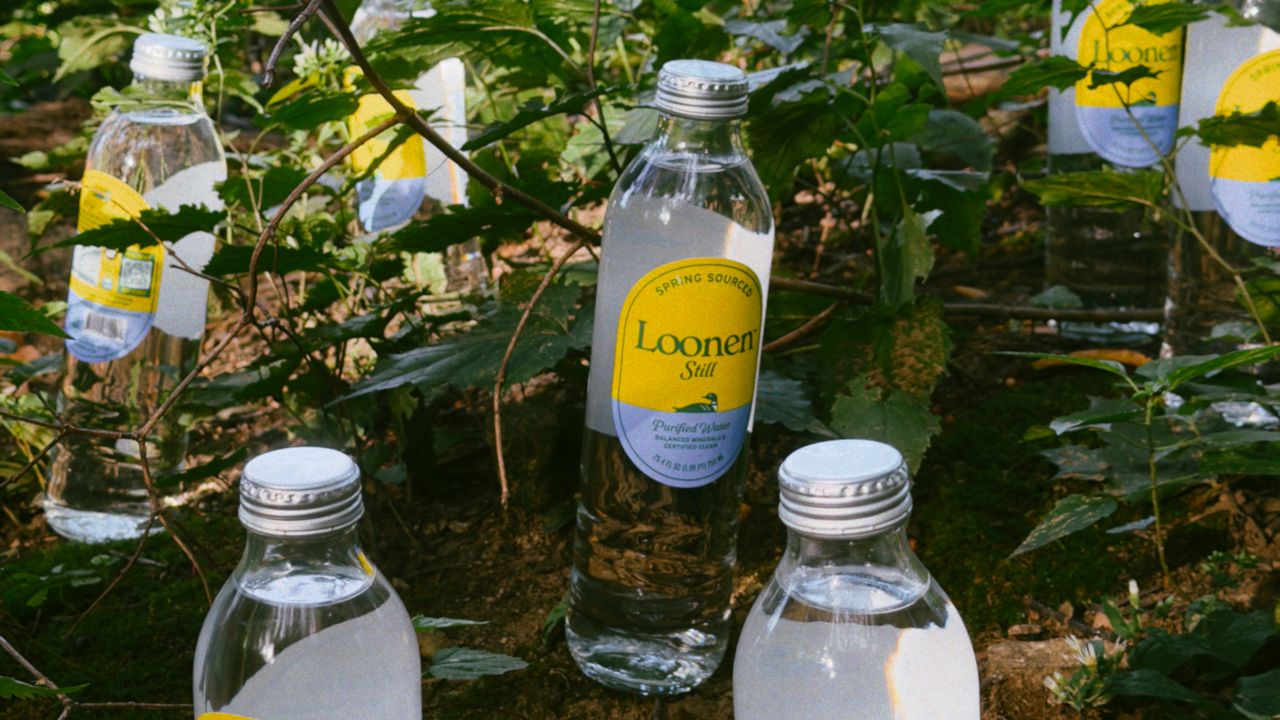

To every generation, an expensive, hype-driven water is bestowed. Or at least, that’s what it’s felt like for the last quarter of a century. See: Fiji water, the status symbol bottle of the early 2000s, later replaced by millennial La Croix, itself usurped by the Gen Z cult of Liquid Death in the early 2020s.
In 2026, Loonen is part of a new vanguard of what’s being dubbed as “wellness waters,” bottled waters that appeal to people hoping to optimize their health. Some of these waters are infused with oxygen, others with hydrogen, and still others advertise that they’re alkaline and filled with electrolytes.
In an era where companies are built off what they infuse and add, Loonen does the opposite. The brand goes hard on what’s not in each bottle. Namely microplastics, the highly discussed health risk quickly becoming the scourge of the 2020s.
The brand hit the market in November of 2025, but it has quickly become something of a phenomenon. Loonen’s tall, wavy bottle began making appearances in the feeds of influencers like Brooks Marks and celebrities like Dua Lipa. It popped up in viral grocery stores like Meadow Lane, Happier Grocer and Erewhon. Then it was everywhere. “What the fuck is Loonen Water,” one thread in r/NYCinfluencersnark asked.
The answer, in short: It’s a luxury bottled water brand that sells for nearly $6 per bottle (the high-end of the price scale for similar products) and markets itself as perfectly pure—but that’s only part of the story.
Why is Loonen so popular?
Some of Loonen’s success can be attributed to the company’s clever influencer marketing. “We send water to people who we think might love the product,” cofounder Clara Sieg says of Loonen’s strategy.
She also says people love Loonen for its bottle. “It’s thin, it feels nice in hand. It has a wide spout. You can [dump] your electrolyte powders into it,” Sieg says. Influencer approval and a luxe bottle have made Loonen feel like a high-end product; one of many signifiers that gesture toward someone’s wealth and status—you’re not just staying hydrated, you’re living better.
But Loonen’s success also speaks to a larger consumption trend: Buying water is now about more than quenching your thirst—it’s about more than hydrating, even. Consumers want water that feels like it helps optimize their health. It’s the same thinking that’s behind the protein-maxxing trend, the MAHA movement, and even the wave of raw milk lovers. People are distrustful of our foodways, and they’ll pay a premium for products that hold the promise of promoting wellness.
For its part, Loonen leans on its purity claims. In a world where it’s increasingly difficult (or, perhaps, impossible) to avoid microplastics, Loonen has built a brand touting being microplastic-free, with frequent lab testing to back it up. Still, some water experts aren’t impressed with Loonen’s water, dubbing it simply processed spring water with a catchy label. “Americans love marketing stories with a sprinkle of fear mongering,” says water sommelier Martin Riese. “I am too hydrated for that.”
What risks do microplastics in bottled water pose?
To stand apart in a crowded luxury water field, Loonen extols its purity and transparency around testing. It’s processed and bottled without touching any plastic, and each batch is tested by a third-party laboratory for organic and inorganic compounds, including microplastics, pesticides, and forever chemicals. Those results are posted on Loonen’s website and regularly updated.
According to a review of studies published in Frontiers in Cell and Developmental Biology, microplastics are basically everywhere. They’re in bodies of water, soil, the atmosphere, and food systems. A study published in Frontiers in Chemistry suggests there’s evidence, too, that bottled water contains more microplastic than tap water. Microplastics are linked to a range of pretty bad health outcomes—cancer, respiratory disease, reproductive health, and “may also systematically accelerate the aging process and increase the risk of age-related diseases,” according to the review.
