
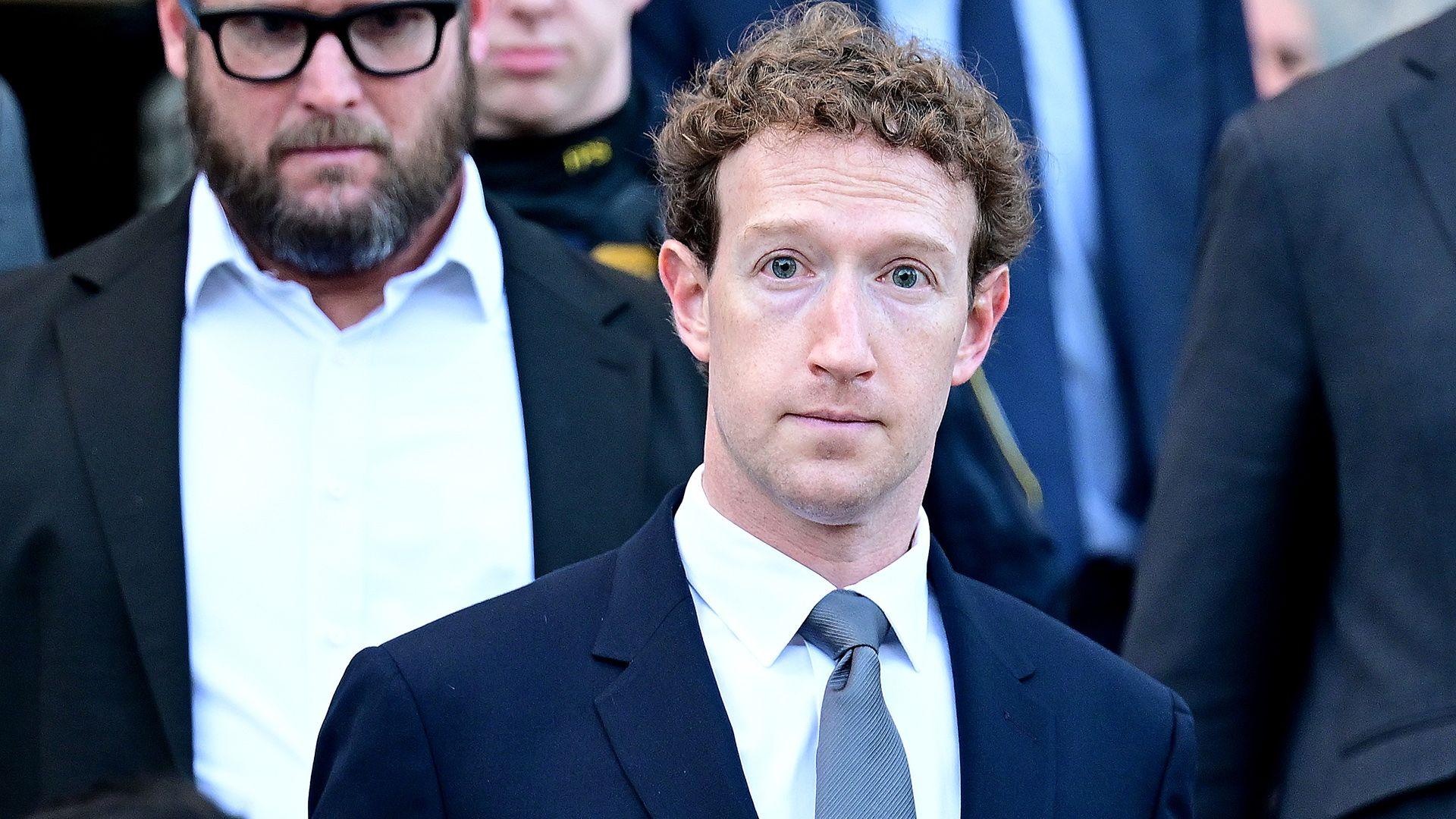

A US judge in New Mexico has ordered Meta to pay another $567m (£421m) for its failure to warn the public about dangers its platforms posed to children, marking the largest fine against the company over child safety.
Judge Bryan Biedscheid said the social media giant is a “public nuisance” akin to air pollution and that it must put the money in a fund aimed at reducing future harms.
Thursday’s ruling is in addition to $375m in fines Meta was already ordered to pay in the case, for a total of $942m.
Judge Biedscheid compared Meta to a factory, with advertising and content as its product and “the psychological harm and sexual exploitation of children to be the pollution that must be abated”.
A spokesman for Meta, which owns and operates Instagram, Facebook, WhatsApp and Threads, said Thursday: “We disagree with the ruling and will appeal.”
“We work hard to keep people safe on our platforms and have been transparent about the challenges of identifying and removing bad actors and harmful content,” they added.
“We remain confident in our record of protecting teens online and will continue to defend ourselves against claims that misrepresent the facts.”
Regarding the earlier $375m verdict in the case, Meta had said it intended to appeal the ruling and gave a similar explanation. It was the first time that a state had successfully sued Meta over child safety issues.
Meta is currently facing thousands of lawsuits in the US over similar issues. In addition to the New Mexico rulings, Meta earlier this year lost a landmark case in Los Angeles which found it could be held liable for building addictive platforms.
Bruce Daisley, a former European vice president of Twitter (now X), told BBC Radio 4’s Today programme the New Mexico fine, while large, was “a drop in the ocean” for Meta.
In its latest financial results, the social media giant posted $61bn in revenue from April to June – up 28% on the same period a year ago.
“But it’s an indication that we are moving to a stage where social media is going to be tackled around the world,” he said.
Meanwhile, former safeguarding minister Jess Phillips told Today she believed US court challenges against big tech could enable the UK to take tougher action – without fearing it may damage UK-US diplomatic ties.
Pollution comparisons
The New Mexico case stems from a 2023 lawsuit brought by state attorneys.
It argued Meta should be held liable for the way in which its platforms endangered children and exposed them to sexually explicit material and contact with sexual predators.
In the first phase of the trial, Meta was found to have repeatedly violated New Mexico’s Unfair Practices Act as its recommendation algorithms essentially “steered” young users toward harmful content and contacts.
Recommendation algorithms are the tools that Meta uses to automatically curate the content a user sees on its platforms.
In ruling on this second phase of the trial, Judge Biedscheid found that Meta’s harms reached the level of “public nuisance” – or an issue of health and safety that has become so widespread it is negatively impacting a general public.
In addition to being the largest fine Meta has received over child safety issues, the ruling also appears to be the first time that a social media company has been deemed a public nuisance.

In his ruling, the judge compared the “harmful effects” of the company’s platforms on children to that the way in which “noxious pollution produced by the factory can harm the common public right to reasonably clean air”.
Rather than remain confined to its platforms, he said, these effects “migrate to the internet as a whole and, perhaps most concerning, to the real world”.
These in turn create “a common, societal burden on and harm to the affected children and their families,” as well as schools, hospitals and law enforcement, he said.
Further measures
The fund that Meta has been ordered to create will be used to pay for efforts to mitigate “the wide-ranging impacts of the harm”, Judge Biedscheid said.
A vast majority of the money, totaling $420m, will go towards treatment of harms Meta’s platforms have already caused, through the funding of “appropriate clinical or other behavioral health programs and professionals,” according to the order.
Another chunk of the money will go towards training around awareness and prevention, including for teachers and health professionals on how to deal with social media harms against children.
The judge also ordered Meta to enact other measures, including ensuring that no account of a user under age 18 is recommended to an adult and that no adult can message an underage user.
In addition, Meta was ordered to:
-
Ban underage users from sending or receiving nudity
-
Enact a “1-strike policy for adult users who engage in child sexual exploitation”
-
Eliminate “like” counts for users under 18
-
Ban push notifications for such users every day between 10:00 PM to 7:00 AM and to ban such notifications during the typical school year between 8:00 AM to 3:00 PM, except on weekends
-
Implement a mandatory usage limit for such users of 90 cumulative hours per month across Instagram and Facebook, or about three hours per day
The UK and EU also want platforms including Meta take similar steps to protect children on their sites, with recent efforts focusing on repairing mechanisms through which children can be seen or contacted online.
But many countries are also forging ahead with plans to ban children from social media entirely.
The UK recently said in addition to blocking under-16s from social media, platforms would also need to stop older teens using social media at night via opt-out “curfews”.
Meanwhile, another major trial against Meta begins next week in California. Nearly three dozen US states’ attorneys general are suing the company for violating child privacy laws.

Get our flagship newsletter with all the headlines you need to start the day. Sign up here.

Get in touch
Have you been affected by the issues discussed in this story?


