
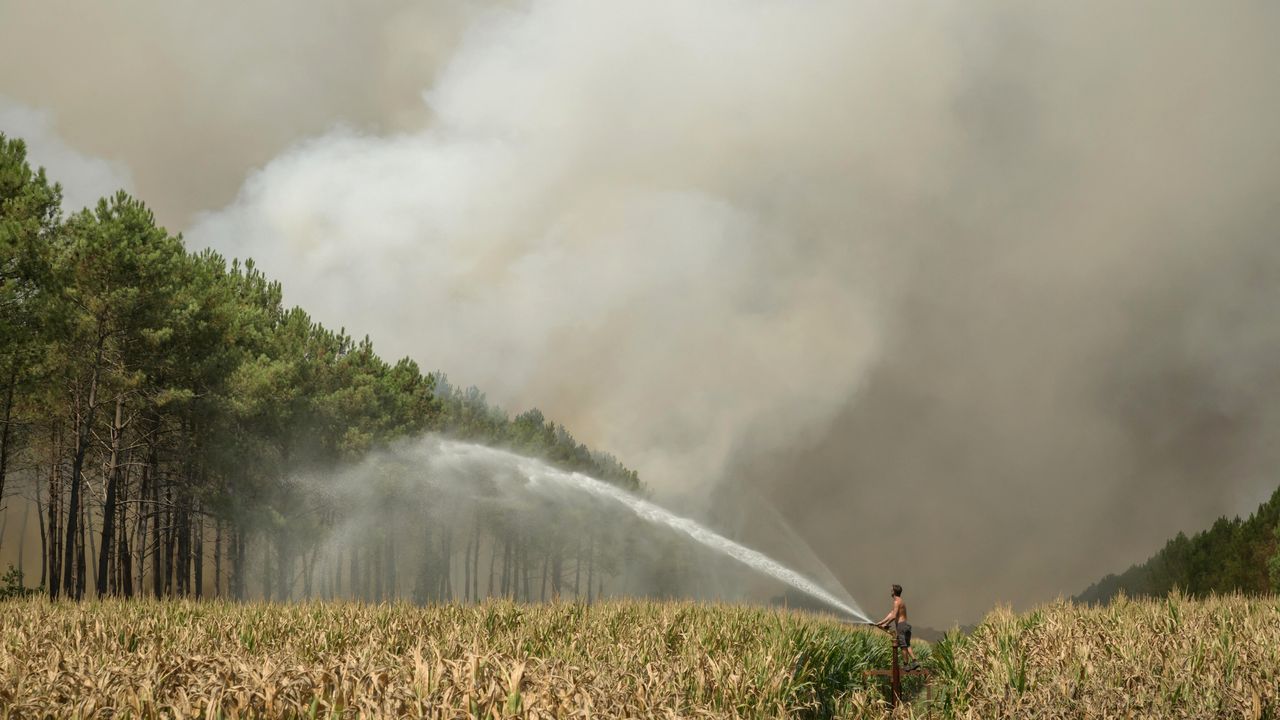

On July 22nd, news reports started circling of fires ripping up the Atlantic coast outside of the region of Bordeaux. Within three days, the skies over the storied wine region had turned an acrid orange. The current burn area is four times the size of the city of Paris, and over 220,000 people have been evacuated from the Western communes—France’s largest-ever peacetime evacuation.
It’s only set to get worse. A fresh heatwave—104°F and climbing—is moving in, which could turn Bordeaux into a tinderbox and complicate efforts to battle the blaze.
It’s an ecological and environmental tragedy, marked by loss of land, livelihood, and ecosystems. As fires continue to burn, winemakers and wine drinkers are wondering: What will the 2026 vintage look like? And will there even be one?
A Region on Fire
The present circumstance is borne from a confluence of problems. Spring was wet but summer has been bone dry, a situation exacerbated by repeat heatwaves. As a result, over the last week, the Bordeaux fires have spread to extreme levels—the worst French wildfire in over 70 years.
French Prime Minister Sébastien Lecornu called the fire season unprecedented. Jerome Steffe, the mayor of the town of Cestas, just south of Bordeaux, called it the fire of the century.
At the root of the problem is how heavily forested Bordeaux is. In the past, this has been an upside: the Landes forest, Southwest of the region, contributes deeply to the terroir of Bordeaux. Over the last few years, Bordeaux has undergone intense efforts to plant additional trees; this provides more shade for vineyards, which hypothetically could lessen the impact of rising temperatures on grapes. During a fire event, however, these factors have led to disaster. More trees mean more material to burn.
The silver lining is that, at least for now, the grapes remain relatively unscathed. No vineyards have yet burned, and initial testing on smoke levels in vineyards showed negligible levels of damage.
“The potential impact depends on several factors, including the proximity of the fire, the duration of smoke exposure, and the stage of grape development,” says Nick Briggs, the winemaker at Dutcher Crossing in Sonoma, a region that has navigated its own extreme fire situations over the past few years. Winemakers in California, British Columbia, and Oregon have by necessity become seasoned experts at mitigating the effects of wildfire and smoke; they have the potential to be valuable resources to colleagues in Europe, which until recently has not been forced to face such threats.
“The compounds associated with smoke are highly volatile, so fires located closer to vineyards generally pose a greater risk than those farther away,” Briggs explains.
The next week will be marked by concern, anxiety, and preparation. An incoming heatwave and shifting winds will edit the trajectory of the fires. Much rides on where they head next.
Until then, the Bordelaise are stepping up and helping out in whatever way they can. Soufflet Vigne, the French agricultural supply and winemaking service company, ferried back and forth water tanks and pumps typically used for fermentation and production to provide water sources for firefighters.
Bordeaux’s Chamber of Agriculture set up an online system that allows farmers to offer up their water tanks, trailers, tractors, and water access points—anything that might aid firefighters battling the flames.
“There is clear solidarity from the industry. Both Smith Haut Lafitte and Rauzan-Ségla are among the many wine estates and agricultural companies that have lent equipment such as water tanks and pumps to assist the firefighters,” says Jane Anson, one of the world’s foremost Bordeaux journalists and author of the upcoming Bordeaux Chronicle.
