
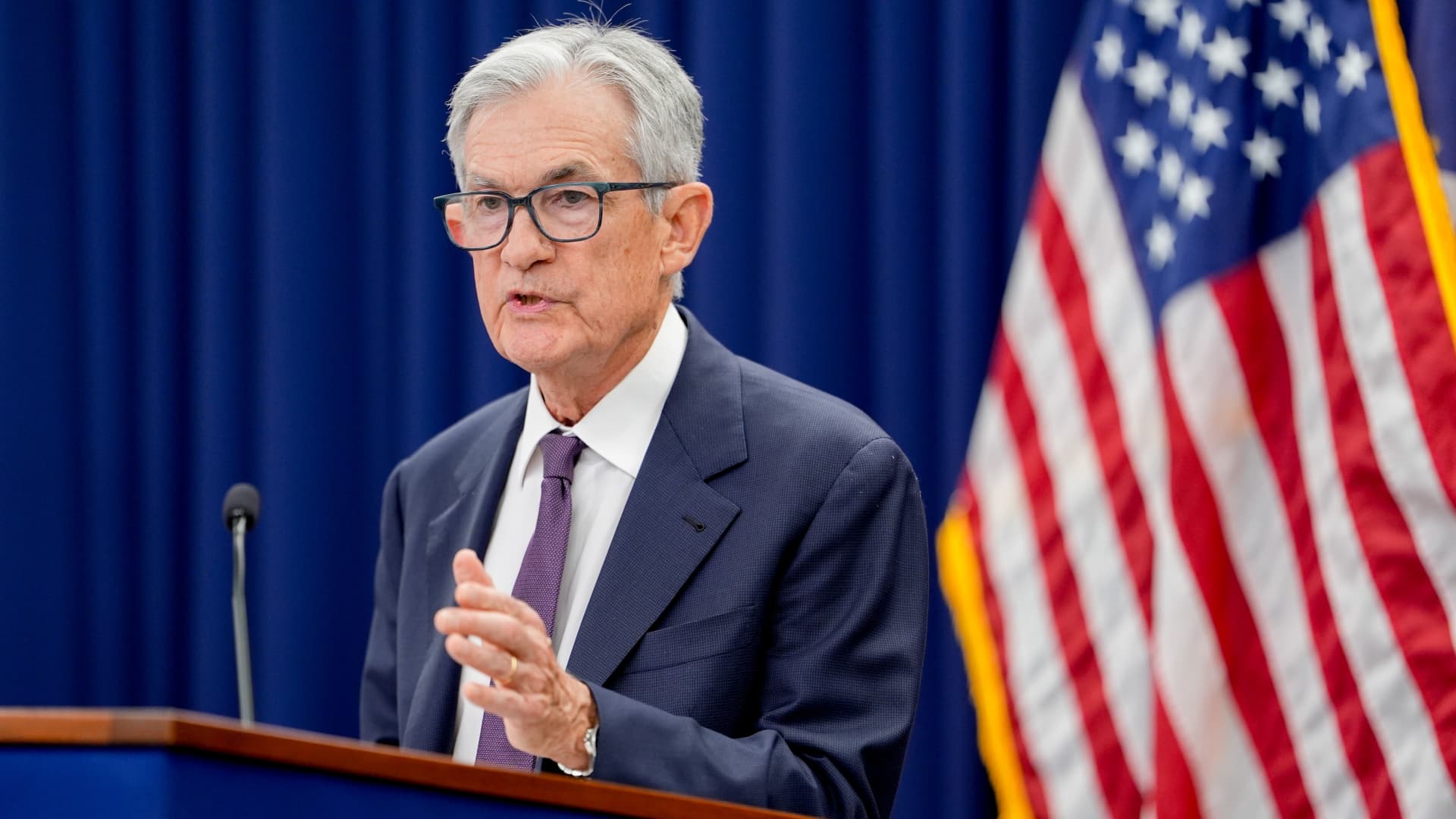

The Federal Reserve finds itself with limited options this week as it maneuvers through a blend of complex and contradictory pressures emerging in the U.S. economy.
Market expectations are indicating an almost negligible chance that the Federal Open Market Committee, responsible for setting rates, will implement a cut during this meeting — or any forthcoming ones soon. Futures trading implies that policymakers are unlikely to consider easing until at least September, more likely October, with just a singular reduction anticipated this year.
In regard to Wednesday’s decision, Chair Jerome Powell and his team are challenged by the Iran conflict, concerns about a potential rise in inflation, and inconsistent indicators coming from the labor market. The interplay of these elements virtually guarantees that the Fed will maintain its stance, keeping the primary interest rate between 3.5% and 3.75%. Anticipated updates to economic predictions and rate projections are also not expected to present significant alterations.
“The decision itself appears almost certain — a hold on rates during the March meeting. Nevertheless, any indications Chair Powell might offer regarding future interest rates will be crucial,” stated BeiChen Lin, senior investment strategist at Russell Investments. “In general terms, the U.S. economy remains robust. This implies, however, that the threshold for any further rate reductions in the U.S. could be significantly high.”
Even prior to the conflict, traders were not anticipating a cut during this week’s meeting. Instead, they foresaw that the FOMC would delay until June and likely cut at least once more before the year’s end, according to the CME Group’s FedWatch pricing.
However, the attacks — and their effects on oil and inflation — have shifted the market’s perspective, despite Fed officials typically overlooking oil shocks associated with the conflict.
Consequently, all focus will be on Powell’s communications. If everything proceeds as anticipated, this will mark Powell’s penultimate meeting as chair, prompting markets to possibly be cautious about overinterpreting the chair’s remarks.
Shaping the future
“With an April reduction nearly eliminated from consideration, Powell’s capacity to steer market expectations hinges on how much his remarks are perceived as reflecting the committee’s collective stance rather than his personal opinions,” remarked Bank of America Fed analysts in a note. “Even disregarding this limitation, Powell will have significant challenges ahead.”
Former Fed Vice Chair Roger Ferguson informed CNBC that he foresees the committee being “cautious” in its post-meeting statement as it evaluates inflation, unemployment, economic progress, and anticipated policy directions.
“The prevailing inquiry on everyone’s mind is what they will articulate, if anything, regarding the future and their perspective on adjusting the risk balance,” he expressed.
In considering the labor market in relation to inflation, Ferguson mentioned that he would prefer the Fed to prioritize prices.
“I am more concerned about escalating inflation. You know, the Fed targets 2%. They have deviated from that target for several years now,” he stated. “At some point, it will come into question whether the 2% target is truly what the Fed aims for, and so I am considerably more apprehensive about that.”
Observing the dot plot
Investors will gain further insights into the committee’s perspective when it announces updates to the Summary of Economic Projections. This release includes the Fed’s closely monitored “dot plot” displaying individual officials’ forecasts for interest rates.
Nevertheless, most analysts predict minimal modifications to the SEP or the dot plot: The Fed may slightly adjust economic growth and inflation estimates from the last update in December, but the rate outlook is likely to remain largely unchanged. Officials reported in December that they anticipated only one rate cut for this year, and this consensus is expected to remain consistent despite any dissenting opinions that may accompany recent Fed actions.
“Reviewing their communications, they will likely stress that the conflict in the Middle East has introduced additional uncertainty to the inflation and employment forecasts. However, their projections could appear strikingly similar to three months ago,” noted David Kelly, chief global strategist at JPMorgan Asset Management.
Adding to the complexity, there is also an ongoing political atmosphere surrounding the Fed.
President Donald Trump has long been advocating for the central bank, and particularly Powell, to implement rate cuts. In a media appearance on Monday, Trump once more criticized the chair, asserting that Powell should have convened a special meeting.
“What could be a better moment to cut interest rates than now? Even a third-grade student would recognize that,” Trump stated.
However, Trump’s own Justice Department is impeding the process of replacing Powell.
His nomination of Kevin Warsh to take over from Powell in May is being stalled due to a case initiated by U.S. Attorney Jeanine Pirro against Powell over the Fed’s renovations at its headquarters. Until this matter is resolved, Sen. Thom Tillis, R-N.C., has indicated he will block the Warsh nomination in the Senate Banking Committee.
