
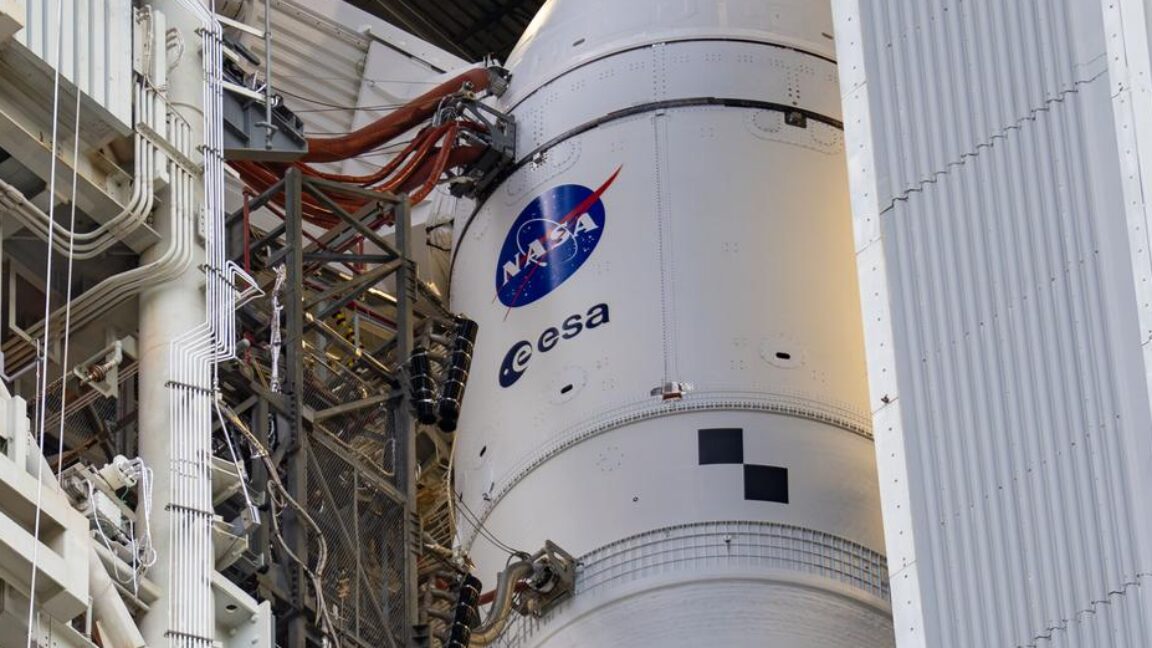
NASA has repaired the fault that forced the Artemis II rocket off its launch pad last month, but officials say it will be a few weeks before the vehicle can be returned to the launch position at Kennedy Space Center in Florida.
The 322-foot-tall (98-meter) rocket might have been able to fly as soon as this week after passing a critical fueling test on February 21. During that test, NASA loaded the Space Launch System with cryogenic propellants without major issues, apparently resolving a persistent hydrogen leak that had held up the mission in early February.
However, a separate issue arose one day after the successful fueling demonstration. Ground crews were unable to get helium into the rocket’s upper stage. Unlike the connections to the core stage, which can be serviced on the pad, the umbilical lines feeding the upper stage higher on the rocket are accessible only inside Kennedy’s cavernous Vehicle Assembly Building (VAB).
Mission managers promptly decided to roll the rocket back to the assembly building for troubleshooting. The vehicle returned to the VAB on February 25, and within a week engineers identified the cause of the helium flow problem. Inspections showed that a seal in the quick disconnect — the passage through which helium moves from ground systems into the rocket — was blocking the flow, according to NASA.
Fixing the seal
“The team removed the quick disconnect, reassembled the system, and began validating the repairs to the upper stage by running a reduced flow rate of helium through the mechanism to ensure the issue was resolved,” NASA said in an update posted Tuesday. “Engineers are assessing what allowed the seal to become dislodged to prevent the issue from recurring.”
