
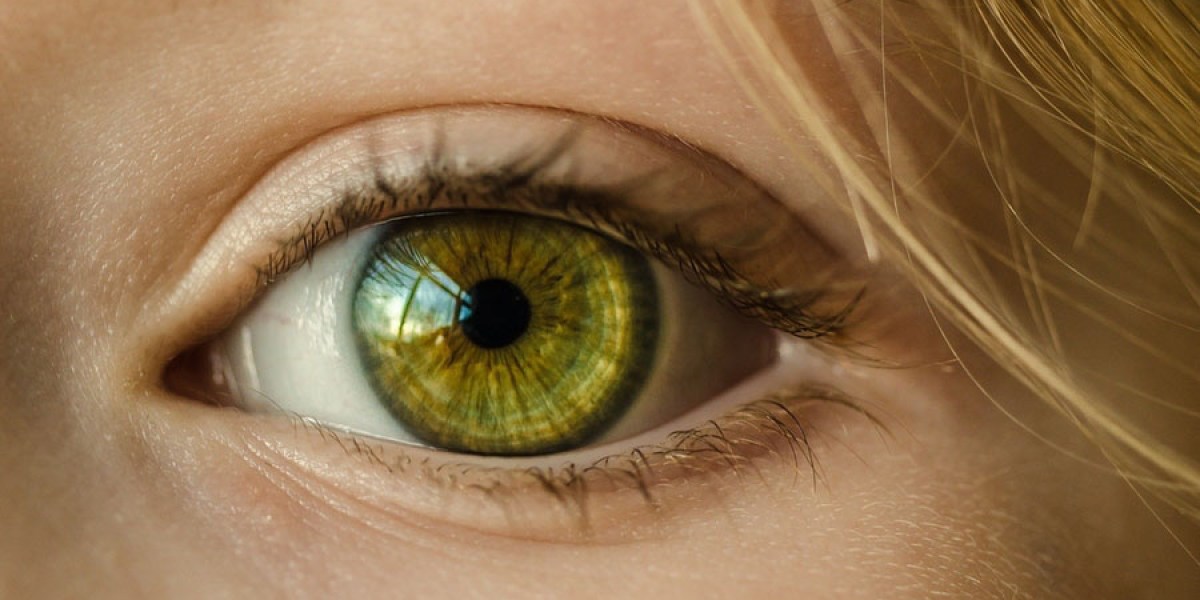

In the visual impairment condition known as amblyopia (or “lazy eye”), diminished sight in one eye during early development leads to a reorganization of neural pathways in the brain’s visual network, favoring the other eye and resulting in reduced ability of the amblyopic eye, even if the initial problem is fixed. Existing treatments are ineffective once childhood is over, at which point the neural connections are fully established.
A recent investigation involving mice by MIT neuroscientist Mark Bear and his team indicates that by temporarily anesthetizing the retina of the amblyopic eye for just a few days, it becomes possible to restore those vital connections, even in later life.
Bear’s group, which has dedicated decades to researching amblyopia, had previously demonstrated that this restoration could be accomplished by numbing both eyes or the non-amblyopic eye, similar to a method where a child is made to wear a patch over the healthy eye in order to strengthen the “lazy” one.
The latest research examined the underlying mechanisms of this phenomenon by following up on an earlier finding: that inhibiting the retina from transmitting signals to neurons within the brain region relaying information from the eyes to the visual cortex resulted in those neurons emitting “bursts” of electrical impulses. Such activity patterns are seen in the visual system prior to birth and help guide early synapse development.
The experiments verified that such bursting is essential for the therapy to be effective—and importantly, that it takes place when either retina is anesthetized. After certain mice with amblyopia had their affected eye numbed for two days, the researchers assessed visual cortex activity to determine the input ratio from both eyes. This ratio was significantly more balanced in the treated mice, suggesting that the amblyopic eye communicated with the brain similarly to the other eye.
A crucial subsequent step will be to validate that this method is effective in other species and, eventually, in humans.
“If proven successful, it would represent a significant advancement, as it would be comforting to know that treatment would not necessitate interrupting vision in the good eye,” comments Bear. “Instead, the amblyopic eye, which is underperforming, could be deactivated and then ‘revived.’”
