
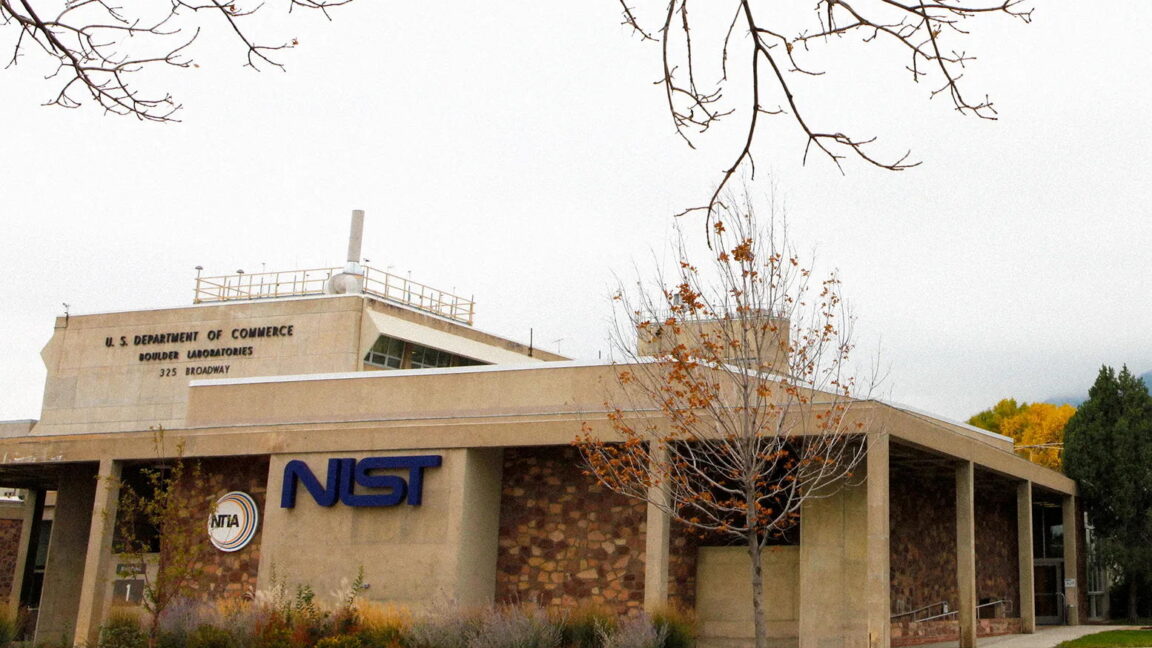
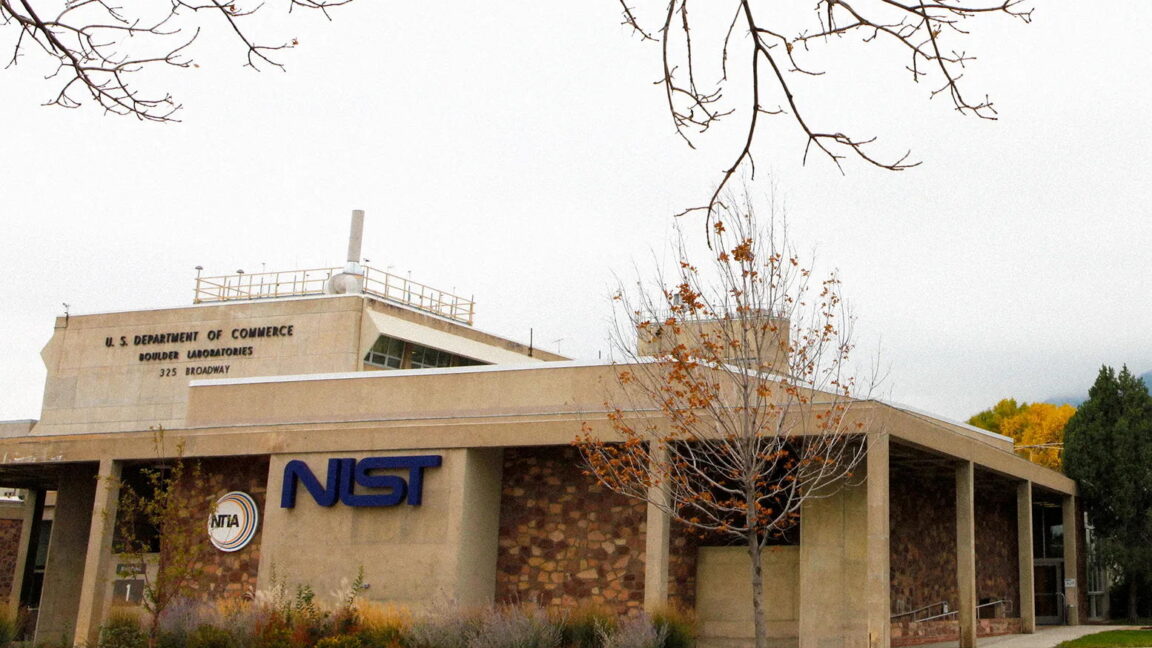
One of the US government’s premier scientific research laboratories is moving to implement policies that could push foreign scientists out, a change lawmakers and sources tell WIRED could deprive the country of valuable expertise and weaken the agency’s credibility.
The National Institute of Standards and Technology (NIST) sets the standards that underlie areas ranging from cybersecurity to semiconductor manufacturing. Some of NIST’s recent work includes establishing guidelines for securing AI systems and flagging health hazards in air purifiers and firefighting gloves. The agency relies on thousands of employees, postdoctoral scientists, contractors, and visiting researchers recruited from around the world for their specialized skills.
“For weeks, reports of sweeping new restrictions have circulated widely, and my staff’s inquiries to NIST have gone unanswered,” Zoe Lofgren, the top Democrat on the House Committee on Science, Space, and Technology, said in a letter sent to acting NIST Director Craig Burkhardt on Thursday. April McClain Delaney, another Democrat on the committee, cosigned the message.
Lofgren said that although her staff has heard various rumors, unnamed sources have confirmed the Trump administration “has begun taking steps to limit the ability of foreign-born researchers to conduct their work at NIST.”
The congressional letter comes after a Boulder Reporting Lab piece on February 12 that reported international graduate students and postdoctoral researchers would be capped at three years at NIST going forward, even though many require five to seven years to finish their research.
A NIST employee told WIRED that several offers to hire foreign workers via the agency’s Professional Research and Experience Program have recently been canceled amid doubts they could pass new security checks. The staffer, who spoke anonymously because they were not cleared to talk to reporters, says the agency has not broadly explained what the new obstacles are or why they’re needed.
On Thursday, the Colorado Sun reported that “noncitizens” had their after-hours access to a NIST lab revoked last month and may soon be barred from the facility altogether.
Jennifer Huergo, a NIST spokesperson, told WIRED the proposals are intended to shield US science from theft and misuse, echoing comments given this week to other outlets. Huergo declined to say who must sign off on the plan or when a final decision would come. She also did not immediately reply to a request for comment on the lawmakers’ letter.
Stopping foreign adversaries from pilfering American intellectual property has been a bipartisan focus, and NIST is one of several agencies recently subject to congressional scrutiny over the strength of its background checks and security measures. Just last month, Republican lawmakers renewed calls for limits barring Chinese nationals from working at or collaborating with national labs run by the Department of Energy.
But Lofgren’s letter argues the rumored limits on non-US scientists at NIST exceed “what is reasonable and appropriate to protect research security.” The letter calls for disclosure of new policies by February 26 and a halt to them “until Congress can weigh in on whether these changes are necessary at all.”
Losing research talent at NIST would compound a number of other Trump administration actions that US tech leaders warn could upend the lives of immigrant researchers already in the country and slow economic growth. Raising fees on H-1B tech visas, cancelling thousands of student visas, and conducting controversial mass deportations all stand to push people eager to work on science and tech research in the US to seek opportunities elsewhere. The Trump administration has also announced plans to limit post-graduation employment training for international students.
Pat Gallagher, NIST director from 2009 to 2013 under President Barack Obama, warns the moves could undermine confidence in the agency, long a source of technical foundations relied on by industry and governments globally. “What has made NIST special is it is scientifically credible,” he tells WIRED. “Industry, universities, and the global measurement community knew they could work with NIST.”
Like many federal agencies, NIST has been in upheaval for much of the past year. Sections were immobilized for months while rumors of mass layoffs circulated. Ultimately, the agency lost hundreds of its thousands of workers to budget cuts, with further funding pressure to come.
A few years ago, NIST hosted around 800 researchers each year on average from abroad to work on-site and collaborate with staff.
Lofgren said she feared that mere rumors could deter researchers and weaken US competitiveness in crucial research. “Our scientific excellence depends upon attracting the best and brightest from around the world,” she wrote in the letter.
This article first appeared on wired.com.
