
The United States and the European Union have ascended to economic dominance by perpetrating climate crimes. They have consumed an exceedingly disproportionate fraction of the globe’s oil and natural gas, planting carbon traps that will explode first in the disadvantaged, hotter regions of the planet.
In contrast, locations such as the Solomon Islands and Chad—either low-lying or simply torrid—have released comparatively minimal carbon dioxide, but due to their geographic position and historical context, they are listed among the nations most susceptible to the severe impacts of climate change. This signifies more prevalent catastrophic cyclones, heat waves, famines, and flooding.
From a moral standpoint, there’s a compelling argument that the nations or corporations accountable for this predicament ought to pay for the homes that will be lost, the coastlines that will vanish under rising waters, and the lives that will be diminished. According to one assessment, the leading economies owe a climate debt to the rest of the globe nearing $200 trillion in reparations.
However, legally, the argument has proven much more challenging to establish. Even disregarding the jurisdictional issues, the early science of climate change couldn’t pinpoint the origin of airborne carbon dioxide molecules across oceans and time. Well-resourced corporations with elite legal teams readily took advantage of those challenges.
Currently, the tides may be shifting. An increasing number of climate-related lawsuits are being filed, especially in the Global South. Governments, nonprofits, and citizens in the most climate-vulnerable countries continue to explore new legal arguments in different courts, and some of these courts appear more willing to hold nations and industries accountable as a matter of human rights. In addition, the science aimed at determining precisely who is responsible for specific weather-related disasters, and to what extent, is advancing significantly.
It is accurate that no court has yet found any climate emitter responsible for climate-related harms. For one thing, nations are generally shielded from lawsuits initiated in other jurisdictions. Consequently, most cases have targeted leading carbon emitters. Yet these companies have relied on a robust defense.
While oil and gas firms extract, refine, and market the world’s fossil fuels, the majority of emissions arise from “the vehicles, power plants, and factories that burn the fuel,” as noted by Michael Gerrard and Jessica Wentz from Columbia Law School’s Sabin Center in a recent article in Nature. In other words, companies merely extract the resources. It’s not their fault if someone else ignites it.
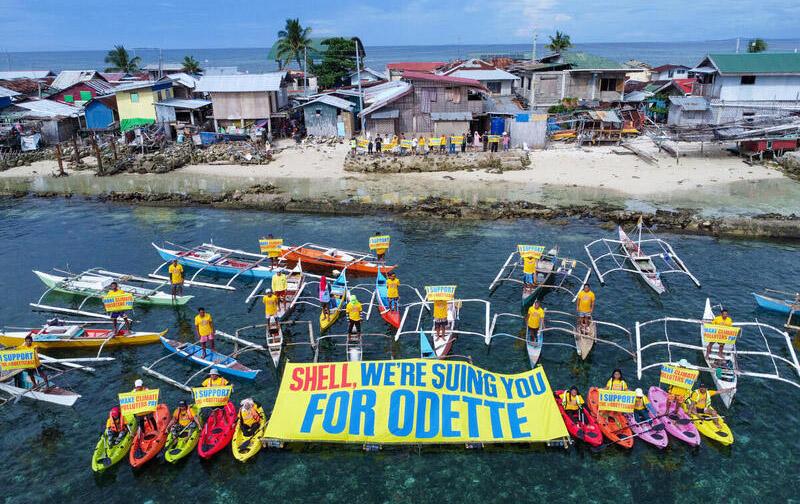
Thus, victims of severe weather phenomena continue to pursue new legal pathways and strategies, supported by increasingly persuasive science. Plaintiffs in the Philippines recently initiated a lawsuit against the oil giant Shell regarding its involvement in triggering Super Typhoon Odette, a 2021 storm that resulted in over 400 fatalities and displaced almost 800,000 people. This case partially hinges on an attribution study that found that climate change rendered extreme rainfall like that experienced in Odette twice as likely.

In general, evidence of corporate accountability—connecting a specific company’s fossil fuel operations to a specific calamity—is becoming more apparent. For instance, a study published in Nature in September successfully identified how much particular firms contributed to various heat waves of the 21st century.
A series of recent legal rulings indicate improving prospects for such lawsuits. Notably, several judgments in climate cases at the European Court of Human Rights affirmed that states have legal responsibilities to safeguard people from the impacts of climate change. And while it dismissed the case of a Peruvian farmer who took legal action against a German energy company fearing that a melting alpine glacier could obliterate his property, a German court concluded that major carbon emitters could, in principle, be deemed liable for climate-related damages associated with their emissions.
At least one lawsuit has already surfaced that might challenge that principle: numerous Pakistani farmers whose agricultural land was inundated during the extensive flooding events of 2022 have filed suit against two prominent German power and cement corporations.
Even if the lawsuit does not succeed, that would reflect a flaw in the legal framework, not the scientific rationale. Significant carbon-emitting nations and corporations bear a disproportionate burden for climate-change-driven disasters.
Affluent countries continued to promote business practices that pollute the environment, even as the perils of climate change became increasingly severe. Furthermore, oil and gas firms maintain their status as primary suppliers to a world hooked on fossil fuels. They have acted with full awareness of the enormous social, environmental, and human toll imposed by their operations while staunchly opposing any regulations that could compel them to compensate for those damages or alter their practices.
They are responsible. They were aware. In a civil society where the rule of law is vital, they should face consequences.
This article is from The Spark, MIT Technology Review’s weekly climate newsletter. To receive it in your inbox every Wednesday, sign up here.
