

Graphene is the lightest and thinnest substance known, made of a single sheet of carbon atoms arranged in a hexagonal pattern. That arrangement gives it a range of remarkable characteristics with significant potential for practical uses: batteries, supercapacitors, antennas, water purification membranes, transistors, solar cells, and touchscreens, among others. The scientists who first produced graphene in the laboratory received the 2010 Nobel Prize in Physics. Yet new research in the journal ACS Nano suggests that 19th-century inventor Thomas Edison might have inadvertently generated graphene while conducting his early incandescent bulb experiments more than a century earlier, according to a new paper published in the journal ACS Nano.
“To reproduce what Thomas Edison did, with the tools and knowledge we have now, is very exciting,” said co-author James Tour, a chemist at Rice University. “Discovering that he may have produced graphene sparks curiosity about what other insights are hidden in historical experiments. What questions would our scientific predecessors pose if they could work alongside us in today’s lab? What can we learn by reassessing their work with modern techniques?”
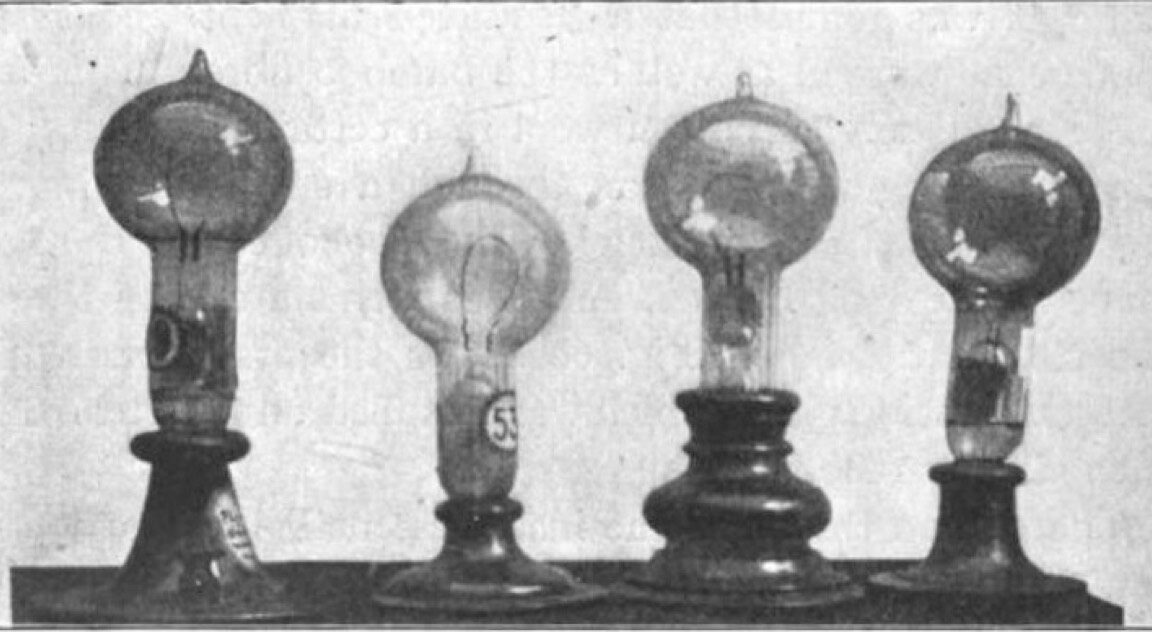
Edison did not originate the incandescent lamp idea; several earlier designs existed. However, those early versions tended to have very short lifespans and required large currents, so they were unsuitable for Edison’s aim of widespread commercialization. He tested many filament materials, beginning with carbonized cardboard and compressed lampblack. Those burned out quickly, as did filaments made from various grasses and reeds, such as hemp and palmetto. Ultimately, Edison found that carbonized bamboo produced the most durable filament, achieving lifetimes exceeding 1,200 hours on a 110-volt supply.
Lucas Eddy, Tour’s graduate student at Rice, was exploring ways to produce graphene at scale using the simplest, most accessible equipment and inexpensive, readily available materials. He evaluated approaches like arc welders and natural events such as lightning strikes on trees—both of which he acknowledged were “complete dead ends.” He concluded that Edison’s light bulb represented an ideal setup, since unlike other early bulbs, Edison’s design could reach the ~2000 °C temperatures necessary for flash Joule heating—the most effective technique for producing so-called turbostratic graphene.
