

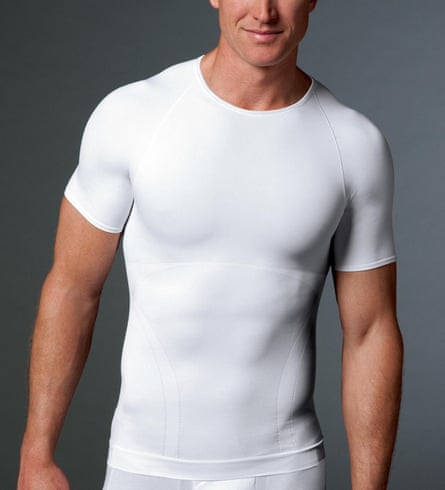
There comes a moment—mere seconds into dressing—when I feel the urge to panic. The edge of my stretchy top has rolled up around my sides before my head even emerges from the neck hole, and with my arms still trapped in the sleeves, I can’t maneuver to pull it down. I squirm helplessly for a minute, but the predicament doesn’t get any better; the band of gathered fabric is tight against my chest, unyielding. At that point, I sense the first flicker of rising dread—so reminiscent of early childhood—stemming from being ensnared in my clothing.
I’m attempting, for the first time, to don an item of shapewear designed for men—a seemingly ordinary, highly elasticated long-sleeve workout top that I hope will grant me the immediate slim silhouette of someone who frequents the gym, rather than someone who hasn’t since the pandemic began.
Ultimately, after some astonishing contortions, I am fully dressed and, shall we say, contained. In discussions where men share methods to minimize one’s silhouette using shapewear, many recommend trying this kind of top, ideally one size smaller. Had I followed that advice, I’d still be sprawled on the bedroom floor with it snagged halfway over my head.
Strictly speaking, the top I’m wearing doesn’t even fit the shapewear classification—it’s commonly referred to as “compression wear,” a stretchy sub-type of athletic apparel meant to boost performance by enhancing blood circulation to your muscles, or something. There’s scant evidence supporting this claim—a recent study found no notable performance gains in runners donning compression garments—but they can indeed be quite flattering, which likely accounts for their actual popularity. It’s certainly not due to their comfort.
Men’s shapewear has been touted as the next big trend for ages. In 2010, Marks & Spencer commenced offering Bodymax pants featuring a stretchy front panel claimed to provide subtle enhancement similar to a codpiece. That same year, shapewear titan Spanx introduced Spanx for Men.
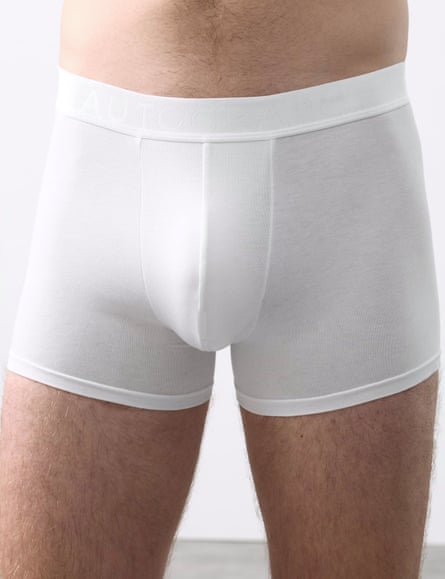
Spanx reinvigorated its line of men’s shapewear in 2021 and again in 2024, yet their current website features no male shapewear offerings whatsoever. Meanwhile, M&S has recently unveiled a fresh collection of enhancing men’s pants boasting a patented feature called Secret Support. This ends up being a front pouch reminiscent of a small bra cup, and it’s discreet enough that I wore the pants for an entire day without realizing it was present. The marketing surrounding men’s shapewear often exhibits a stifling bashfulness.
In 2023, Kim Kardashian’s line Skims—the foremost name in shapewear—launched its own men’s line, which however, included nothing fitting the traditional shapewear description. In fact, it was largely the inverse: loose-fitting trousers, baggy T-shirts, and hoodies. At that time, Kardashian informed GQ that Skims shapewear for men was forthcoming, “but we’re not commencing with that.” Nearly three years later, it’s still not available. One might be tempted to conclude that while attracting attention toward men’s shapewear is simple, selling it to men is decidedly more challenging.
“I don’t believe shapewear for men has genuinely come into existence yet,” states Zak Maoui, style director at UK Esquire magazine, albeit he doesn’t consider compression wear like my top as part of that definition.
“When I envision shapewear, I think of distinctive garments aimed at bringing contours of the body inward,” he explains. Yet he remains uncertain about what the hold-up is concerning its production for men. “I think anything that aids people in feeling better about themselves is positive.”
For now, a multitude of smaller brands exist. As per the commerce analytics entity ShelfTrend, several niche labels—including Esteem Apparel, TAILONG, and QORE Logiq—have generated seven-figure revenue streams by offering their products through Amazon, with online inquiries for “male shapewear” surging by 40% from 2024 to 2025.
The concept of male shapewear remaining a market poised for takeoff hinges largely on its vast potential for expansion. The shapewear industry itself is tremendous—a $3bn (£2.2bn) annual market that is anticipated to reach $4.3bn by 2030—with Skims projecting over $1bn in sales this year, and the company’s valuation is currently at $5bn. Yet male shapewear constituted less than 7% of the entire market in 2024.
For one UK online seller, that share has now grown to approximately 30%. “We’ve transitioned from around four years ago, when we had maybe two products in a few colors, to now having six or eight,” remarks Shane Rogers, head of creative at The London Corset Company. “We’re considering producing our own, as we can’t acquire the quantities we desire or the styles we want.” The London Corset Company imports male shapewear from various global sources, including South America, a hub for innovation in contemporary shapewear (the Colombian label Leonisa has its own men’s collection called Leo).
Fairly put, it does seem a lot of men’s shapewear still masquerades—or at least serves dual purposes—as compression wear. Projections encompassing both shapewear and compression wear suggest the market may reach $8bn by 2030, so the distinction might soon blur. According to Rogers: “Anything that constricts you essentially counts as compression.”
Regardless of the terminology, we’re discussing the same foundational technology: the extreme and sustained stretchability evident in female shapewear and male compression apparel stems from the strategic inclusion of elastane, the polyether-polyurea copolymer invented by DuPont in 1958, more commonly acknowledged as either Lycra—a brand name—or spandex, which sounds like a brand name but isn’t. If there exists a genuine differentiation between compression wear and shapewear, it likely lies in proportions: my panic-inducing compression top contains 16% elastane. A women’s Skims core sculpt waist cincher has 39%.
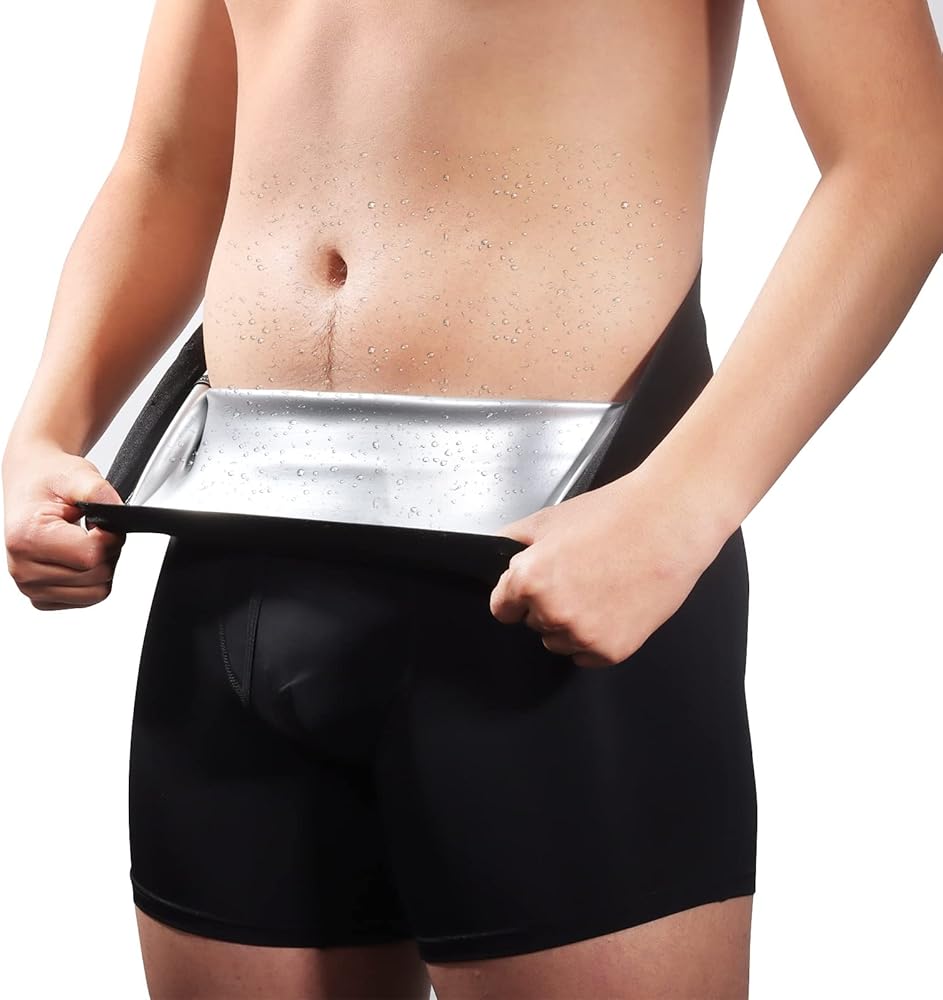
A simple search online will reveal an array of male shapewear extending beyond tight-fitting gym apparel—there are high-waisted girdles and thigh-slimming leggings. Some pants feature discreet padding in the rear, while compression tops aim to correct your posture alongside your belly. There are shirts with large biceps pre-attached, and all-in-one girdles resembling shortie wetsuits.
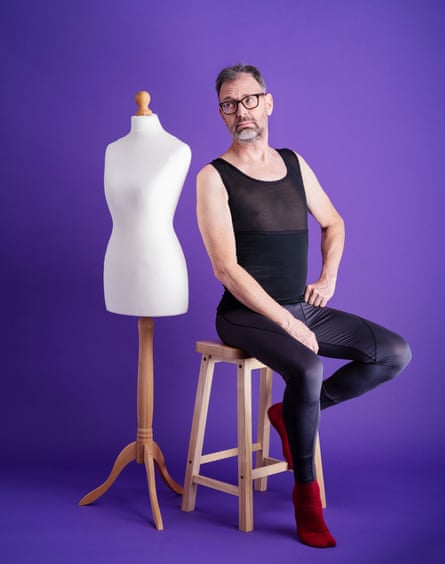
On the second morning of my shapewear experience, I try on a very snug tank top featuring an extra panel that pulls across your belly and closes with a series of hooks and eyes. Once more, the morning begins with a battle—it takes considerable time and strength to fasten all ten hooks. Once secured, I feel less sculpted than encased, akin to sausage filling in its casing. I spend the remainder of the day a bit short of breath. By 4 PM, I can no longer endure it. This might just be the nicest thing I can say about shapewear: it feels wonderful to remove it.
Shapewear for men isn’t a new concept—US brand Underworks has been providing it for nearly thirty years—in fact, the notion has existed long before elastane was developed.
“For centuries, people have donned corrective garments,” states Dr. Alun Withey, author of Technology, Self-Fashioning and Politeness in Eighteenth-Century Britain: Refined Bodies. “However, I would contend that the 18th century marks the beginning of a shift—not merely aimed at ‘curing’ deformities but rather, molding the body into a socially appealing shape.”
The ideal figure was deemed “natural,” although it bore little resemblance to the muscular physique of those living off the land.
“The body of the refined gentleman is slender—it conveys that you don’t perform manual labor,” Withey explains. “You’re delicate, which doesn’t equate to being skinny. The favored posture is that of a dancer or a fencer.” Much remains unchanged today—shapewear aims not to correct you, but to make your body conform to a fluid stereotype.
In the 18th century, one significant technological advancement in male foundational garments was steel. “One category of products involved steel backs,” Withey explains. “You’d strap it to yourself prior to putting on your shirt, and its steel plate would necessitate an upright stance.” Other devices included concealed steel collars preventing your chin from drooping. “Thus, these went beyond mere correction—they compelled you into a socially acceptable form.”
With time, adapting to my compression top is becoming a tad simpler, although I doubt I could bring myself to wear it solo—definitely not at the gym—and I’m unsure it does me any favors concealed beneath my usual attire. Regardless, I’m not certain I could ever adjust to managing my daily routine while shrink-wrapped.
While compression wear is essentially a jogging top with additional benefits, true shapewear has a wide array of specific functions: some is post-surgical; some men utilizing it to manage excess skin when exercising after significant weight loss; others employ it to minimize gynaecomastia (man breasts). Increasingly, however, it caters to men desiring a slimmer appearance, even if just for an evening.
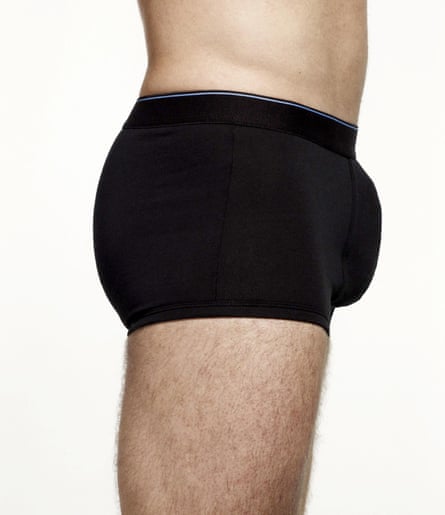
“I can’t make a 20 stone individual appear to weigh 10 stone or anything,” remarks Rogers. “However, if you’re attending a wedding and wish for your suit to look flattering—as long as your suit originally fit well—they can be effective.”
Why larger brands, including Skims, have yet to dive headfirst into this market remains somewhat enigmatic. “What insights do they possess about the men’s shapewear sector that we aren’t aware of, which is preventing them?” questions Maoui.
There may also exist a straightforward rationale for why the anticipated boom in men’s shapewear continually eludes reality.
“Nobody truly wishes to confess to wearing it, do they?” Withey observes. “If its goal is to conceal your bulging belly, admitting it is counterproductive.”
