
Absynth is considered a cult classic within the soft synth community. First introduced in 2000, it quickly garnered a following among the rising number of individuals creating music on computers. However, its last significant update, Absynth 5, was released in 2009, and Native Instruments officially phased out the instrument in 2022, citing insufficient resources to keep up with software that desperately needed updating. Now, Absynth is set for a grand revival with version six, developed in collaboration with original designer Brian Clevinger and featuring presets from Brian Eno and Kaitlyn Aurelia Smith.
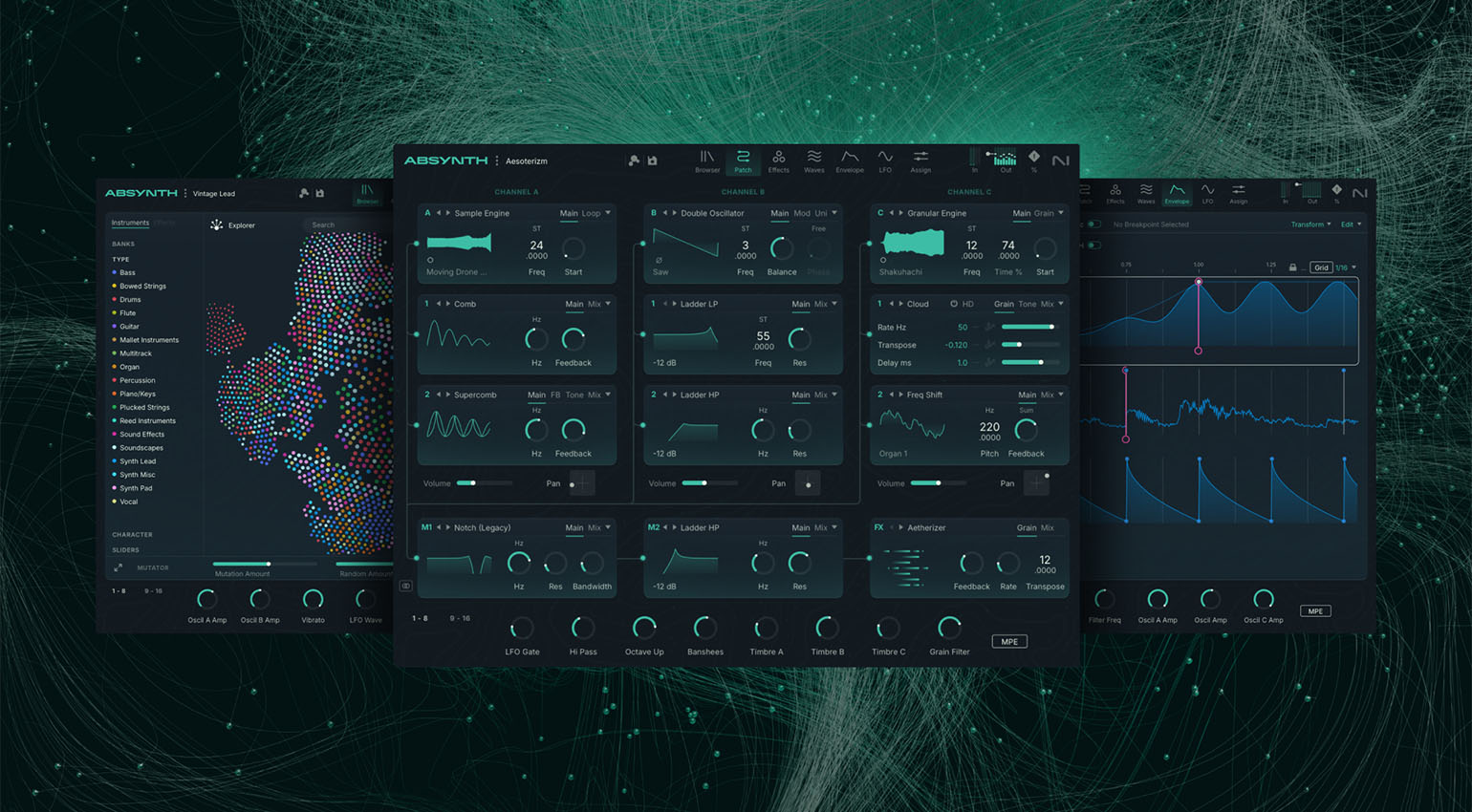
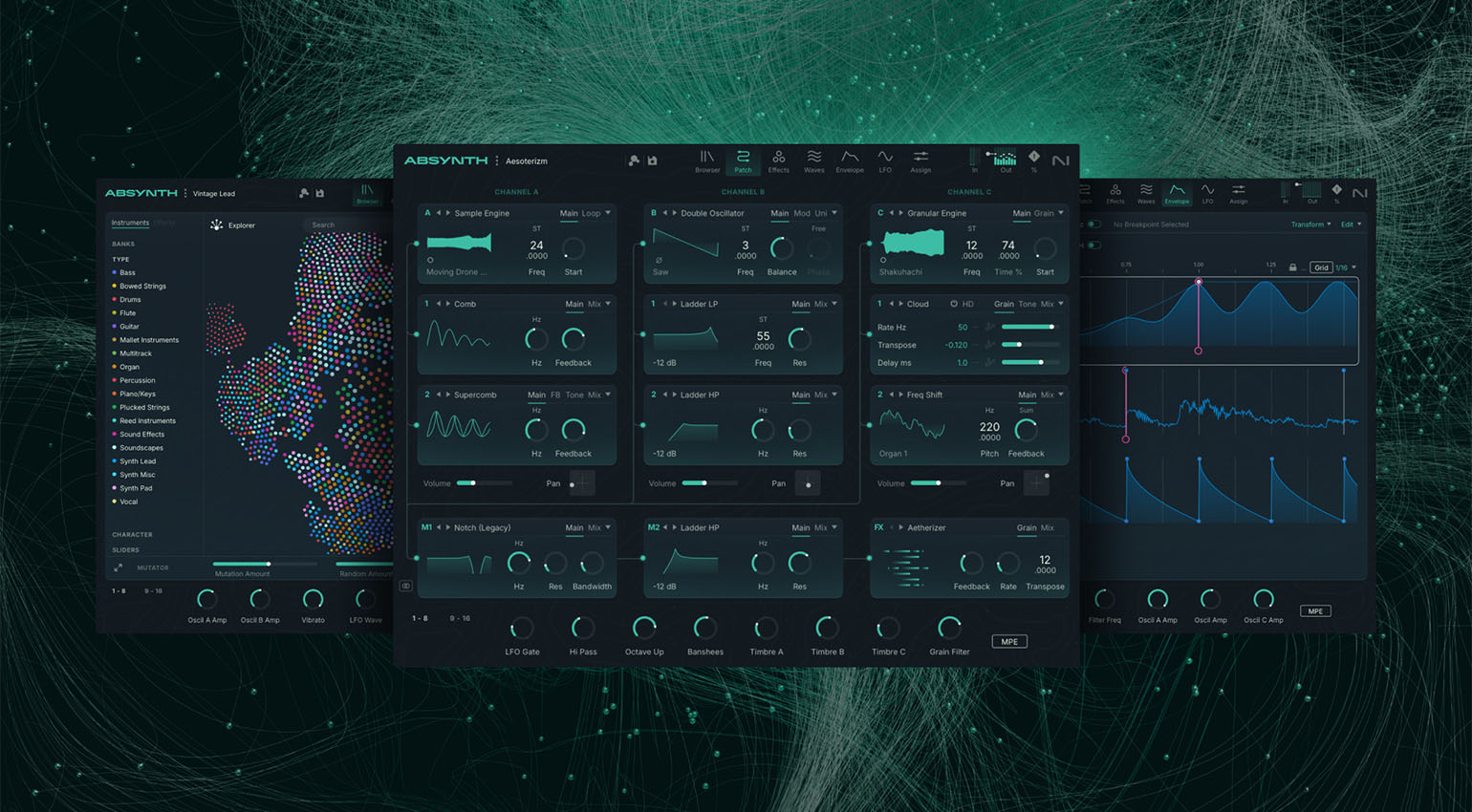
The essence of what made it so popular remains intact in Absynth 6. It continues to be a powerful semi-modular virtual instrument with a variety of synthesis engines and extensive modulation capabilities. There’s classic subtractive synthesis with a vast array of waveshapes, from basic sine waves to intricate complex chords — you can even draw your own waveform. Additional options include FM, a sample player, and a granular engine.
This positions it alongside other leading super-synths like Omnisphere, Serum, Pigments, and Massive X from Native Instruments. However, where it truly excels, even compared to those renowned plugins, is in its envelope system. Instead of the usual four-point ADSR (attack, decay, sustain, release) envelope, or even a six-point DAHDSR (delay, attack, hold, decay, sustain, release) envelope, Absynth 6 envelopes boast up to 68 points. These can be looping, single-shot, or time-synced. The modulation potential in Absynth is remarkable.
This capability contributes to its proficiency in crafting evolving soundscapes. Native Instruments promotes Absynth as being “weird by design,” and it’s hard to dispute that title. Many of the included presets lean towards the unusual, commonly utilized not in the score of a sci-fi or horror film, but rather prioritize texture and atmosphere. For those who enjoy ambient music or cinematic scoring, Absynth is a fascinating tool to incorporate into your toolkit. Enhancing its cinematic adaptability, Absynth 6 supports up to eight-channel surround sound, a rare feature.
Another new feature in version 6 of Absynth is MPE support, which enhances its already intricate sounds by providing more expressive options. By pressing harder or sliding your finger on a compatible controller, such as the Push 3 or Roli Seaboard, users can manipulate a filter, introduce a new oscillator, or adjust the feedback on the Aetherizer granular effect for each note individually. This allows for highlights on specific notes in a chord progression while keeping the root note subdued.
The most visible update to Absynth is the newly integrated AI-assisted preset explorer. Instead of presenting a simple list of sounds to navigate, Absynth now defaults to a collection of points arranged roughly by mood. It bears resemblance to Obsidian’s graph view or the XO sample manager. Personally, I’m not particularly fond of this approach. It’s adequate for discovering surprising sounds among the over 2,000 presets available, but it complicates tracking what I’ve previewed and what is new to me.
If you wish to modify a preset swiftly without delving into the various sound design tabs, patches offer up to eight macro controls, alongside a Mutate button that makes random minor adjustments to the current sound, creating a fresh variation.
Absynth 6 is offered at a price of $199 for new users. However, if you are already a user of Absynth 5, you can upgrade for just $99.
