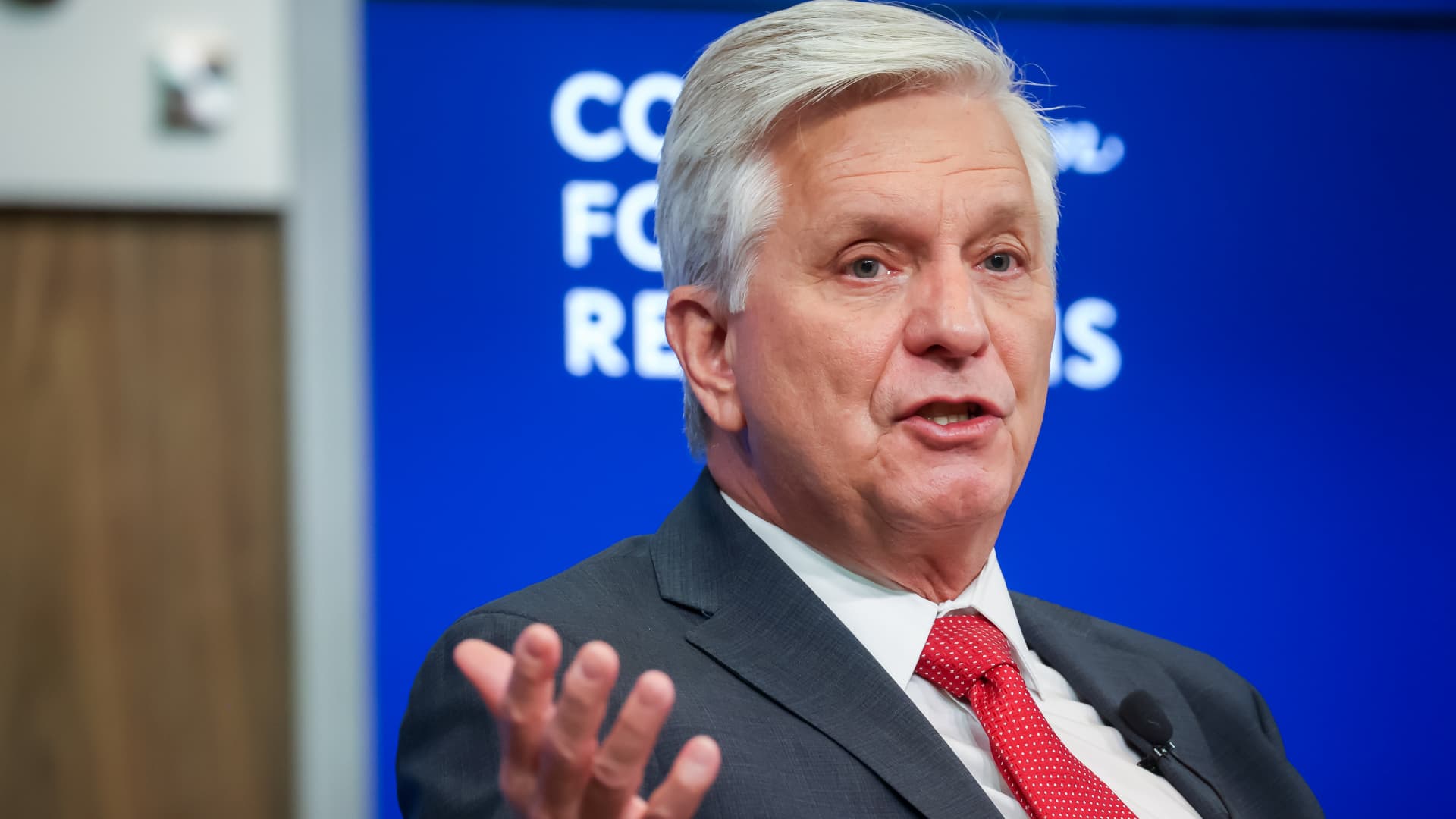

On Friday, Federal Reserve Governor Christopher Waller indicated that existing economic circumstances are making interest rate decisions more complex, as policymakers confront a potentially enduring inflation shock alongside a labor market that is stable but showing no job growth.
In light of this scenario, Waller mentioned that the Fed might need to maintain its current stance for an extended timeframe until the economic trajectory becomes more discernible.
“Navigating high inflation and a sluggish labor market could pose significant challenges for decision-makers,” the central banker remarked during a speech in Alabama. “Should I encounter such circumstances, I would need to weigh the risks associated with both aspects of the Fed’s dual mandate to ascertain the correct policy path, which might entail keeping the policy rate within the existing target range if inflation risks overshadow those related to the labor market.”
The speech arrives as markets anticipate that the Fed will remain steady this year amidst a murky economic forecast.
For Waller, this speech represented a shift from his earlier evaluation of the labor market. In prior months, he voiced worries regarding low hiring rates, but stated on Friday that indicators are emerging suggesting the break-even rate—where hiring levels sustain the unemployment rate—could be nearly zero.
Waller had previously advocated for reducing interest rates but participated in a March vote to hold the federal funds rate within a band of 3.5%-3.75%.
Nevertheless, he expressed ongoing concerns regarding the labor market.
“I perceive that employers are balancing precariously between their previous difficulties in sourcing qualified candidates and their perceptions of economic trends, making them susceptible to potential economic shocks that could lead to significant job cuts,” he noted.
Regarding inflation—the other facet of the Fed’s dual mandate—Waller conveyed that he is less optimistic compared to some other policymakers and analysts who view the impact of the Iran conflict as short-lived.
“Considering the duration of these disruptions, coupled with this economic shock following the price increases from import tariffs, I believe there is a chance that this series of price fluctuations might result in a more persistent rise in inflation, much like the series of shocks we experienced during the pandemic,” he remarked.