
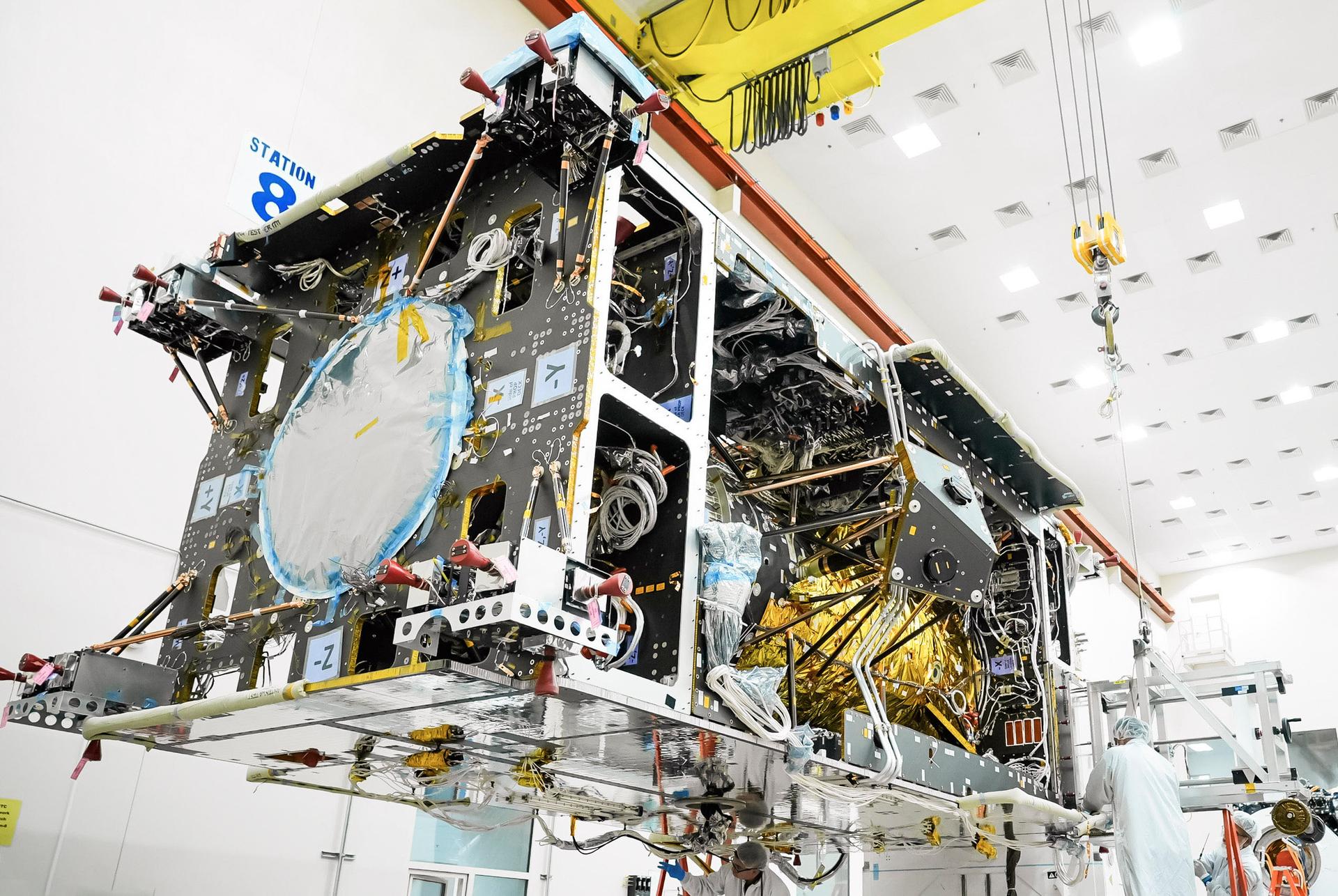
Beyond improved efficiency, a nuclear-electric propulsion arrangement also benefits from using conventional plasma thrusters. Rather than relying on solar panels to power the thrusters’ xenon propellant, SR-1 will draw electricity from an onboard nuclear reactor.
“Our SR-1 nuclear program isn’t about going out and lobbying for billions to fund an entirely new mission,” Isaacman said. “Frankly, after roughly $20 billion in failed programs over time, we haven’t earned the right to do that. That’s why we’re leveraging hardware we already have—a reactor that’s largely built and fuel that’s mostly paid for over time.”
Credit:
Lanteris Space Systems
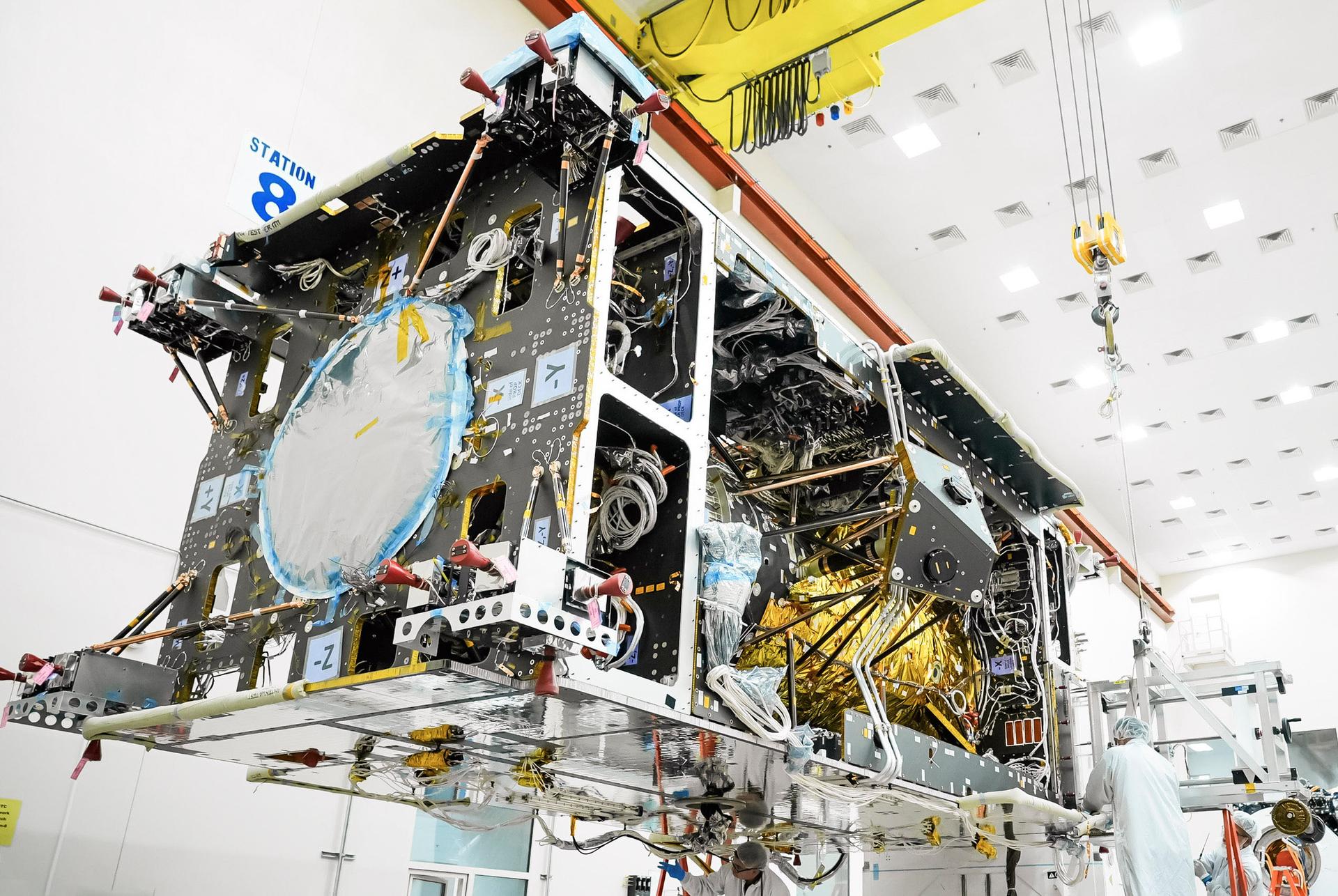
Gateway’s Power and Propulsion Element, pictured under construction last year, will serve as the focal point of the SR-1 Freedom mission.
Credit:
Lanteris Space Systems
NASA officials did not reveal an estimated cost for the SR-1 mission.
“Once you demonstrate that nuclear propulsion works, then you can come back and perhaps request more [funding] down the line when you’ve shown it can be done,” Isaacman said.
“SR-1 Freedom mostly introduces a single new component, the reactor, onto a spacecraft bus that already exists,” Sinacore said. “The schedule must align with the next Mars launch window in December 2028. Orbital mechanics won’t negotiate, so the project’s scope has to conform to that deadline.”
Significant obstacles remain. Preparing any large space mission—particularly a novel nuclear propulsion demonstration—for launch in under three years will demand intense focus, resistance to mission creep, and near‑flawless execution. Sinacore outlined an aggressive timeline for SR-1, with mission design finished by June and large‑scale assembly beginning at the start of 2028. If the mission misses the late‑2028 launch opportunity, the next Earth‑Mars alignment won’t occur until early 2031.
“We’re not attempting to do everything,” Sinacore said. “We’re aiming to tackle the difficult task: operating a coupled nuclear reactor, power‑conversion system, and electric propulsion thruster assembly beyond Earth orbit for the first time.”
Although NASA will serve as the “prime integrator” for SR-1, launching radioactive fuel into space requires coordination with multiple federal agencies, including the Department of Energy. Any rocket chosen to carry a nuclear‑powered payload must receive special certification. SpaceX’s Falcon Heavy, which NASA originally contracted to launch the Gateway core module, is undergoing a nuclear certification to launch NASA’s Dragonfly mission to Saturn’s moon Titan.