
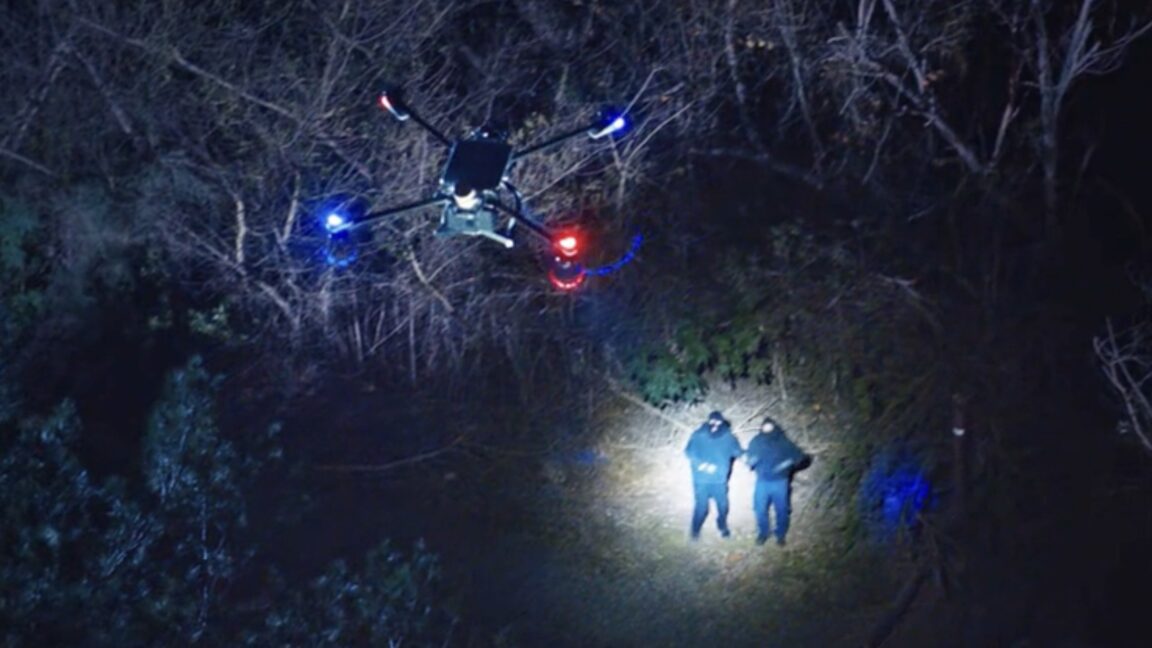
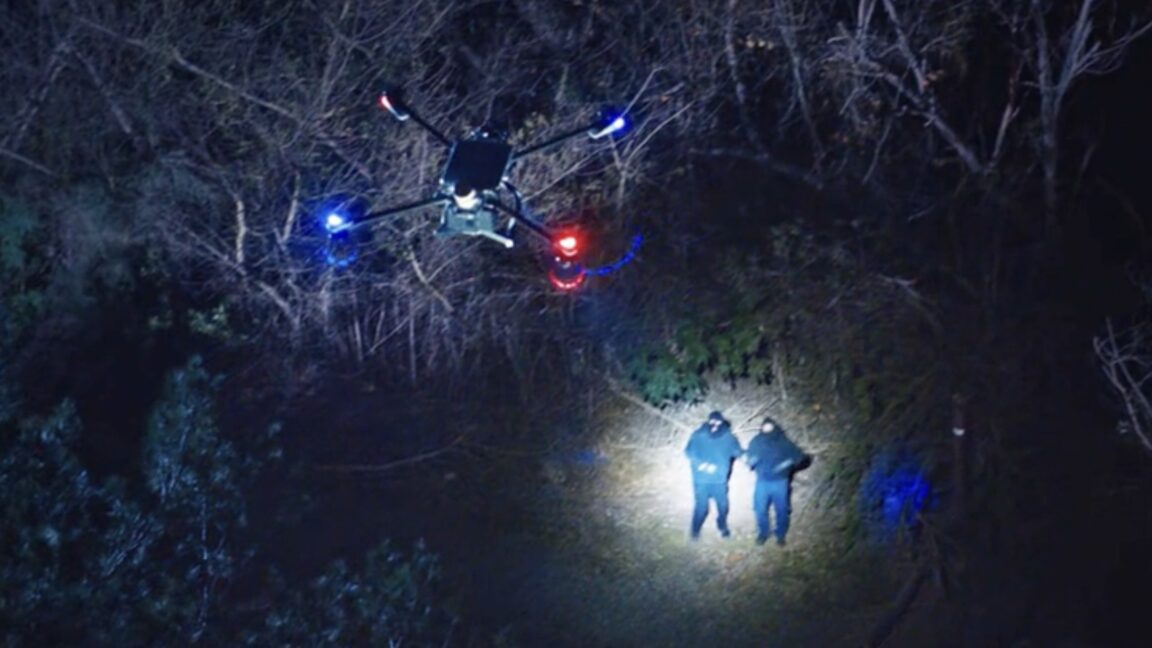
“If Guardian emitted a siren tuned to the speaker’s resonant frequency while a police car played the same tone beside it, Guardian would register about three times the loudness,” he said.
Seattle-founded BRINC manufactures drones that are now deployed in more than 900 U.S. municipalities — from Laredo, Texas, to Chattanooga, Tennessee — as components of the expanding “drone as first responder” (DFR) programs.
Typically, cities pay a few hundred thousand dollars annually for each drone—while deals can climb into the millions when jurisdictions buy more aircraft or add features. A year ago, Newport Beach, California, revealed a $2.17 million, five-year agreement with BRINC to acquire seven drones. (Per Forbes, BRINC was estimated to be worth roughly $480 million last year.)
An existing client, the Redmond Police Department in Washington state, told Ars that the new model represents a “completely new and different airframe.”
“This is a major advance in DFR innovation and potential,” Jill Green, a police spokesperson, wrote by email.
However, veteran drone observer and analyst Faine Greenwood was less impressed.
“Even if those assertions hold up (which I’m skeptical of currently), the gains in speed and battery life are only incremental compared with similar drone platforms,” Greenwood told Ars via email. “This isn’t a game-changer, and I don’t think it will alter the decision-making for police departments still wavering over drone adoption.”
