
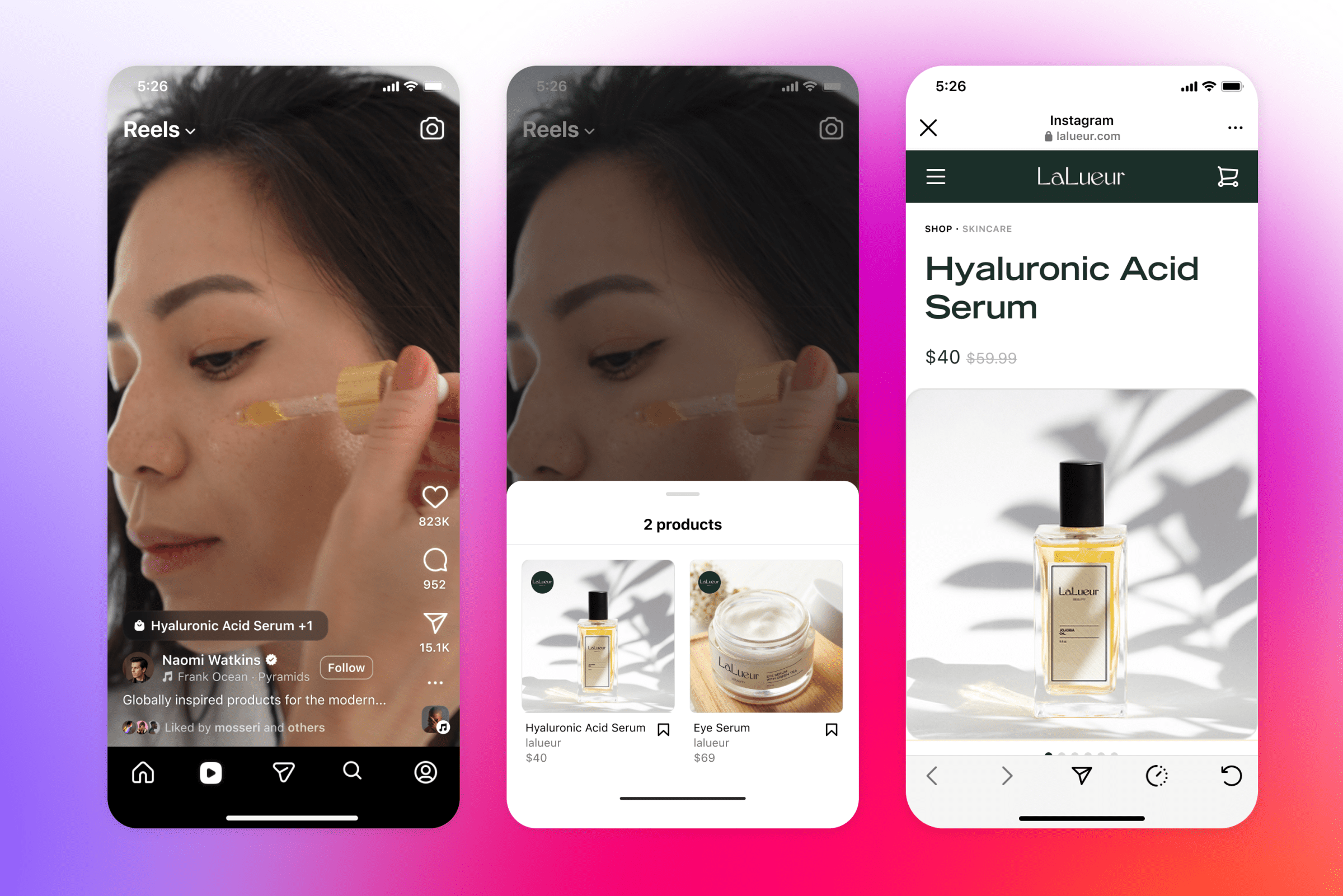
Content creators will have the capability to link products directly within their posts, akin to how TikTok Shop links are incorporated.
Content creators will have the capability to link products directly within their posts, akin to how TikTok Shop links are incorporated.


Shopping links will soon be integrated into posts on Instagram and Facebook, effectively eliminating the need for third-party “link in bio” services. Meta revealed on Tuesday that it is introducing commerce capabilities on both platforms, though the features will vary slightly for each.
Content creators on Facebook will have the option to link their affiliate accounts with brands and tag products in Reels and images. Normally, when an influencer wishes to direct their audience to their affiliate link, they need to comment on a post with a link to the item or guide viewers to an affiliate site like ShopMy or LTK. Now, chosen products will attach directly to content as a clickable floating bubble for viewers. Initially, affiliate partners will be restricted: In the US, the initiative will commence with Amazon, with Temu and eBay to be incorporated in the upcoming months.
On Instagram, creators will have the ability to include up to 30 shoppable items within a single Reel. Unlike Facebook, there will be no restrictions on products: Influencers can directly copy and paste their affiliate links for specific items. The only requirement is that linked products need to be registered with Meta within brands’ commerce catalogs.
These new features will be beneficial for those earning income from affiliate marketing. For others, the platforms may increasingly resemble a shopping mall. The integrated affiliate content mirrors how TikTok Shop operates, offering easily accessible links for products like tank tops and camera mounts appearing throughout videos.
The launch of shopping features follows a recent incident where influencers noticed Instagram adding shopping links to their content without authorization. The “Shop the look” function included links to inexpensive imitation products instead of the original items, as noted by an influencer who stumbled upon the feature. At that time, Meta indicated it was a limited trial and that the company was “considering various modifications” to the feature.
