
A Walmart ads vehicle
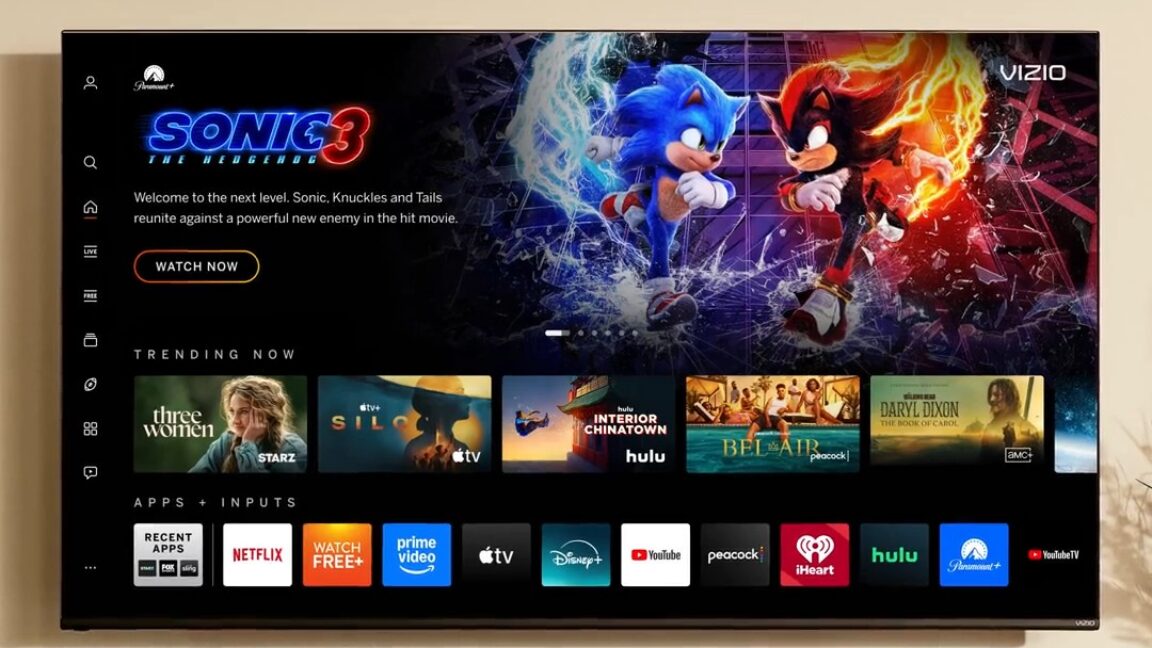
This week’s news indicates Walmart is moving to fold Vizio more tightly into its operations and to exploit Vizio OS’s advertising and tracking tools more aggressively to grow its $6.4 billion ads business. In Vizio’s final quarter as an independent company, its ad division reported a gross profit of $115.8 million while its hardware arm lost $6.7 million. Walmart doesn’t separately disclose Vizio’s results, but on a February investor call John David Rainey, CFO and EVP of Walmart, noted that Vizio “saw triple-digit growth in advertising” during Walmart’s fiscal Q4 2026.
Although Vizio OS has required a Vizio account since mid-2024 (before Walmart’s purchase), having an account linked to a retail conglomerate brings clearer and broader implications for TVs being used to nudge viewers toward purchases—especially those sold by Walmart. People who tolerated creating an account with an ad-focused TV maker may balk at signing up through Walmart.
Walmart’s announcement said the new, streamlined login makes setup easier while creating a secure identity framework across devices, tying streaming engagement directly to retail interaction.
As part of turning Vizio sets further into a Walmart advertising channel, the company said this week that Vizio OS will run ads for beauty giant L’Oréal that lead to Walmart’s and other retailers’ product pages.
For years, Vizio has shifted from a competitively priced TV maker into a business centered on advertising. More than a year after acquiring Vizio, Walmart appears ready to push the brand fully over that line, if it hasn’t already.
Ads and tracking are now nearly ubiquitous on budget TVs and are increasingly showing up in higher-end models, making the hard-to-find dumb TV and other non-tracked alternatives more appealing.