
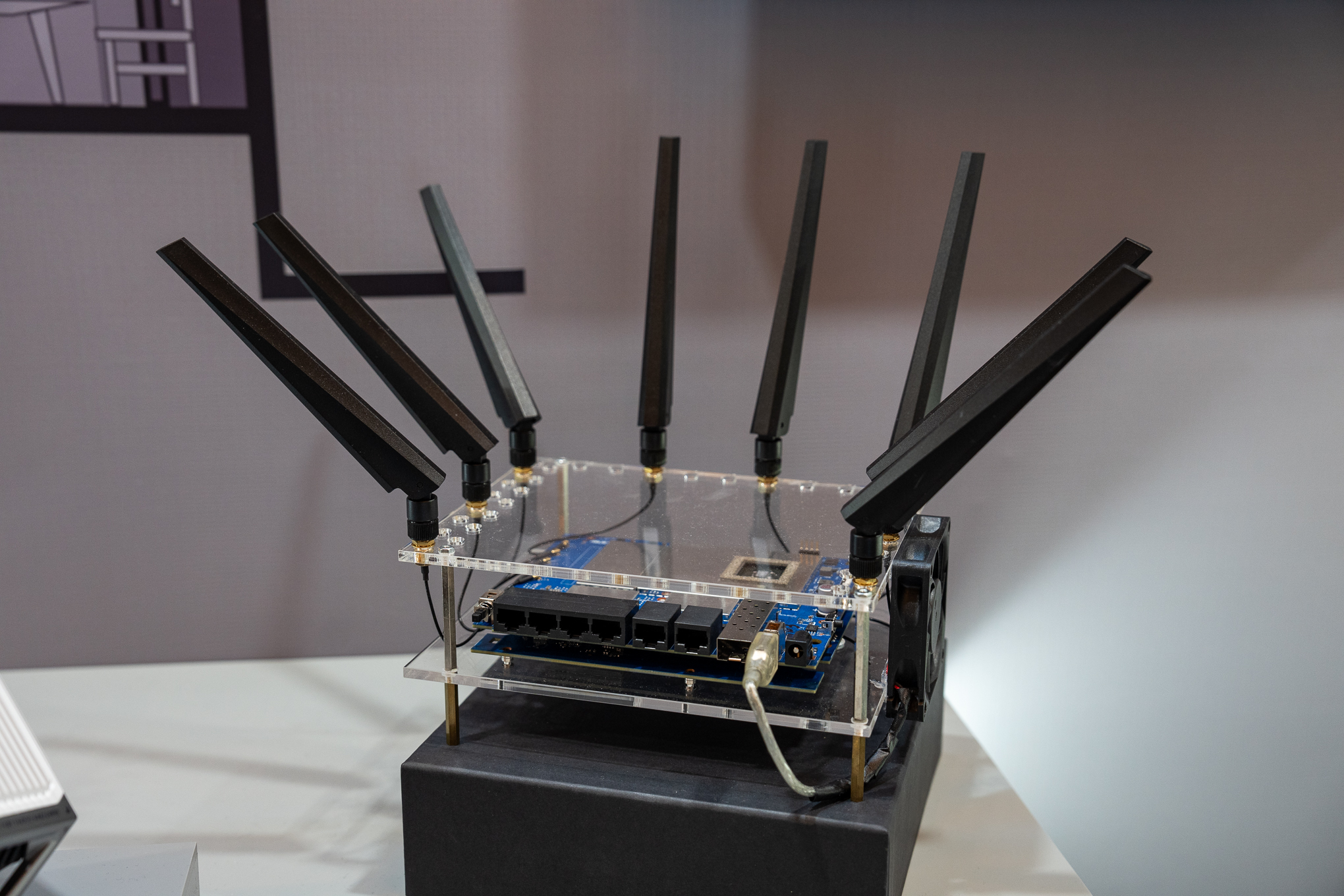
The US asserts that routers produced abroad present national security threats.
The US asserts that routers produced abroad present national security threats.


In December, the Federal Communications Commission prohibited the importation of all drones manufactured in foreign nations into the United States, pending an exemption for the manufacturer. The FCC has now applied the same rule to consumer networking devices, stating there is “an unacceptable risk to the national security of the United States and to the safety of U.S. individuals.”
If you currently have a Wi-Fi or wired router, you are permitted to continue using it — and firms that have previously received FCC radio approvals for specific foreign products are allowed to keep importing those items.
However, given that the vast majority — if not all — consumer routers are produced outside the U.S., most future consumer routers are now banned. By including all foreign-manufactured consumer routers in its Covered List, the FCC indicates it will no longer authorize their radios, effectively stopping new devices from being imported into the nation.
Now, router manufacturers are required to A) obtain a “conditional approval” that allows them to continue getting new products cleared for entry into the US while they attempt to persuade the government to restart manufacturing on American soil, or B) opt not to sell future products in the US, as drone manufacturer DJI has already done.
Similar to the ban on foreign drones, the FCC has a National Security Determination that it says supports these actions, asserting that “Allowing routers manufactured abroad to prevail in the U.S. marketplace leads to unacceptable economic, national security, and cybersecurity threats,” and claiming that “routers produced abroad were directly involved in the Volt, Flax, and Salt Typhoon cyberattacks which targeted key American communications, energy, transportation, and water infrastructure.”
“Considering the importance of routers to the effective operation of our nation’s economy and military defense, the United States can no longer rely on foreign countries for router production,” states another section.
It is a fact that numerous router vulnerabilities have been revealed over time, making them a prime target for cybercriminals and botnet attacks. Additionally, it is true that one China-origin company, TP-Link, leads the consumer market in the US; US officials previously contemplated a specific ban on TP-Link due to its market dominance and associated national security issues. (TP-Link has been working to separate its image from China, distancing itself from the Chinese entity in 2022, establishing a global headquarters in California in 2024, and suing Netgear in 2025 for suggesting that TP-Link had been compromised by the Chinese government.)
It remains unclear how simply relocating router production within the US would enhance their safety. In the Volt Typhoon incident, hackers sponsored by the Chinese state primarily targeted Cisco and Netgear routers, designed by American firms, according to the Department of Justice. They were at risk because those American corporations had ceased providing security updates for the particular routers targeted, which had been phased out by those companies.
While the FCC’s Covered List implies that the US is banning all “routers produced in a foreign country,” it’s actually defined more specifically. It is distinctly prohibiting “consumer-grade routers” as described in NIST Internal Report 8425A, referring to devices “meant for household use and can be installed by the consumer.”
“Nearly all routers are produced outside the United States, including those made by U.S.-based firms such as TP-Link, which manufactures its products in Vietnam,” states part of a response from TP-Link through third-party representative Ricca Silverio. “It seems that the total router industry will be affected by the FCC’s announcement regarding new devices not previously authorized by the FCC.”
Update, March 23rd: Clarified TP-Link’s distancing from China, and appended company statement.