

The U.S. Attorney’s Office for the Southern District of New York has filed charges against associates of an undisclosed U.S. server manufacturer for the unlawful diversion of billions in Nvidia-powered servers to China.
The U.S. government has been investigating how high-performance chips have reached China without proper authorization, as American AI firms like Anthropic and OpenAI encounter competition from DeepSeek and other Chinese companies.
In a newly unsealed indictment, the U.S. government accused Yih-Shyan “Wally” Liaw, Ruei-Tsan “Steven” Chang, and Ting-Wei “Willy” Sun of collaborating to breach the Export Control Reform Act.
The products of the server company that contain Nvidia chips “are subject to strict U.S. export regulations prohibiting their sale to China without a license,” stated the claim in the indictment. “Such regulations are enforced to safeguard U.S. national security and foreign policy objectives, among other reasons.”
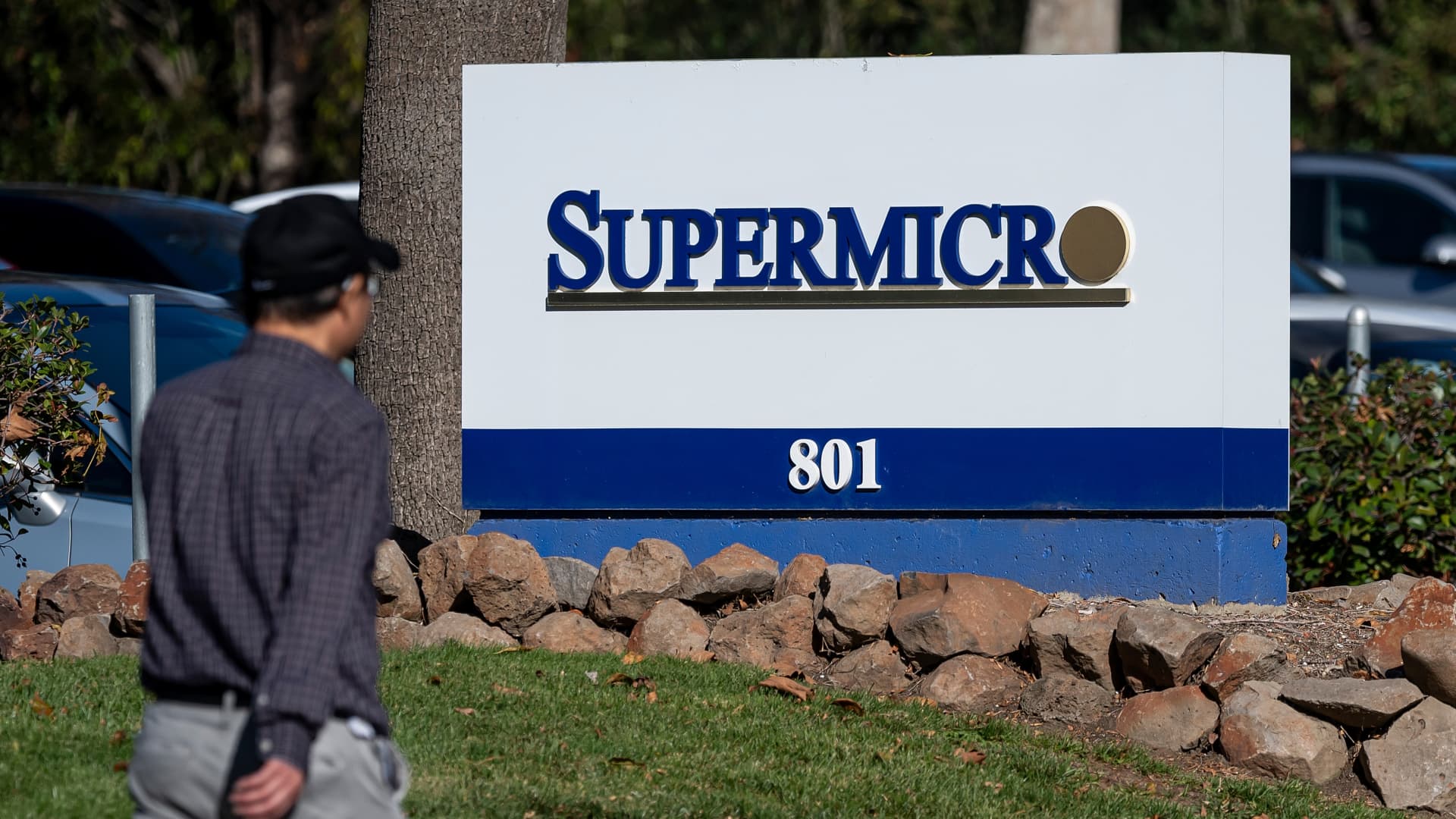
Liaw is a co-founder of server manufacturer Super Micro Computer and serves on its board of directors. He oversees $464 million worth of Super Micro shares, as per FactSet. He did not answer a request for comment.
Super Micro’s stock plummeted by 12% in after-hours trading following the indictment’s release by a federal court.
The company stated that while it is not named as a defendant, Liaw is a senior vice president of business development, Chang serves as a sales manager in Taiwan, and Sun is a contractor. The company has put these employees on leave and severed ties with the contractor.
“The actions of these individuals outlined in the indictment violate the Company’s policies and compliance protocols, including attempts to bypass relevant export control laws and regulations,” said a statement. “Supermicro upholds a strong compliance program and is dedicated to fully adhering to all relevant U.S. export and re-export laws and regulations.”
A Southeast Asian entity, acting as an intermediary, fabricated documents to create the impression of legitimate server use and had a different logistics company repackage the servers for concealment before shipment to China, according to the indictment.
The accused allegedly misled the server manufacturer’s compliance team with “dummy” servers at the Southeast Asian company’s storage locations while the genuine servers had already been sent to China and pressured the compliance team into endorsing shipments, as detailed in the indictment. The defendants also purportedly utilized “dummy” servers during a visit from a U.S. export control official.
These activities reportedly resulted in about $2.5 billion in revenue for the server producer since 2024, with $510 million sold to the Southeast Asian company and subsequently to China between April and May of 2025, according to the claims. The plaintiff asserted that the manufacturer lacked a U.S. Commerce Department license to export servers equipped with Nvidia GPUs to China.
Chang worked on preventing auditors from examining sections of data centers where the Southeast Asian company supposedly stored the servers that had actually been sent to China, and arranged for an auditor deemed “friendly” to conduct the review, as stated in the indictment. In 2024, Super Micro announced that its auditor, Ernst & Young, had resigned, and subsequently appointed BDO as a new auditor.
Nvidia’s graphics cards have been highly sought worldwide for training generative AI systems.
Initially, U.S. President Donald Trump aimed to block China from obtaining these processors. However, in December, he mentioned informing China’s President Xi Jinping that the U.S. would allow Nvidia to ship H200 GPUs to China “under conditions that maintain substantial National Security.” Earlier this week, Nvidia CEO Jensen Huang stated that the chipmaker is resuming production to meet H200 orders from China.
Last summer, Nvidia obtained licenses to ship the H20 chip to China, with Huang agreeing to allocate 15% of its sales in China to the U.S.
Prosecutors accused Liaw of advocating for the Southeast Asian firm to acquire a more advanced chip, the B200 based on Nvidia’s Blackwell architecture, in late 2024.
“Approximately how many can you receive by January? February? March? April?” Liaw communicated via text to an executive at the Southeast Asian company. “A simple forecast will suffice … . Then we can propose to [Nvidia] in a manner they can accept … . This remains the only way for [Nvidia] to guarantee the B200 allocation to the best of my knowledge.”
In 2025, Liaw provided the executive with a link to a White House announcement concerning an export rule for AI products that was to be implemented later in the year, indicating that the rate of shipments must ramp up prior to the effective date, according to the indictment.
When a broker, having purchased Nvidia-powered servers from the Southeast Asian firm, sent Liaw a text containing a link to a news piece about Chinese nationals being apprehended for smuggling AI chips into China, Liaw reportedly replied with crying emojis.
“Offenses involving sensitive technology necessitate prompt action,” Jay Clayton, the U.S. Attorney for the Southern District of New York appointed by Trump and former chairman of the Securities and Exchange Commission, was quoted as stating in a statement. “Otherwise, the law becomes devoid of meaning.” Liaw and Sun were arrested on Thursday, while Chang remains at large, according to the attorney’s office.