
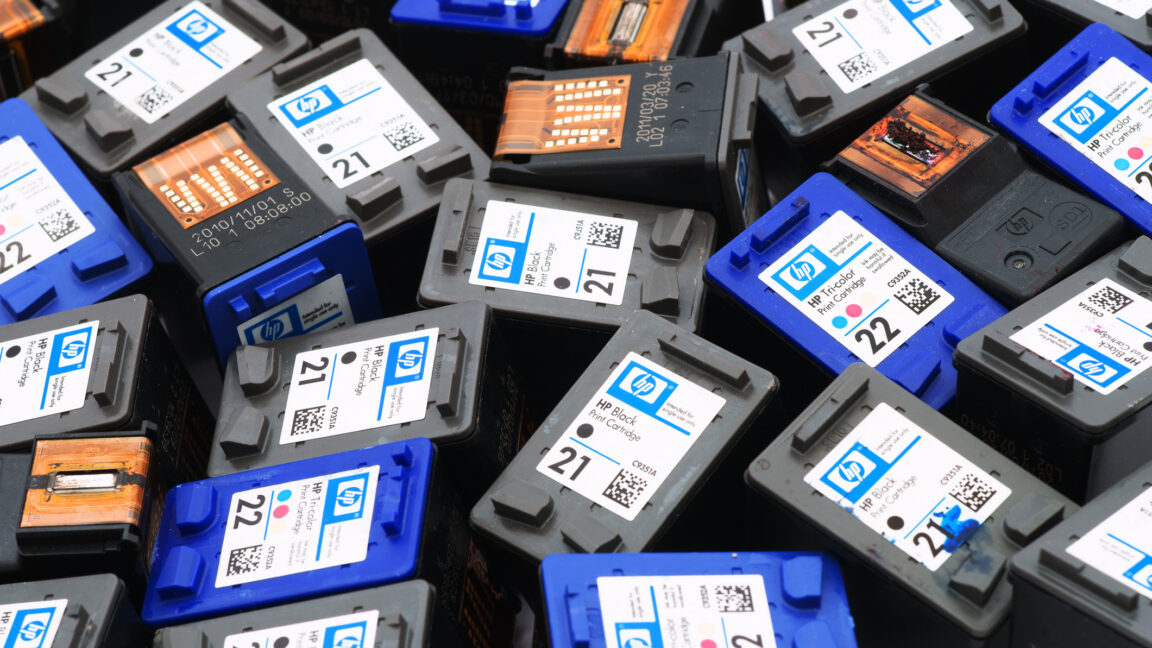
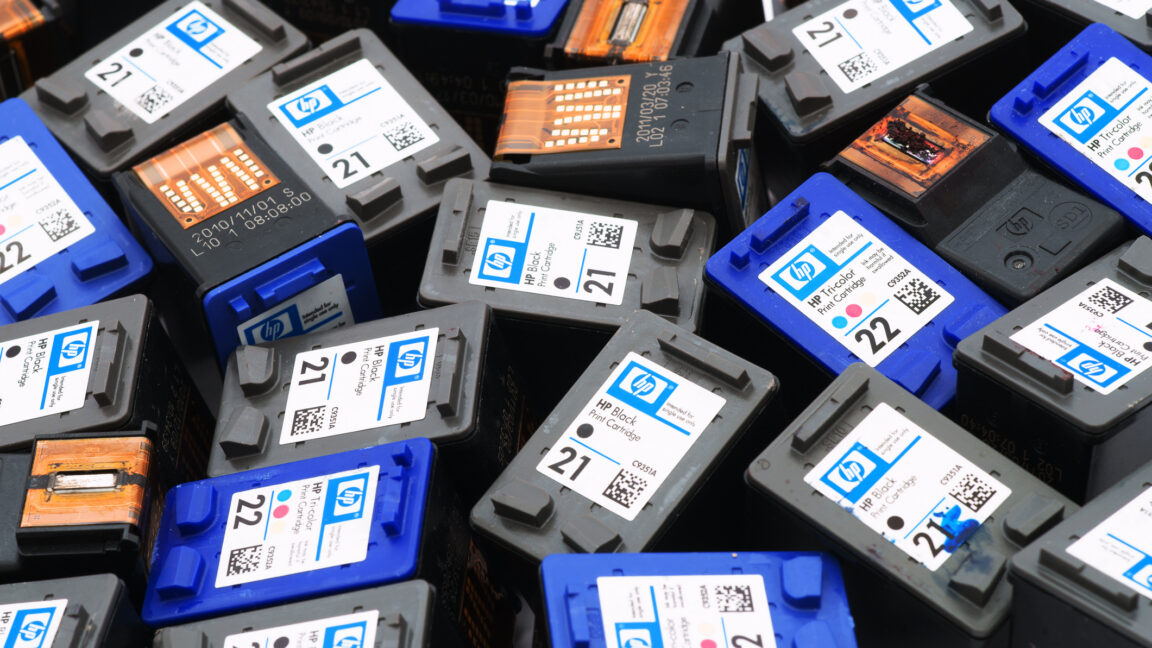
The third approach would require makers to offer remanufactured cartridges to buyers — for at least registered products — through channels like the manufacturer’s website, whether those cartridges carry the manufacturer’s branding or that of a third party.
At the time of writing, 38,291 devices remain listed in the EPEAT 1.0 registry. Only 163 products are recorded under EPEAT 2.0, and none of those are printers. That highlights how recent the EPEAT 2.0 registry is and suggests the GEC is likely still adding devices, including printers.
Even so, the Int’l ITC doubts HP will comply with EPEAT 2.0’s standards, noting that “HP released firmware 2602A/B on January 29, 2026 across eleven printer models,” the trade group said in a press release last week. (Some of the firmware updates — including those for the nearly 9-year-old OfficeJet Pro 7720) appear to have been issued in February.)
“HP’s recent behavior is emblematic of a larger pattern,” the Int’l ITC’s release stated. “HP presents itself as a sustainability and circular-economy leader, yet rather than proactively meeting top environmental benchmarks like EPEAT 2.0, HP prioritizes profits and only changes course under external pressure or the risk of non-compliance.”
In an email exchange with Ars Technica, Tricia Judge, the Int’l ITC’s executive director and general counsel, noted that HP’s firmware rollouts came after the EPEAT 2.0 registry launched. She described why the Int’l ITC singled out HP rather than other printer makers:
HP is unique in deploying lockout chips activated by firmware “upgrades” that are defended as “security” measures. HP is the only company that misleads and inconveniences its own customers by blocking more environmentally friendly competitors. Other firms have tried different tactics in the past to gain an edge, but they have not engaged in this specific behavior.
In 2023, the Int’l ITC sent a letter to the GEC asking it to remove at least 101 HP printers from the original EPEAT registry, largely over Dynamic Security. The GEC declined that request.
“EPEAT 1.0 was fairly rudimentary (it prohibited interference with the use of remanufactured cartridges), and HP argued that its disclosures (buried in marketing materials or on its website) meant it did not interfere — a loophole the GEC accepted,” Judge said. “We aimed to close that gap with EPEAT 2.0. It’s not as watertight as we wanted, but it is an improvement.”
HP didn’t respond to Ars Technica’s request for comment for this story.
