
Likewise, after an unintended flooding incident in the lab, scientists recorded an exceptionally prolonged multiday torpor in a golden spiny mouse, its body temperature falling to about 75°F (24°C).
Geiser says this greater flexibility in using torpor allows heterotherms to ride out catastrophic events. By contrast, homeothermic species can’t simply cut back their need for food and water and may be unable to endure prolonged adverse conditions.
“Perhaps there’s no food, perhaps no water, perhaps it’s very warm,” says ecophysiologist Julia Nowack of Liverpool John Moores University in England, a coauthor on the sugar glider study. Torpor, particularly in tropical regions, has “many different triggers.”
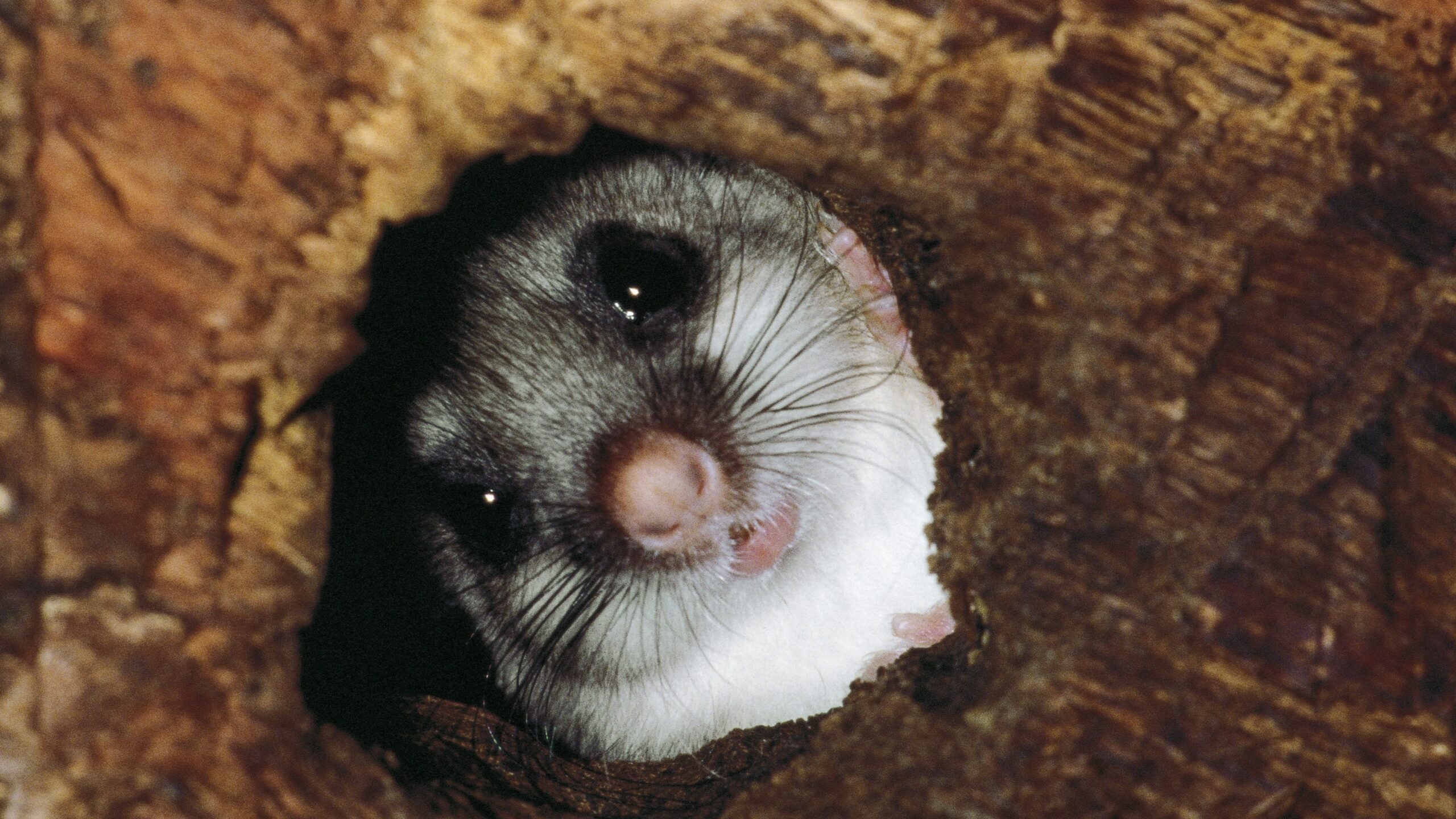
Different kinds of threats, such as predators, can also lead animals to lie low. The (aptly named) edible dormouse, for example, will sometimes enter extended periods of torpor in early summer. At first researchers were puzzled—why sleep through summer when temperatures are mild and food is plentiful, especially if it means missing opportunities to reproduce?
After examining years of data gathered by multiple teams, two researchers concluded that because spring and early summer are peak activity times for owls, these small, easily eaten animals were likely choosing to be torpid at night, safely concealed in underground burrows to avoid becoming prey. In a similar strategy to evade nocturnal predators, Fjelldal’s bats modify their torpor use slightly with the lunar phase, remaining torpid longer as the moon brightens and they grow easier to detect.
The fat-tailed dunnart, a mouse-like carnivorous marsupial native to Australia, is another species that stays subdued when predation risk increases. In one study, researchers placed dunnarts in two enclosure types: some with abundant ground cover created by plastic sheeting to simulate predator-protected habitat, and others with little cover to simulate higher predation risk. In the higher-risk enclosures, the animals foraged less and their body temperatures became more variable.