
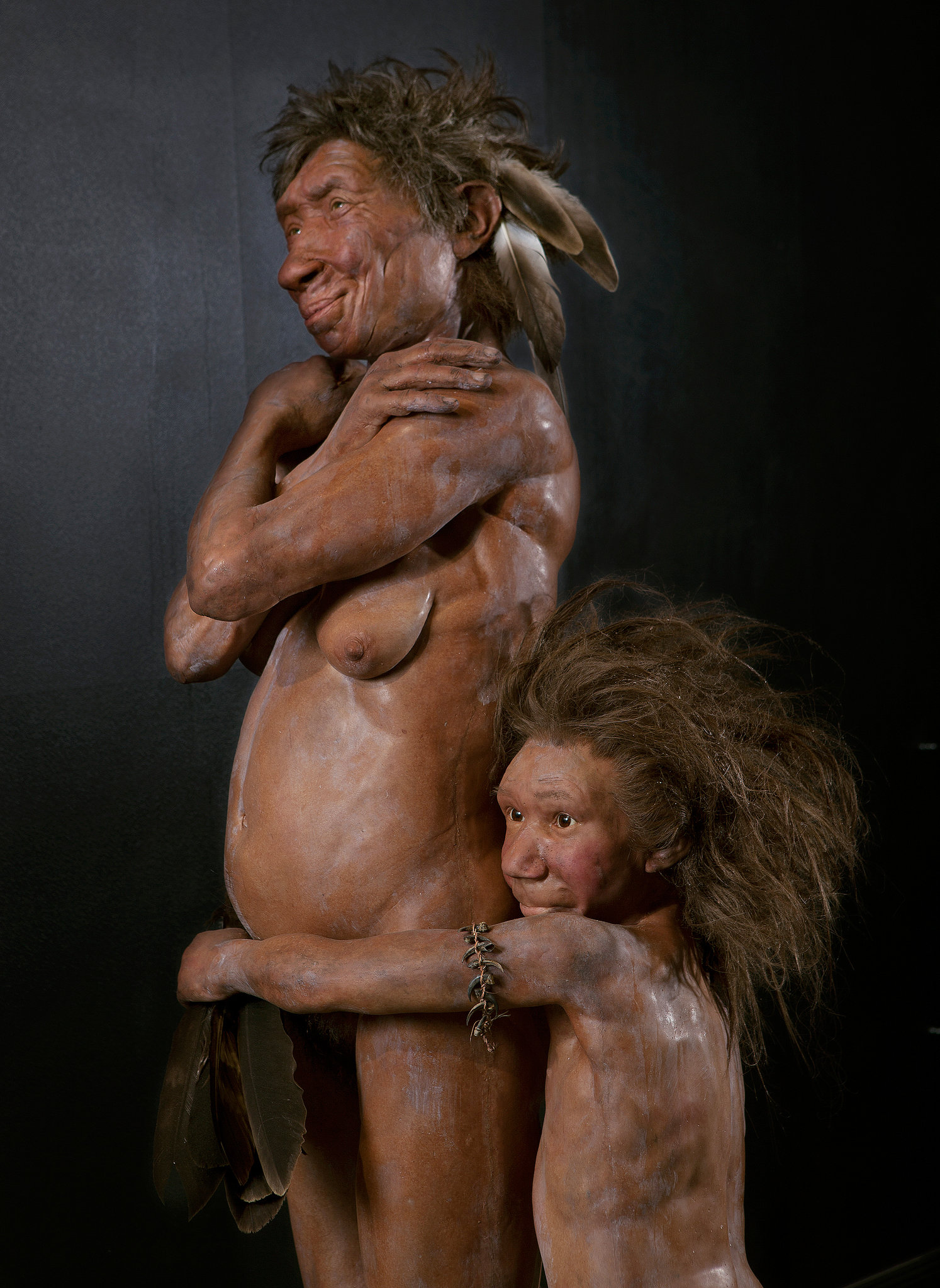

It’s now well established that as modern humans moved out of Africa they encountered and interbred with Neanderthals, leaving a substantial amount of Neanderthal-derived DNA scattered across our genomes. Less commonly noted is that some Neanderthal genomes we’ve sequenced also contain stretches of modern human DNA.
Not every modern person carries the same Neanderthal segments; individuals inherit different fragments by chance. There are also regions, called “Neanderthal deserts,” where traces of Neanderthal ancestry appear absent. The most notable desert is the entire X chromosome, which raises questions about whether this pattern reflects selection on genes there or mating behaviors.
Researchers Alexander Platt, Daniel N. Harris, and Sarah Tishkoff at the University of Pennsylvania performed the reverse analysis by inspecting the X chromosomes from the few complete Neanderthal genomes available. They found a strong enrichment of modern-human sequences on the X as well, and interpret this pattern as evidence of biased mating — with Neanderthal males preferentially mating with modern human females and their descendants.
What form of selection might this be?
Because modern humans and Neanderthals evolved separately for a long time, some degree of genetic incompatibility is plausible. Many proteins work together in complex interaction networks, and the genes in those networks coevolve — a change in one gene often leads to compensatory changes in others. Over time, reintroducing the original version of a gene can disrupt the network and reduce fitness.
Consequently, introducing certain Neanderthal alleles into modern-human genomes (or vice versa) could be disruptive and lower carriers’ fitness, so those alleles would be selected against and lost over generations. At the same time, some segments would vanish by chance — the genome is large, and an expanding modern human population could dilute the genetic contributions of other groups. Disentangling the effects of selection versus random drift can be challenging.
