
When dinosaur fossils emerge at a site, it is frequently hard to determine how many millions of years have passed since their bones were buried. Although the different layers of sedimentary rock record stretches of geologic history frozen in place, precisely dating those layers or the fossils they contain has often been a frustrating task.
Scientists have had some success dating fossilized bones and teeth, but results are uneven and depend on the individual specimens. Both the fossilization process and the conversion of sediment into rock can modify bone in ways that reduce dating accuracy. Uranium–lead dating is a commonly used method for determining ages of materials, but its direct application to fossils is only just being developed.
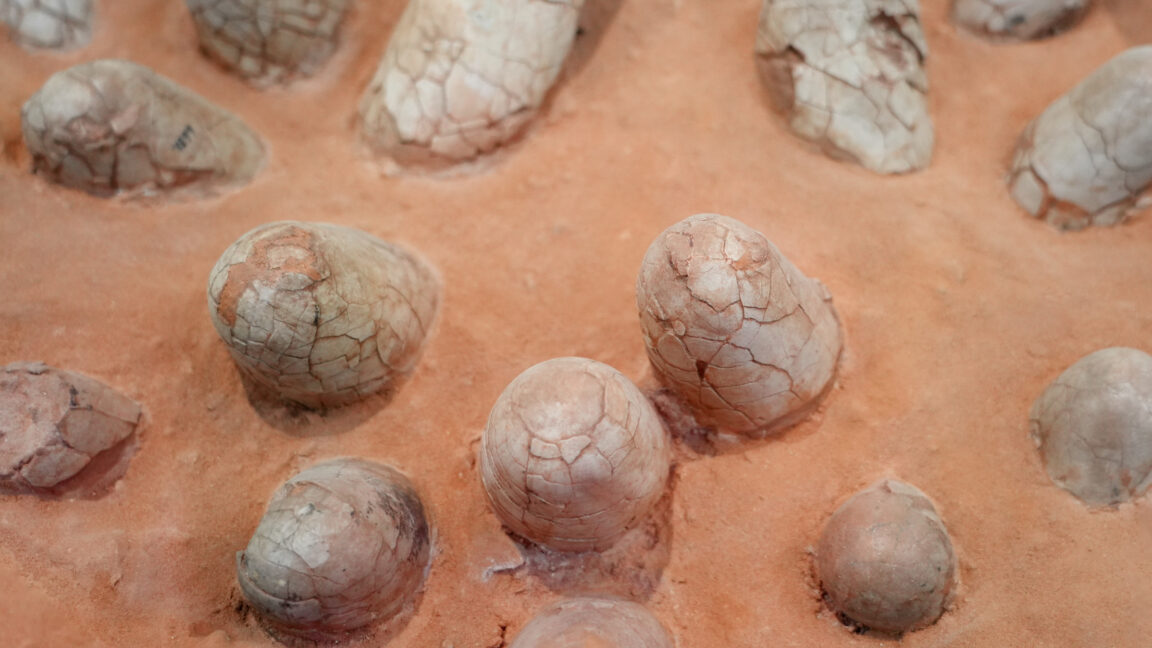
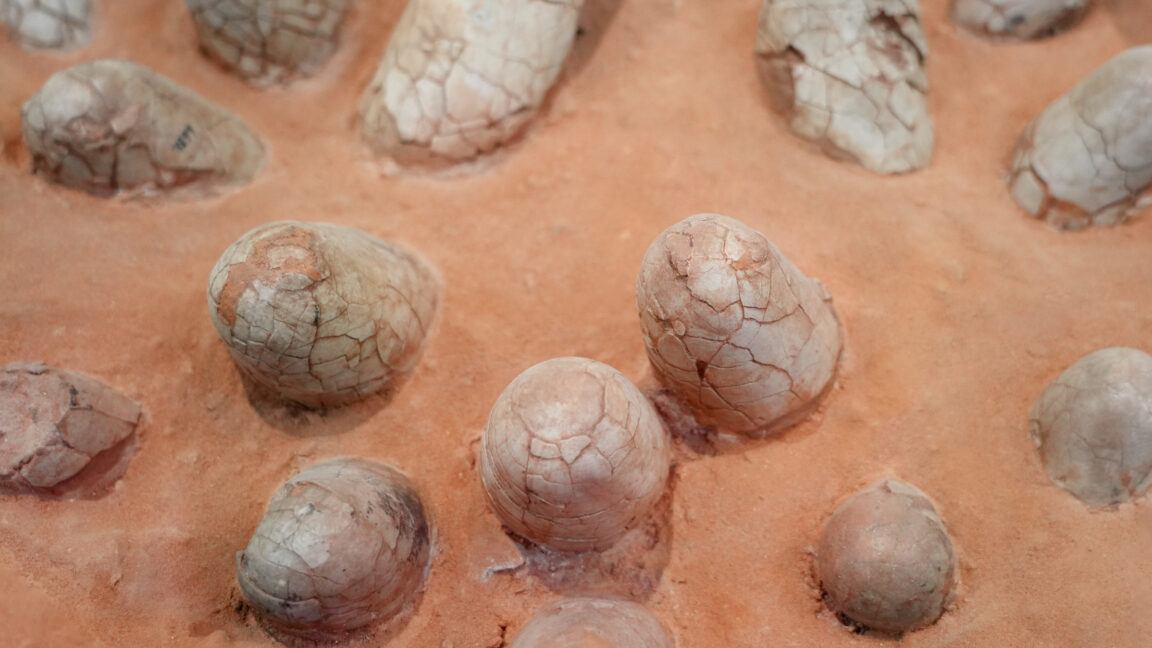
Dinosaur eggshells may at last offer a method to date the surrounding rocks and fossils. Led by paleontologist Ryan Tucker of Stellenbosch University, a research team has devised a technique for dating eggshells that indicates when they were buried by what was once sand, mud, or other loose sediments. That timing can then provide the burial age for other fossils found in the same rock layer.
Tucker said in a study recently published in Nature Communications Earth & Environment that, if validated, the approach could significantly expand the range of continental sedimentary successions that can be dated using radioisotopic methods.
This goes way back
Vertebrates have been laying calcified eggs for hundreds of millions of years (although the first dinosaur eggs had soft shells). What makes fossil eggshells especially useful for determining the age of nearby fossils is the distinctive microstructure of calcium carbonate they contain. The arrangement of its crystals preserves a record of diagenetic alterations — the physical and chemical changes that occur during fossilization. These changes can include water-related alteration as well as breaks and fissures caused by compression between sediment layers. Those preserved features make it easier to screen for such signs when estimating their age.