

Americans have received a fresh batch of dietary recommendations. Robert F. Kennedy Jr. has flipped a classic food pyramid on its head, positioning a steak and a pat of butter in prominent spots.
Kennedy and his Make America Healthy Again colleagues have long praised the benefits of meat and whole-fat dairy, so it was not unexpected to see these foods suggested alongside vegetables and whole grains (despite the well-known danger of excessive saturated fat).
Some influencers have pushed the meat trend to its limits by adopting a “carnivore diet.” “The best thing you could do is cut out everything except fatty meat and lard,” Anthony Chaffee, an MD with nearly 400,000 followers, stated in an Instagram update.
And I nearly gagged on my broccoli when I stumbled upon an interview with another doctor who claimed that “there is zero scientific proof that vegetables are necessary in the human diet.” That physician, who labeled himself as “90% carnivore,” mentioned that his entire food intake for the previous day was a kilogram of beef, and stated that vegetables contain “anti-nutrients,” whatever those might be.
You don’t need to browse social media for long to encounter such assertions. The “traditionalist” influencer, writer, and psychologist Jordan Peterson was endorsing a meat-only diet as early as 2018. A recent review of studies on nutritional misinformation on social media revealed that the majority of dietary information is disseminated on Instagram and YouTube, much of which is nonsense. So much so that the authors labeled it a “growing public health concern.”
What’s new is that a portion of this misinformation originates from individuals now at the helm of America’s federal health agencies. In January, Kennedy, who heads the Department of Health and Human Services, informed a USA Today reporter that he was following a carnivore diet. “I eat only meat or fermented items,” he stated. He added that this diet had enabled him to shed “40% of [his] visceral fat within a month.”
“The government must stop disseminating false information that natural and saturated fats are harmful,” argued Food and Drug Administration commissioner Martin Makary in a recent podcast interview. The principles of “whole foods and clean meats” are “biblical,” he asserted. The interviewer remarked that Makary’s concerns regarding pesticides led him to want to “steer clear of all salads and completely skip the organic section in the grocery store.”
Just to clarify: There is substantial evidence that a diet rich in saturated fat can elevate the risk of heart disease. That is not government misinformation.
The carnivore doctors’ recommendation to forgo vegetables is incorrect as well, states Gabby Headrick, associate director of food and nutrition policy at George Washington University’s Institute for Food Safety & Nutrition Security. There’s no evidence to indicate that a meat-only diet is beneficial. “All current nutrition science strongly points to a diverse range of vegetables … as being very beneficial to health,” she adds.
To be fair to the influencers in the field, diet is a complex subject to investigate. Much of the nutrition research depends on volunteers maintaining detailed and truthful food records—something that people generally struggle with. Additionally, our bodies’ reactions to foods could be affected by our genetics, microbiomes, preparation or consumption methods, and who knows what else.
Nonetheless, it should come as no surprise that there is an abundance of what the previous study refers to as “low-quality content” circulating on social media. Thus, it’s prudent to equip ourselves with a healthy dose of skepticism, particularly when encountering posts that mention “miracle foods” or extreme, restrictive diets.
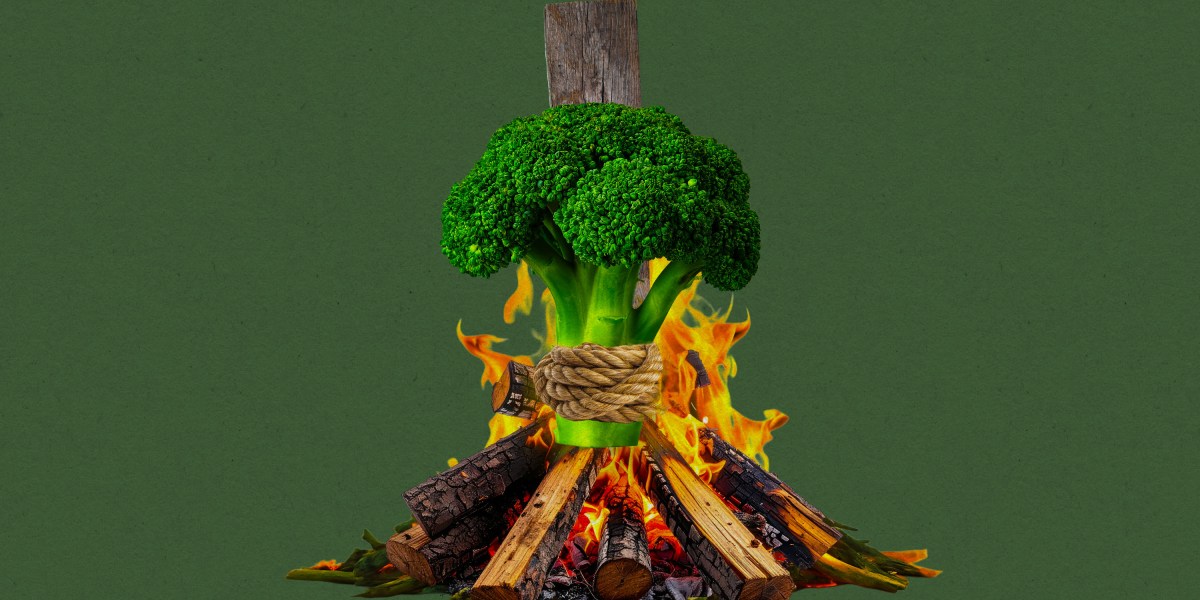
The reality is that most foods are neither good nor bad when consumed in moderation. Dietary trends rise and fall, and for most individuals, the most sensible recommendation is simply to follow a balanced diet low in sugar, salt, and saturated fat. You know—the fundamentals. Regardless of what that peculiar upside-down food pyramid suggests. To the carnivore influencers, I assert: keep your misinformation away from my broccoli.
This article first appeared in The Checkup, MIT Technology Review’s weekly biotech newsletter. To receive it in your inbox every Thursday, and read articles like this first, subscribe here.
