
Running solo
After the crew left on January 15, only one NASA astronaut — Chris Williams — remained in orbit. He had flown to space in November aboard a Russian Soyuz alongside cosmonauts Sergey Kud-Sverchkov and Sergei Mikaev. The station is vast, and with much of its infrastructure more than twenty years old, Williams spent most of his time on upkeep and system monitoring.
On the ground, engineers at NASA and SpaceX were busy as well. Because Crew 11 returned more than a month early, the agencies moved the Crew-12 launch up to shorten the period Williams would have to oversee the large US segment of the station by himself.
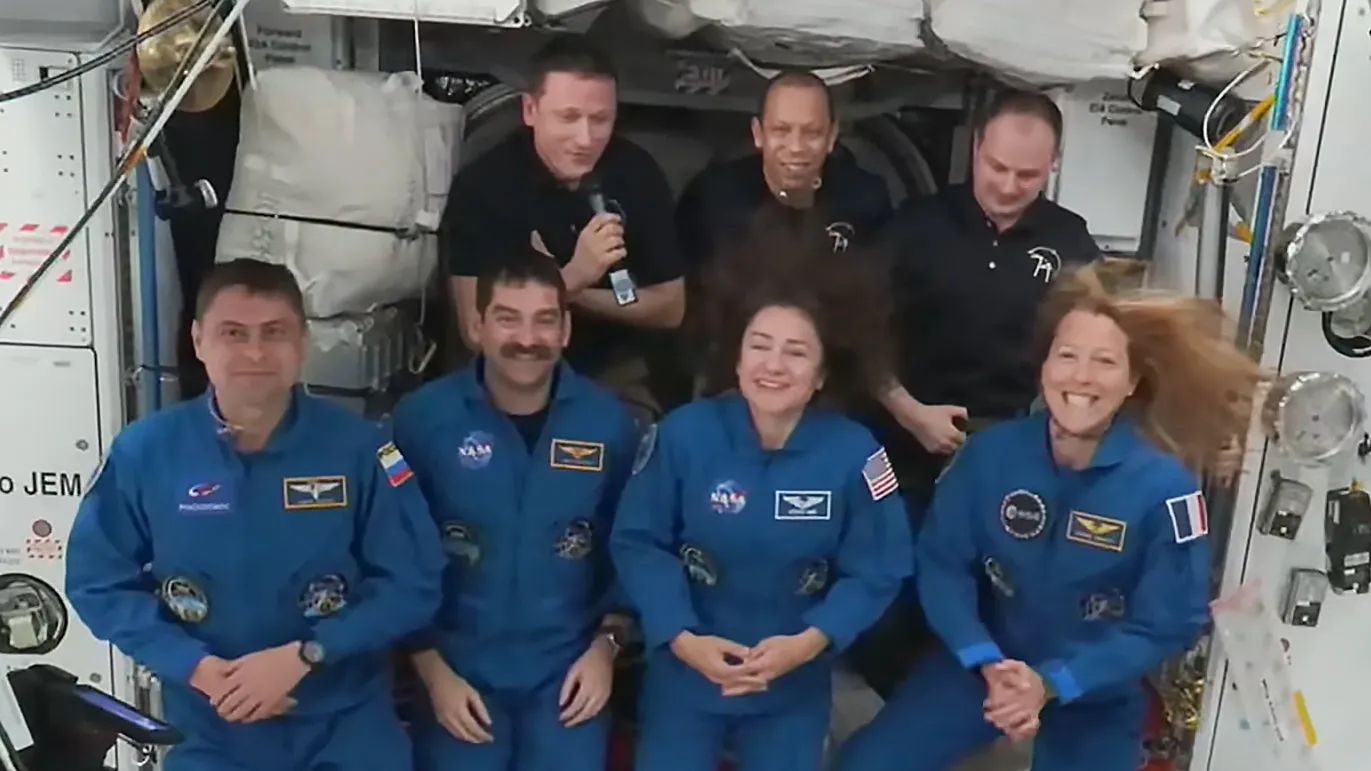
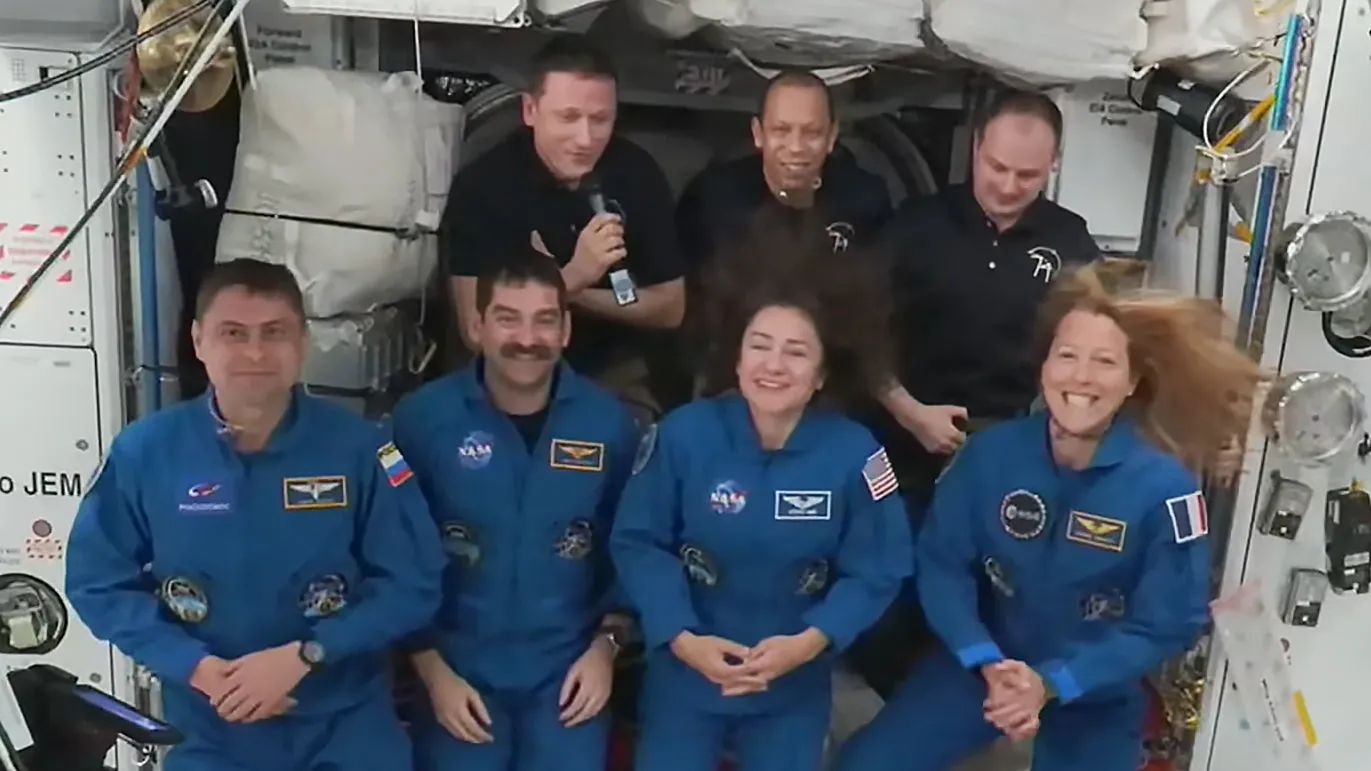
Expedition 74 greets the SpaceX Crew-12 team aboard the International Space Station. In the front row, from left: Andrey Fedyaev (Roscosmos); Jack Hathaway and Jessica Meir (NASA); and Sophie Adenot (ESA). Behind them are Sergey Kud-Sverchkov (Roscosmos), Chris Williams (NASA), and Sergei Mikaev (Roscosmos).
Expedition 74 greets the SpaceX Crew-12 team aboard the International Space Station. In the front row, from left: Andrey Fedyaev (Roscosmos); Jack Hathaway and Jessica Meir (NASA); and Sophie Adenot (ESA). Behind them are Sergey Kud-Sverchkov (Roscosmos), Chris Williams (NASA), and Sergei Mikaev (Roscosmos).
The effort culminated in a successful Dragon liftoff early Friday, with the reinforcements arriving at the station Saturday evening.
“This mission has demonstrated, in many respects, what it means to be mission-focused at NASA,” said the space agency’s administrator, Jared Isaacman, during a post-launch news conference. “Over the last couple of weeks we brought Crew 11 home ahead of schedule and moved up Crew 12, all while preparing for the Artemis II launch. That was only possible because of the extremely talented workforce at NASA, our contractors, and our commercial and international partners.”
