
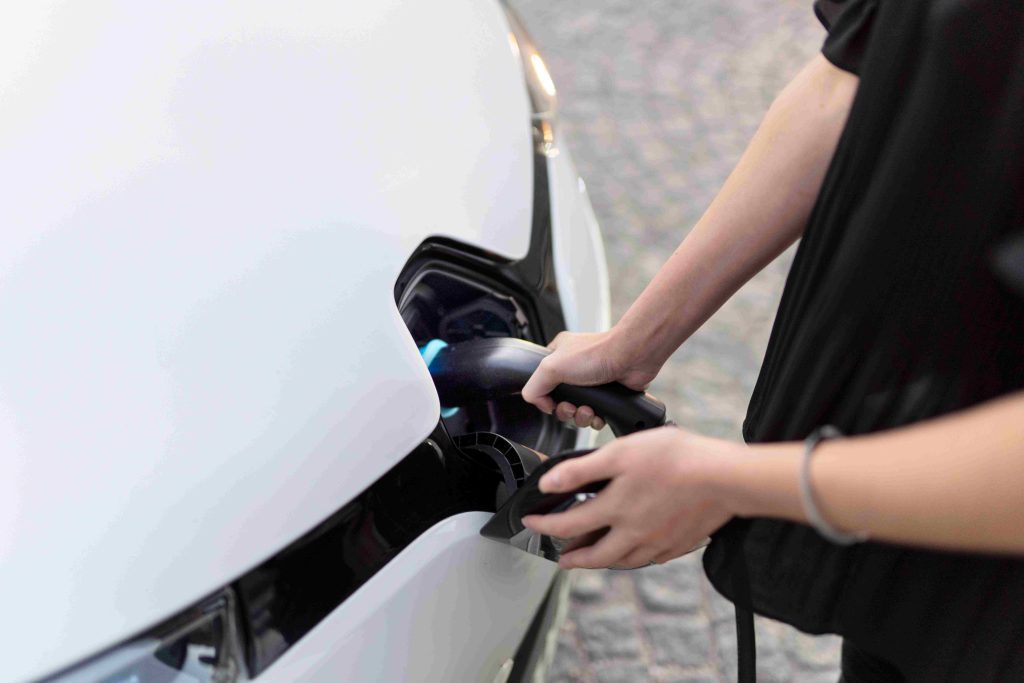


Electric vehicles may achieve economic viability in Africa faster than anticipated. While only 1% of new cars sold across the continent in 2025 are expected to be electric, a recent analysis indicates that with the implementation of solar off-grid charging, EVs could become less expensive to own than gasoline vehicles by 2040.
Several significant challenges hinder the widespread adoption of EVs in many African nations, including an occasionally unreliable power grid, inadequate charging infrastructure, and limited access to affordable financing. Consequently, previous studies have predicted that fossil-fuel vehicles would continue to dominate in Africa at least until 2050.
However, as the costs associated with batteries and the vehicles they power continue to decrease, the financial justification for EVs is gaining strength. Electric two-wheelers, cars, larger vehicles, and even minibuses could become competitive in many African nations within just 15 years, as outlined in a new report published in Nature Energy.
“EVs show significant economic promise in most African nations in the near future,” states Bessie Noll, a senior researcher at ETH Zürich and one of the study’s authors.
The research assessed the total cost of ownership over the lifespan of a vehicle. This includes the purchase price, financing expenses, and the costs associated with fueling (or charging). The researchers did not include policy-related expenses such as taxes, import duties, and government incentives, opting instead to concentrate solely on the foundational economics.
Every year, EVs are becoming more affordable as battery and vehicle production advances and scales up, with researchers determining that in most instances and locations across Africa, EVs are projected to be less expensive than comparable gasoline-powered vehicles by 2040. EVs are also anticipated to be cheaper than vehicles that utilize synthetic fuels.
For two-wheelers, such as electric scooters, the affordability of EVs might materialize even sooner: utilizing smaller, more cost-effective batteries, these vehicles could be economically feasible by the end of the decade. Alternatively, one of the most challenging segments for EVs is the small car market, notes Christian Moretti, a researcher at ETH Zürich and the Paul Scherrer Institute in Switzerland.
Noll emphasizes that due to limited or inconsistent grid access in certain countries, charging remains a significant barrier to EV adoption. Therefore, the authors examined not just the cost of the vehicle but also the investment in a solar off-grid charging system. This encompasses solar panels, batteries, and an inverter to convert the electricity into a form that can charge an EV. (The additional batteries enhance the system’s ability to store energy for charging when sunlight is unavailable.)
Mini grids and other autonomous systems featuring solar panels and energy storage are becoming more prevalent across Africa. Noll suggests that this approach might become a primary method for EV owners in Africa to charge their vehicles in the future.
Financing expenses are another substantial obstacle for EVs in Africa, she indicates. In some scenarios, financing costs can surpass the upfront expense of the vehicle, significantly increasing the total cost of ownership.
Currently, EVs are pricier than similar gasoline-powered vehicles in many parts of the globe. However, in regions where borrowing money is relatively inexpensive, this disparity can be amortized over the lifespan of the vehicle at minimal expense. Consequently, since charging an EV often costs less than fueling a gasoline car, the overall expenditure for an EV is lower over time.
Conversely, in certain African nations, political insecurity and unpredictable economic conditions result in higher borrowing costs. To some degree, elevated financing costs influence the acquisition of any vehicle, irrespective of its power source. Nonetheless, because EVs have a higher initial price compared to gasoline vehicles, that increased upfront cost leads to more interest paid over time. In some instances, financing an EV can also be pricier than financing a gasoline vehicle—the technology is more recent, and banks may view such purchases as riskier, leading to higher interest rates, according to Kelly Carlin, a manager in the carbon-free transportation program at the Rocky Mountain Institute, an energy think tank.
The situation varies significantly depending on the country. In South Africa, Mauritius, and Botswana, financing conditions are already nearing levels necessary for EV cost parity, as per the study. In higher-risk countries (the study highlights examples such as Sudan, which is presently in a civil war, and Ghana, which is recovering from a severe economic crisis), financing costs would need to be substantially reduced for this to occur.
Making EVs financially viable will be a crucial initial step in increasing their presence on the roads in Africa and globally. “People will begin to adopt these technologies once they become competitive,” asserts Nelson Nsitem, lead Africa energy transition analyst at BloombergNEF, an energy consultancy.
Charging systems based on solar energy, similar to those referenced in the study, could alleviate the electricity challenge, thus facilitating a greater number of EVs on the roads, according to Nsitem. However, there remains a pressing need for enhanced charging infrastructure, a significant challenge in many nations where the grid requires substantial upgrades for capacity and reliability, he notes.
Worldwide, the number of EVs on the road continues to rise each year. “The global trend is unmistakable,” observes Carlin. While there are inquiries about the pace of this development in various locations, he remarks, “but the momentum is undeniable.”
