
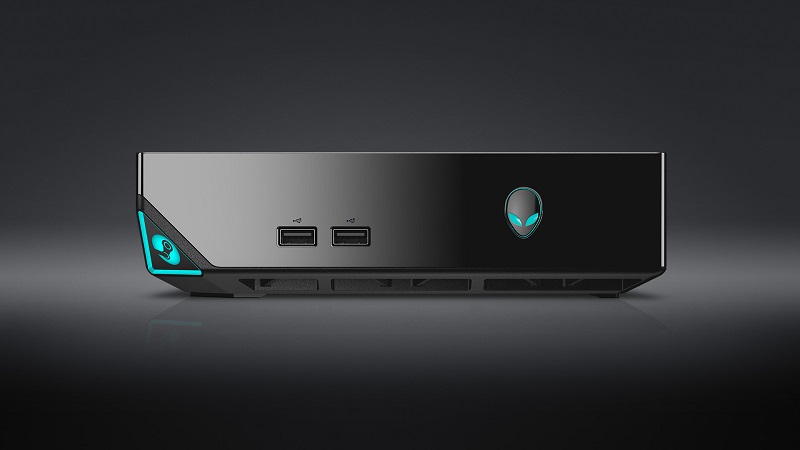

Is Valve facing particularly bad news?
At first glance, rising component prices may look like a problem that would hit every gaming-hardware maker equally. In practice, however, analysts warned that Valve could be in a uniquely difficult spot when it comes to handling this prolonged market disruption.
Large console makers like Sony and Microsoft “can commit to tens of millions of orders, and have strong negotiating power,” Niko Partners analyst Daniel Ahmad pointed out. The Steam Machine, by contrast, is “a niche product that cannot benefit in the same way when it comes to procurement,” which means Valve may have to absorb steeper component cost increases.
F-Squared’s Futter likewise said Valve is “not an enormous player in the hardware space, even with the Steam Deck’s success. So they likely don’t have the same kind of priority as a Nintendo, Sony, or Microsoft when it comes to suppliers.”
Credit:
Sam Machkovech
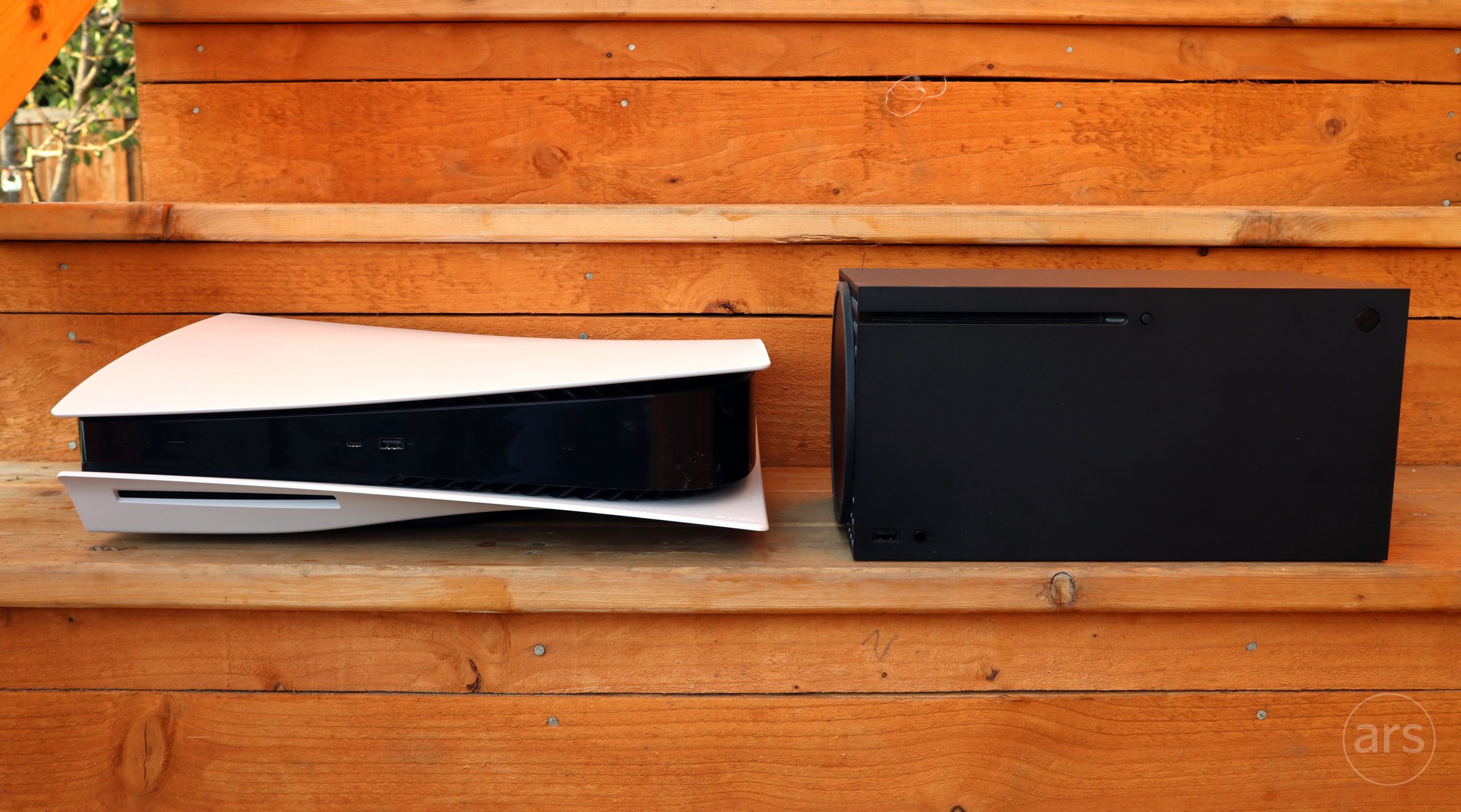
Sony and Microsoft may have an edge when negotiating volume discounts with suppliers.
Credit:
Sam Machkovech
The extent of any price increase for the Steam Machine could hinge on when Valve finalized its supply agreements. “It’s not clear when or if Valve locked in supply contracts for the Steam Machine, or if supply can be diverted from the Steam Deck for the new product,” Tech Insights analyst James Sanders observed. Conversely, “Sony and Microsoft likely will have locked in more favorable component pricing before the current spike,” Van Dreunen said.
Still, certain design choices for the Steam Machine might give Valve some leeway on pricing. Sanders pointed out that the Steam Machine’s smaller footprint could reduce packaging needs and lower shipping expenses. He also noted that selling mainly direct through the web and Steam avoids the retailer markups traditional console makers must factor in.
“I think Valve was hoping for a much lower price and that the component issue would be short-term,” Cole said. “Obviously it is looking more like a long-term issue.”
