
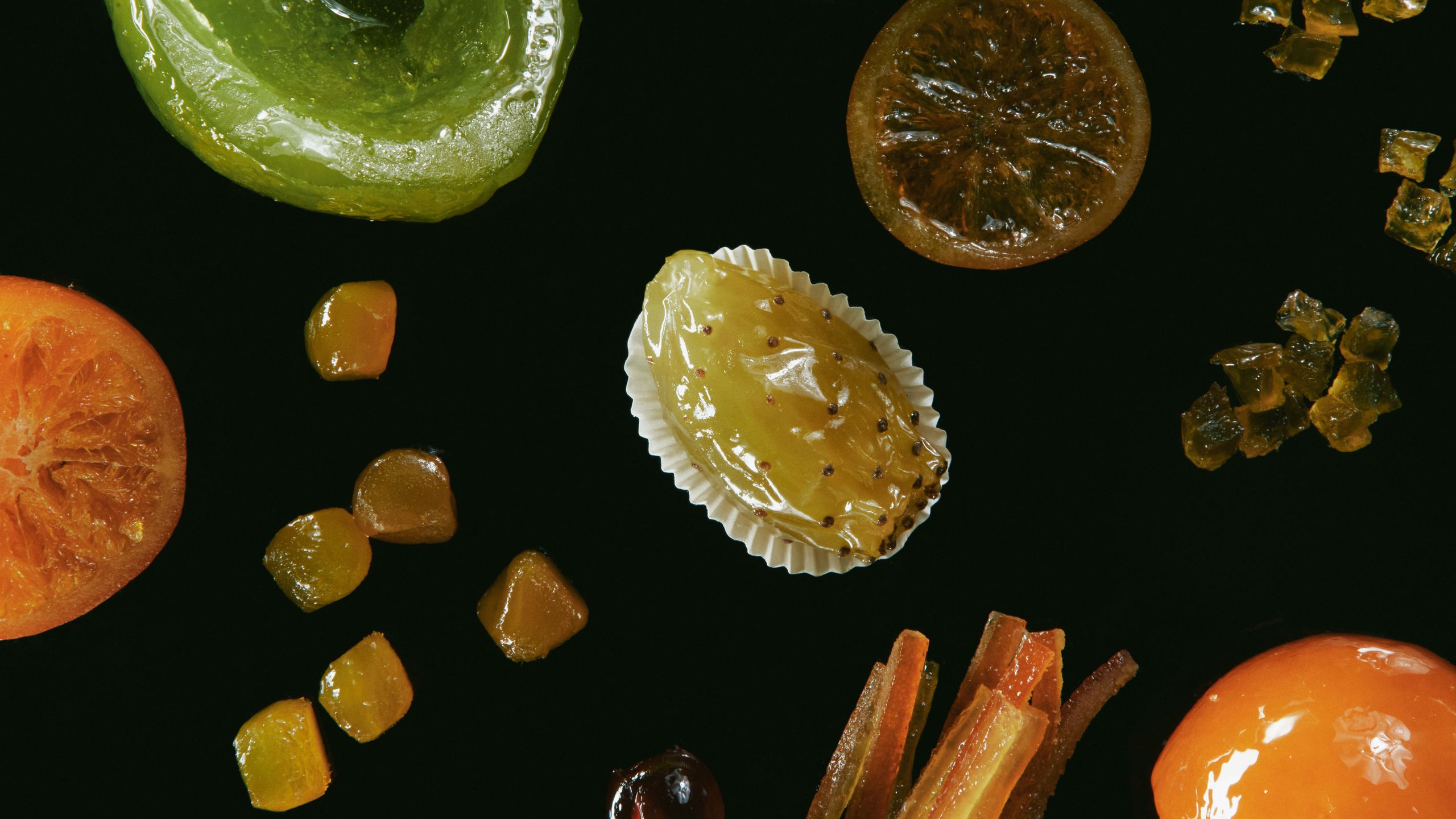

You may have noticed candied fruit appearing recently—shimmering, colorful, and seemingly otherworldly. It’s often seen beautifying desserts by contemporary pastry chefs, enhancing elaborate centerpieces at trendy gatherings, and decorating the social media showcases of your favorite food influencers with a keen eye for aesthetics.

The intricate process, once associated mainly with fruitcake and other classic confections, is experiencing a shiny resurgence. Why does this vintage treat so fascinate us? “Candied fruit possesses a translucent quality,” shares Camilla Wynne, author of Nature’s Candy—a captivating aspect reminiscent of gemstones, handcrafted glass, or, as Wynne prefers, luminous jellyfish.

However, it’s not merely its appearance that is exquisite: “There’s something remarkable about the ability to extend the life of fruit,” she states, “simply by substituting its water content with sugar.” The method is labor-intensive, involving several days or even weeks of boiling and soaking in syrup. Yet, when sugar effectively infiltrates the fruit’s cellular framework, not only does its appearance take on an almost radiant quality, but the bacteria responsible for spoilage are unable to survive.