
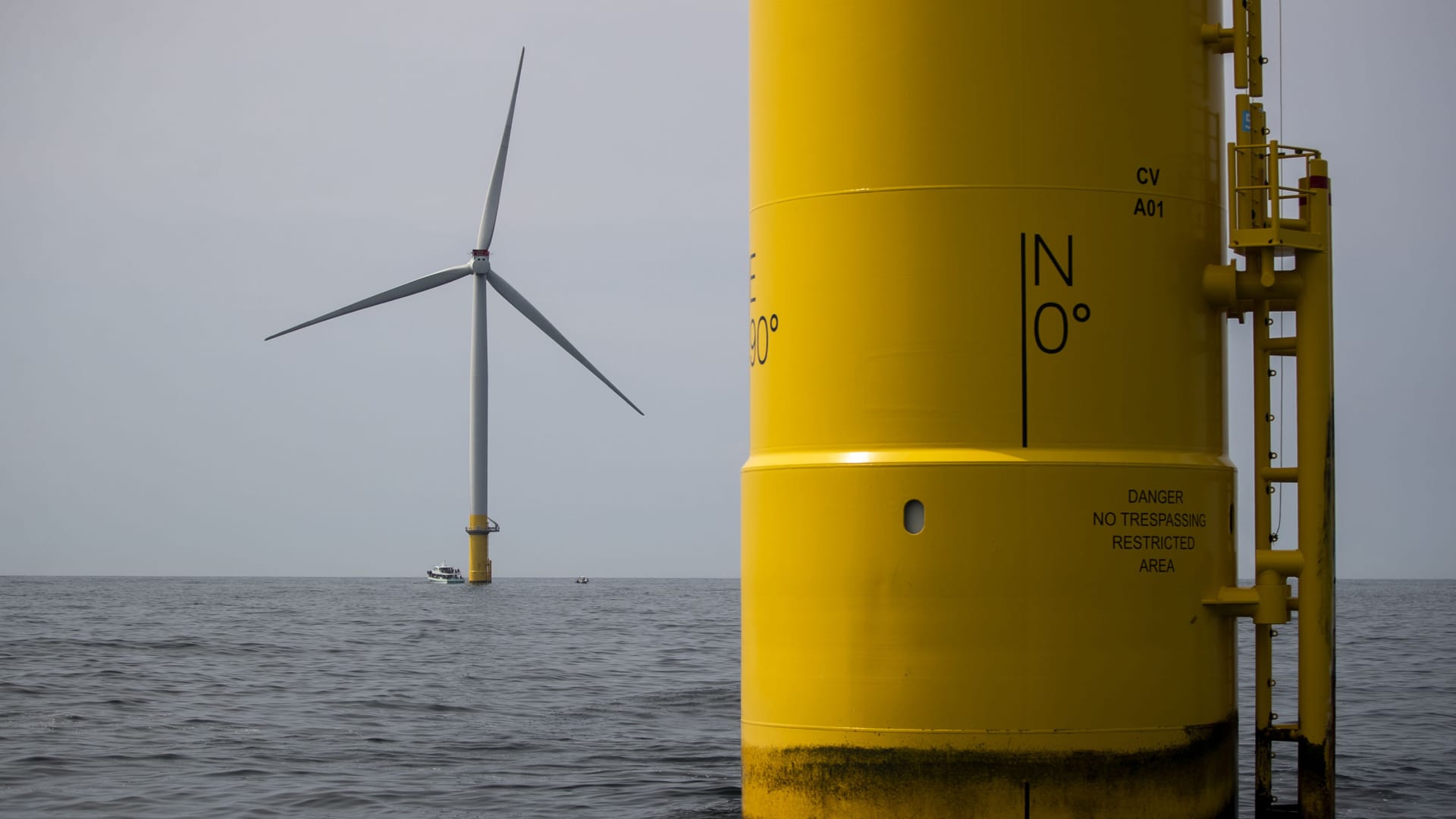

On Monday, the Trump administration stopped the Coastal Virginia Offshore Wind, the biggest project of its nature in the U.S., along with four additional projects that were underway along the East Coast, delivering a severe setback to the wind sector.
Stocks of Dominion Energy, the company behind the Virginia project, saw nearly a 4% decline following this announcement.
The administration also put on hold leases for Vineyard Wind 1 near Massachusetts, Revolution Wind off Rhode Island, Sunrise Wind off Long Island and New England, and Empire Wind 1 located south of Long Island.
Together, the projects are projected to generate enough power to supply more than 2 million homes, as per the developers’ statements.
Interior Secretary Doug Burgum indicated that the leases for these projects were paused due to national security issues raised by the Pentagon.
Shares of Denmark’s Orsted, managing the Revolution and Sunrise initiatives, dropped by 11%. Norway’s Equinor, responsible for Empire Wind 1, decreased by about 1%.
Coastal Virginia Offshore Wind is a project involving 176 turbines that would generate sufficient power for over 600,000 homes, according to Dominion. The completion of the project was anticipated for next year.
Dominion remarked that the substantial project is vital for U.S. national security and the significant energy demands of Virginia. Northern Virginia stands as the leading center for data centers globally. The increasing demand from artificial intelligence is driving electricity costs higher within the state.
“Halting CVOW for any duration will jeopardize grid reliability for some of the nation’s most critical military, AI, and civilian assets,” Dominion stated in a release.
“It will also lead to rising energy costs and put thousands of jobs in jeopardy,” the utility added.
Virginia Governor Glenn Youngkin, a Republican, endorses the initiative. Incoming Governor Abigail Spanberger, a Democrat, secured victory in November’s gubernatorial election on a commitment to tackle rising electricity costs partly by promoting renewable energy.
The Interior Department mentioned in a release that the pause will allow the federal government to “collaborate with leaseholders and state partners to evaluate the potential to alleviate the national security threats posed by these projects.”
Interior disclosed that the U.S. government determined that turbine blades and “highly reflective towers” pose a radar interference risk.
“The congestion caused by offshore wind initiatives obscures legitimate moving targets and produces false targets within the area of the wind projects,” the Interior stated.
President Donald Trump has been critical of the U.S. wind sector since his start in office. On January 20, Trump ordered a freeze on all new leases and permits for both onshore and offshore wind pending federal evaluation.
Senator Chuck Schumer, D-N.Y., denounced Trump’s actions against wind initiatives as “irrational.” The senate minority leader claimed that the Interior’s decision would escalate energy expenses.
“Trump’s fixation on dismantling offshore wind projects is erratic, irrational, and unwarranted,” Schumer expressed in a Monday statement. “During a period of rising energy prices, this latest choice from DOI represents a step backward that will further increase energy bills.”
Trump’s campaign against the wind sector has met with court challenges. Judge Patti Saris from the U.S. District Court for the District of Massachusetts ruled on December 8 that Trump’s order was “arbitrary, capricious, and against the law.”
