
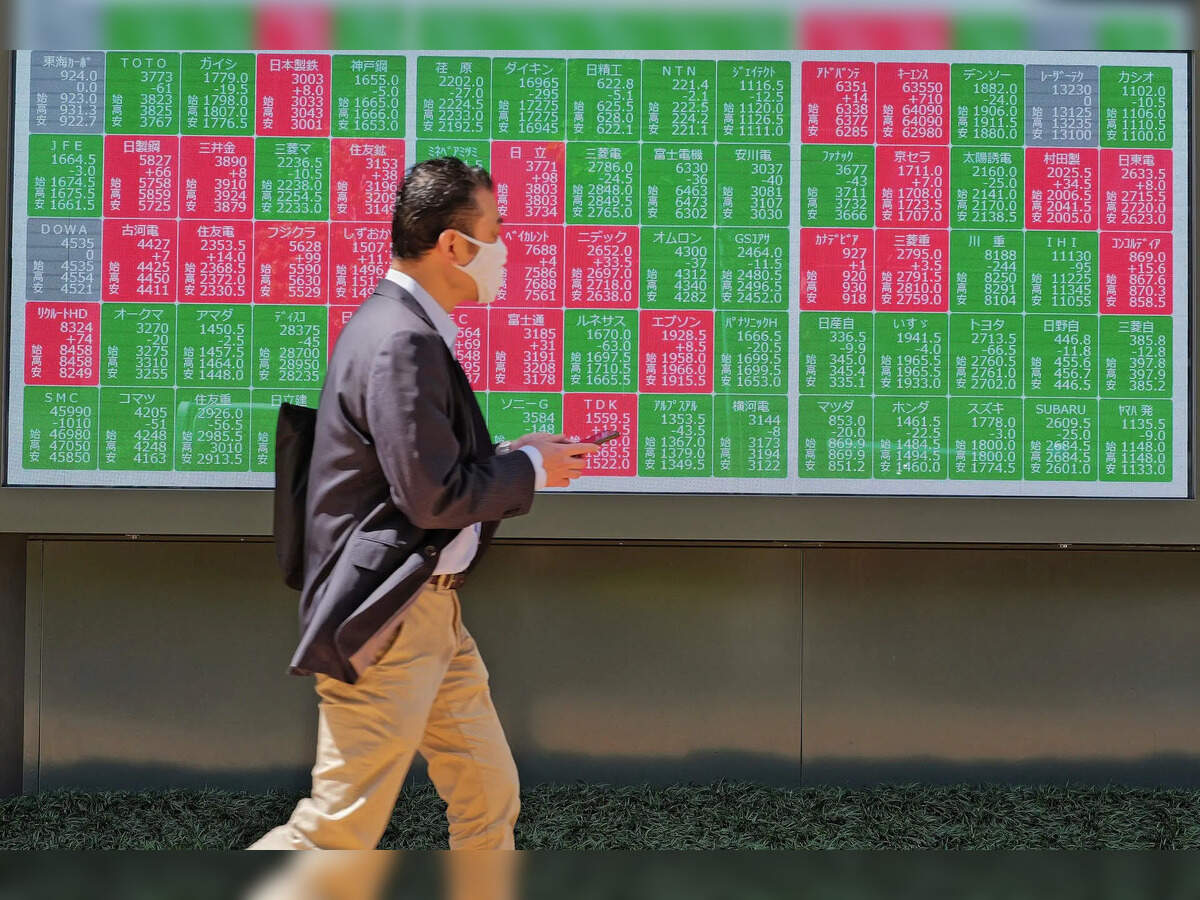

Japan’s central banking authority elevated its short-term interest rates on Friday to a peak not seen in thirty years, progressing with its policy normalization and triggering a sell-off in government bonds.
The Bank of Japan increased benchmark rates by 25 basis points to 0.75%, its highest point since 1995, aligning with the predictions of economists surveyed by Reuters.
The BOJ indicated that real interest rates are anticipated to remain “significantly negative,” asserting that supportive financial conditions will persist in bolstering economic activity.
Post-decision, the yield on 10-year Japanese government bonds surged approximately 5 basis points to 2.019%, while the yield for 20-year JGBs heightened 3 basis points to 2.975%, both reaching levels last seen in 1999.
The yen dipped by 0.25% to 155.92 against the dollar, while the benchmark Nikkei 225 stock index increased by 1.28%.
Japan initiated its policy normalization last year, ending the world’s sole negative interest rate policy that had been in effect since 2016. Since then, the BOJ has consistently adhered to its approach of gradually elevating rates, emphasizing its aim to foster a “virtuous cycle” of rising wages and prices.
Inflation has exceeded the BOJ’s 2% target for 44 consecutive months, with data released earlier showing consumer price increases at 2.9% in November. Persistent high inflation has exerted pressure on real wages, which have fallen for 10 consecutive months, according to labor ministry statistics.
The BOJ forecasts that core inflation — excluding fresh food prices — will likely decelerate below 2% from April to September 2026, attributed to a slower uptick in food prices and the impact of governmental measures aimed at curbing price increases.
Increased rates could aggravate challenges within the Japanese economy. Revised GDP figures for the third quarter revealed that the economy contracted more than previously estimated, shrinking 0.6% on a quarterly basis and 2.3% on an annualized scale.
The BOJ remarked in its announcement that although economic weakness was noted, corporate profits were projected to remain robust, and companies were expected to continue increasing wages in 2026.
“It is very likely that the mechanism in which both wages and prices rise moderately will be sustained,” stated the bank, adding that the likelihood of underlying inflation reaching the 2% target was improving.
The rate increase also occurs at a time when JGB yields have been reaching multi-decade peaks, spiking further following the decision, heightening the risk of escalated borrowing costs for Japan and intensifying fiscal pressures.
As Asia’s second-largest economy, Japan already holds the highest debt-to-GDP ratio globally, nearing 230%, according to International Monetary Fund data.
However, climbing yields could bolster the Japanese currency. The yen has been fluctuating between 154-157 against the dollar since November, having depreciated over 2.5% since Prime Minister Sanae Takaichi, an advocate for less stringent monetary policy, assumed office in October.
Following this increase, the BOJ is anticipated to further adjust its policy rate in mid-2026, potentially reaching a terminal rate of 1%, as noted by Shigeto Nagai, head of Japan Economics at Oxford Economics, in a statement to CNBC prior to the BOJ’s decision. The terminal or neutral rate refers to one that balances inflation with economic expansion — ensuring it neither fuels excessive growth nor stifles the economy.
BOJ Governor Kazuo Ueda reportedly stated earlier this month that estimating the terminal rate was challenging, with the central bank placing it between 1% to 2.5%.
Nagai cautioned that another rate hike by the BOJ might create tension with Takaichi, should inflation decline smoothly towards 2% in the first half of 2026.
Takaichi during her leadership race firmly resisted rate increases by the BOJ, but has since softened her position.
Nagai remarked that Takaichi would likely accept this rate hike due to the weak yen, stating that “addressing the cost-of-living crisis has become a pressing policy matter.”
In November, Japan’s cabinet sanctioned a stimulus package amounting to 21.3 trillion yen ($135.5 billion) as Takaichi aims to revitalize the country’s sluggish economy and provide assistance to consumers affected by inflation.
