
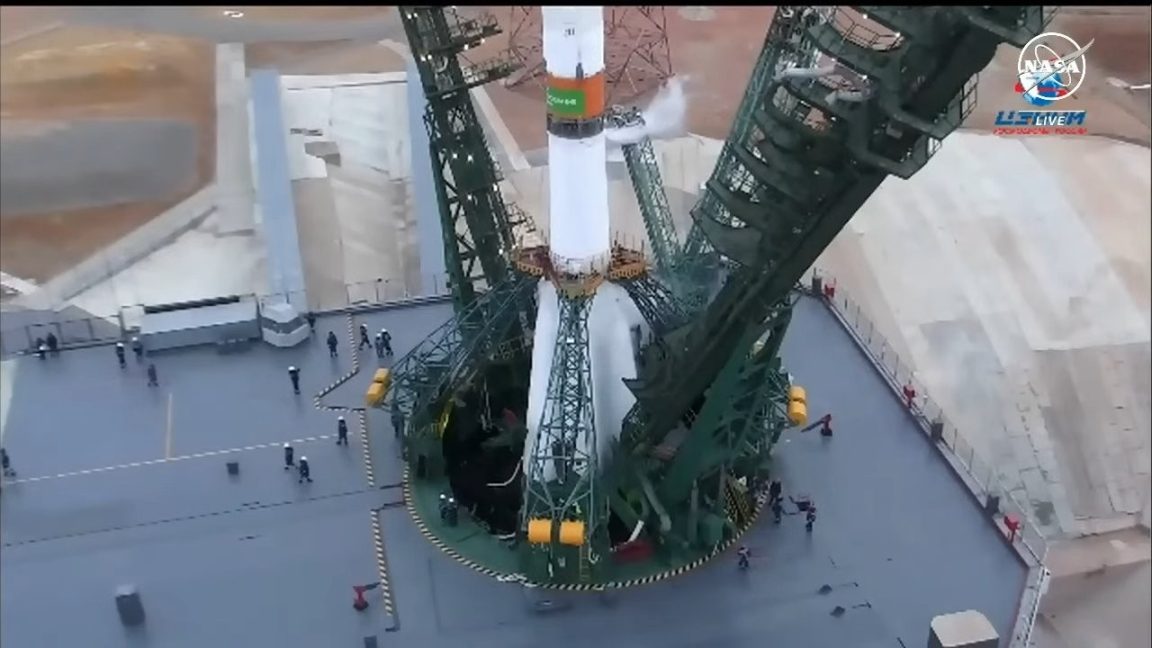
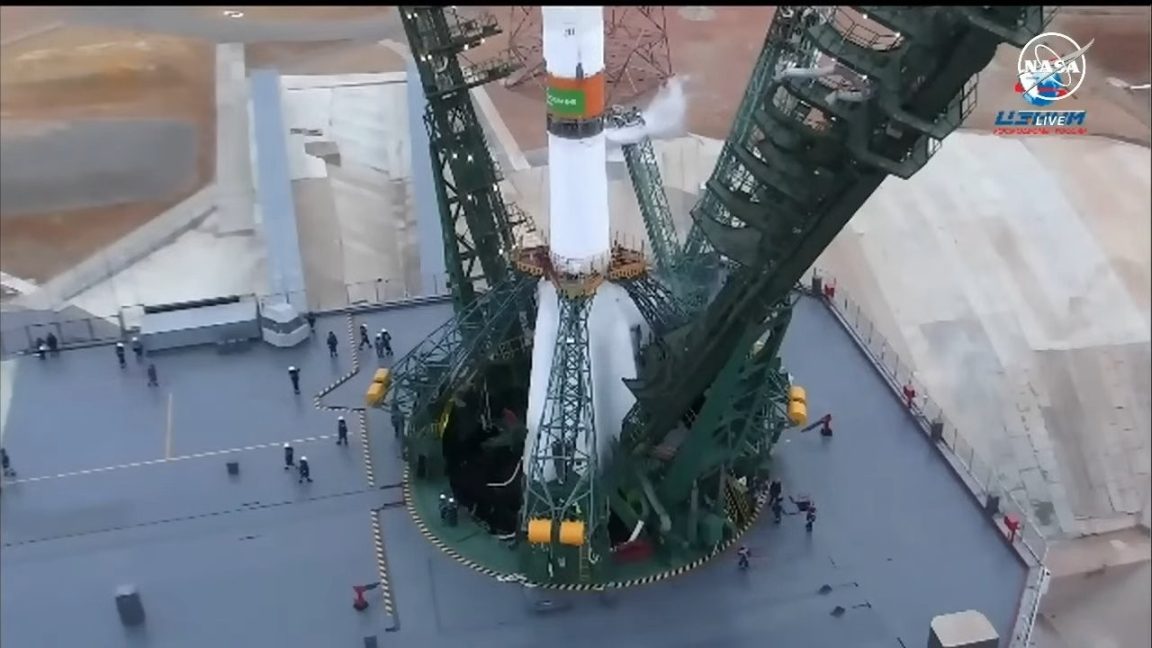
A Soyuz rocket took off on Thursday with Roscosmos cosmonauts Sergei Kud-Sverchkov and Sergei Mikayev, along with NASA astronaut Christopher Williams, embarking on an eight-month journey to the International Space Station. The group of astronauts reached the orbiting facility without issues.
Nevertheless, a significant problem occurred on the ground during the launch involving the ground systems that manage the vehicle’s processing before liftoff at Site 31, situated at the Baikonur Cosmodrome in Kazakhstan.
In a brief statement released Thursday evening on the social media platform Telegram, the Russian space agency operating Soyuz seemed to minimize the severity of the incident: “The launch pad underwent inspection, as it does for every rocket launch. Damage to several components of the launch pad was detected. Damage can happen post-launch, hence such inspections are essential internationally. Currently, we are evaluating the launch pad’s condition.”
‘Major’ damage
However, footage captured of the launch location post-liftoff revealed considerable damage, with a substantial service platform seemingly collapsed into the flame trench beneath the launch table. According to one source, this is a platform situated under the rocket, allowing workers access to the vehicle prior to liftoff. It weighs around 20 metric tons and was evidently not secured before the launch, leading to it being thrown into the flame trench by the vehicle’s thrust. “The pad has sustained major damage,” this source commented.
Russia possesses numerous launch pads, both within its borders and in neighboring countries, including Kazakhstan, which were formerly part of the Soviet Union. However, Site 31 at Baikonur remains the only pad in the country currently set up for launching the Soyuz rocket and two vital spacecraft for the space station, the cargo-only Progress vehicle and the Soyuz crew capsule.