
This year’s most unpredictable UN climate conference ended with a lackluster thud.
This year’s most unpredictable UN climate conference ended with a lackluster thud.


“That’s a wrap … Don’t forget to pick up an ‘I survived Belém’ shirt,” reads the first line of an email I received on Saturday, the concluding day of the eagerly awaited United Nations climate discussions in Belém, Brazil. The message came from Shravya Jain-Conti, the US climate diplomacy chief at the Global Strategic Communications Council (GSCC), who has been monitoring these events for years. While she often shares tips on where to grab a coffee along with her email updates for journalists, the T-shirt suggestion was a first, as far as I’m aware.
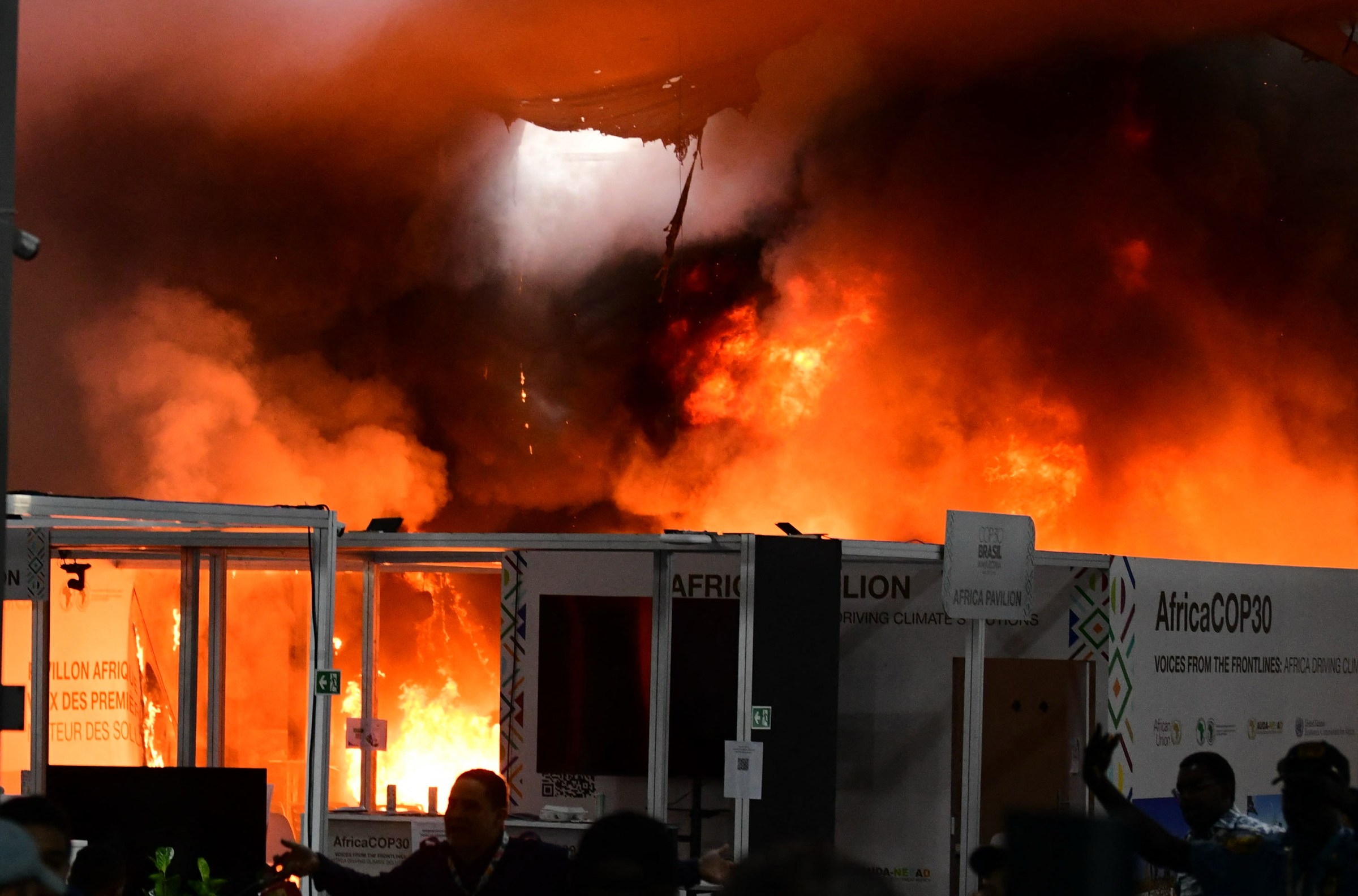
I’ve been reflecting on these negotiations since the previous year, outlining possible funding sources to travel to Belém and report firsthand. I ultimately decided to cover the news from the United States instead of braving the Amazon while pregnant amid a federal government shutdown. My fear of losing out waned last week when the UN event venue caught fire, shortly before a disappointing conclusion to what many had hoped could be the most significant climate change discussions since the 2015 Paris agreement.
The two-week discussions concluded over the weekend with a great deal of back and forth about moving away from the fossil fuels contributing to climate change. Organizers of the event, termed COP30 (the 30th “Conference of the Parties” which includes representatives from over 190 nations that endorsed the UN Framework Convention on Climate Change) advertised this as the “Implementation COP.” It was supposed to be a conference centered on how to fulfill prior promises to curb global warming and transition to cleaner energy.
While that was optimistic thinking — especially as the rise of nationalistic tendencies around the globe hinder global collaboration on matters like climate change. The conference ultimately wrapped up with yet another set of commitments to address the issue later, alongside calls for countries not to abandon the process.
On Saturday, I received a WhatsApp message shortly after the negotiations concluded containing a remark from former Irish president and vocal climate action proponent Mary Robinson via GSCC. “This agreement isn’t flawless and falls short of what science demands,” Robinson’s statement noted. “However, during a time when multilateralism is facing challenges, it’s noteworthy that nations are still choosing to progress together.”
For an event aimed at “implementation,” quite a bit of coordination went awry. Belém is considered a critical city for the Amazon, and hosting the conference there was initially expected to emphasize the significant role forests such as the Amazon play in combating climate change by absorbing greenhouse gases. However, to accommodate around 50,000 participants, officials cleared forests to construct a new road and utilized large diesel-powered cruise ships as temporary lodging for attendees.
Indigenous protesters who depend on and protect these forests organized demonstrations to highlight some of the hypocrisy and to call for a halt to resource extraction and deforestation that annihilates their lands. At one point, demonstrators clashed with security to gain entry to the venue, a few bearing signs proclaiming “our forests are not for sale.” A few days later, members of the Munduruku tribe from the Amazon Basin and their supporters set up a human blockade outside the COP entrance to advocate for better protections for forests and their lands.
This year saw a record number of Indigenous participants at the COP. However, the number of fossil fuel lobbyists also surged, surpassing every nation’s delegation rate aside from Brazil.
Perhaps it was a twist of fate (but likely linked to an electrical malfunction) — on Thursday, a day prior to the conference concluding, a small fire erupted at the venue and burned through the roof. The evacuation delayed discussions for several hours. And while COP meetings often extend past their scheduled time, this year brought extra urgency to conclude prior to the scheduled departure of the cruise ships that were set to sail on Saturday.
The conference officially concluded on Saturday, and two major proposals that had gained traction during COP had fallen through the cracks. Over 80 nations had expressed support for formalizing a “roadmap” for reducing reliance on fossil fuels. Additionally, 90 nations united to call for another roadmap focused on halting deforestation. However, the official agreement produced from this year’s conference does not even mention fossil fuels or deforestation. The consolation, it seems, is that COP30 President André Corrêa do Lago committed to advance the creation of those roadmaps throughout the next year.
Other lukewarm actions were taken in Belém. Brazil acknowledged 10 new Indigenous territories. A commitment of billions of dollars for forest conservation and climate resilience projects was pledged, albeit less than what many participants believe is necessary. Environmental activists celebrated a “Just Transition Work Program,” a pact aimed at ensuring that the distribution of carbon-free energy is more equitable while prioritizing human rights.
Nonetheless, the fossil fuel sector achieved its own victory by procrastinating the roadmap to curb coal, oil, and gas consumption. The US federal government, the largest producer of oil and gas worldwide, opted to avoid participating in the talks this year as the Trump administration strives to boost fossil fuel production — a decision that alleviated pressure from other oil- and gas-producing countries.
“While we appreciate the enhanced provisions in the Just Transition Work Program, the achievements at COP30 are notably dampened by the disappointing absence of any mention of fossil fuels in the final documentation,” Ife Kilimanjaro, Executive Director of the US Climate Action Network, remarked in a press release. “Neglecting to address the root cause of the climate crisis undermines the integrity of the entire process.”
