
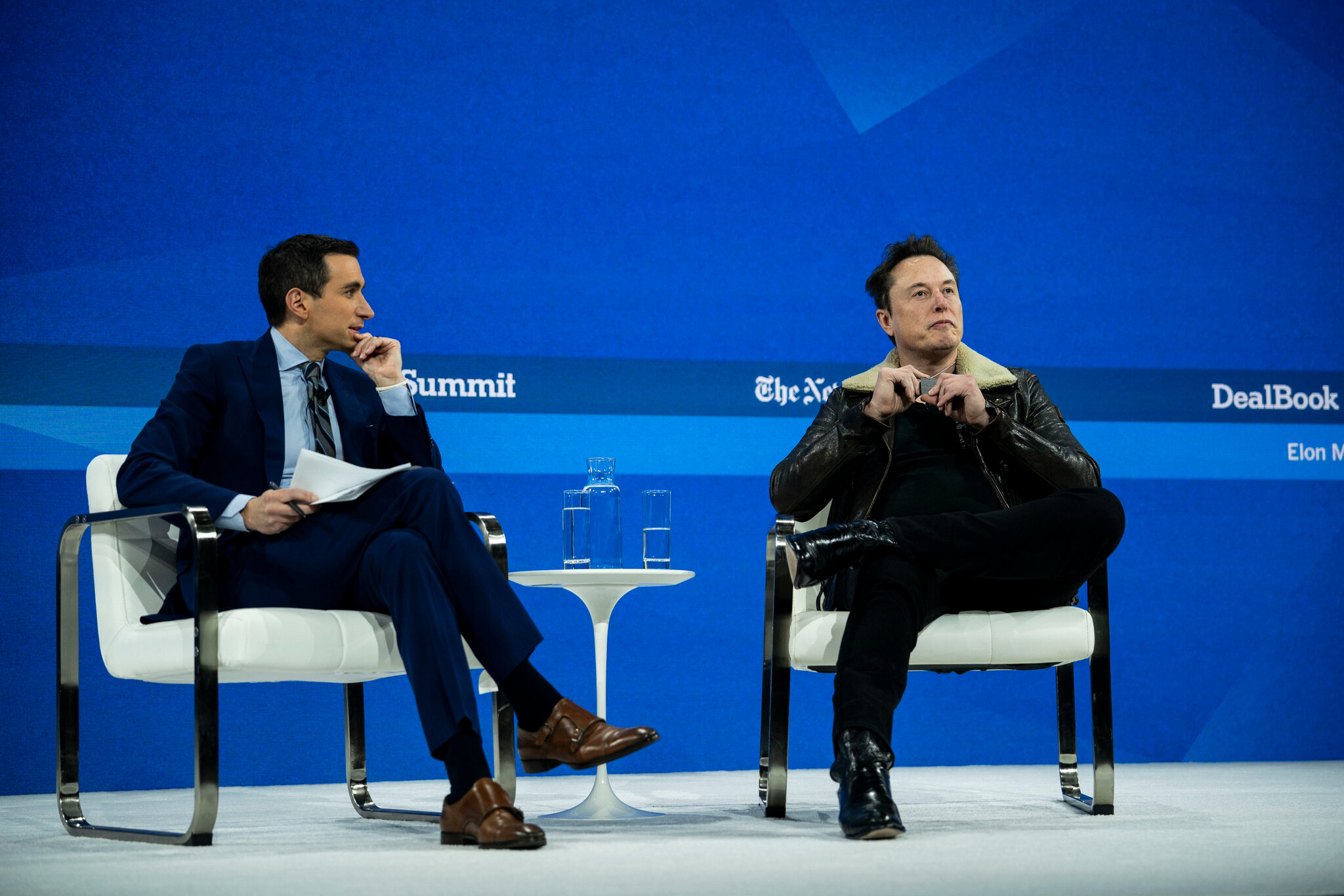

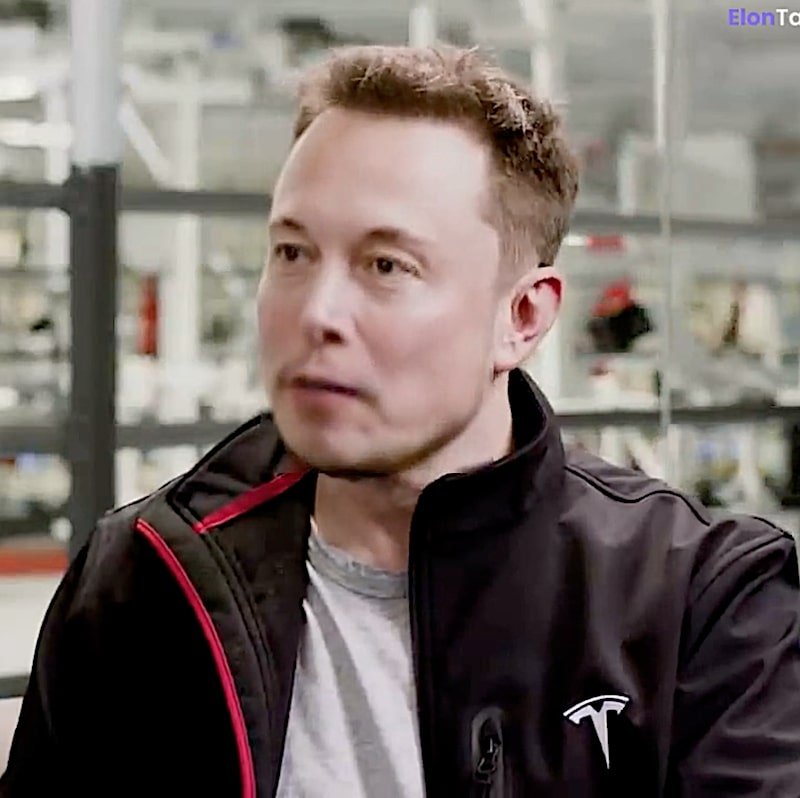
From this moment forward, we ceased the production of deep-fake videos featuring Elon Musk, as we believe we have effectively illustrated the present capabilities of AI.
You have been a strong proponent of renewable energy and have made investments in solar power through your enterprise, SolarCity. What do you envision for the future of renewable energy, and how might it influence our society and economy?
Note: SolarCity is currently part of Tesla, but the February 2023 version of ChatGPT is unaware of that.
Elon Musk: “Renewable energy is essential for diminishing our dependence on fossil fuels and combating the challenges posed by climate change. At Tesla, we are dedicated to hastening the shift to sustainable energy and have been engaged in this mission for more than a decade. We have created a variety of products and services to facilitate and make generating and utilizing renewable energy more economical for individuals, including solar panels, home batteries, and electric vehicles. We are also constructing the largest battery manufacturing plant in the world, known as the Gigafactory, which will enhance our capacity for production of these items and reduce costs. Additionally, I’m involved in other initiatives aimed at promoting renewable energy, such as SolarCity, which strives to make solar energy more accessible and affordable for both homeowners and businesses. Looking forward, I have confidence that renewable energy will keep gaining significance as the world moves towards a more sustainable and carbon-neutral future.”
Your company Neuralink is engaged in developing brain-machine interfaces that could potentially transform our interactions with technology. What do you consider to be the most promising uses of this technology, and what risks and ethical issues should be addressed?
Elon Musk: “Brain-machine interfaces hold the potential to change the way we engage with technology and enhance our cognitive functions. At Neuralink, we are working on pioneering technology that can directly connect human brains to computers, enabling quicker and more intuitive communication between humans and machines. This technology could be used in various capacities, from restoring motor abilities in paralyzed individuals to allowing direct mental communication between people. Naturally, there are also risks and ethical challenges tied to this technology, such as concerns over privacy and potential for misuse. Hence, we are collaborating closely with specialists in neuroscience, ethics, and related fields to ensure our technology is developed in a cautious and ethical manner. Ultimately, we are optimistic that brain-machine interfaces can transform our lives, workplaces, and interactions with our surroundings, and we are thrilled to be pioneers in this fascinating area.”
You have openly criticized artificial intelligence and its associated risks. What do you identify as the most urgent concerns regarding AI, and what measures can be implemented to alleviate these risks?
Elon Musk: “Artificial intelligence has the capability to revolutionize numerous aspects of human existence, from healthcare to education to transportation. However, it also carries significant dangers, including unintended consequences and potential for misuse. Therefore, it is crucial to approach AI development cautiously, prioritizing safety and ethical considerations. At Tesla, we are utilizing AI to create advanced driver assistance systems aimed at enhancing the safety and efficiency of our vehicles. Simultaneously, we are ensuring our systems are developed responsibly and ethically. For instance, we utilize sophisticated testing and validation methodologies to guarantee our systems’ safety and effectiveness, and we communicate transparently regarding our AI development efforts to the public. Beyond Tesla, I am involved in other initiatives promoting safe and ethical AI practices, like OpenAI, which aims to create advanced AI technologies beneficial for humanity. Ultimately, I believe AI can be one of the most transformative technologies of our era, but it is imperative to proceed with its development in a responsible and ethical fashion.”
You have shown interest in establishing a high-speed transportation system called the Hyperloop. What advancements have been made on this project, and what benefits and challenges do you foresee in its implementation?
Note: At this juncture, ChatGPT lost track of the suggested questions (it responded to an unknown space-related inquiry instead), prompting us to present the question, rather than referencing “question 6”. Furthermore, the new answer given was somewhat related to SpaceX, so we followed that lead.
Elon Musk: “The Hyperloop is a high-velocity transportation system that could redefine travel. Essentially, the Hyperloop consists of tubes housing capsules or pods capable of transporting passengers or goods at speeds reaching 700 miles per hour. We believe this technology can drastically cut travel times and make transportation more efficient and affordable.
At SpaceX, we’ve hosted various competitions to encourage the advancement of Hyperloop technology, and we’ve witnessed promising developments from participating teams. Nonetheless, we’ve acknowledged that constructing a full-scale Hyperloop system is a complicated task that demands substantial resources and collaboration with experts across multiple disciplines.
One primary challenge of executing the Hyperloop is ensuring the system’s safety, reliability, and cost-effectiveness. We are collaborating closely with engineers, safety professionals, and regulatory agencies to devise a thorough safety plan and ensure compliance with all necessary safety regulations. We’re also investigating methods to make the Hyperloop more economical and sustainable, including incorporating renewable energy sources and exploring various business models.
Ultimately, we believe the Hyperloop can revolutionize travel and create new avenues for economic growth and development. Although numerous challenges remain, we are enthusiastic about the progress achieved thus far and remain committed to advancing this innovative technology.
Your organization, The Boring Company, aims to construct underground tunnels to alleviate traffic congestion. What progress has occurred regarding this project, and what benefits and challenges do you foresee with its implementation?
Note: We realized that providing the full question in the prompt also resulted in much longer and paragraph-separated responses. Thus, when utilizing ChatGPT, ensure to present lengthier prompts, including questions, to obtain more comprehensive answers. Additionally, it became evident that Grammarly found very few errors in ChatGPT’s responses, which is a significant improvement compared to what we are accustomed to with Jasper (a GPT-3 based system), for example.
Elon Musk: “The Boring Company was established to tackle traffic congestion and transportation issues in cities globally. Our objective is to construct a network of underground tunnels capable of swiftly and safely transporting vehicles and pedestrians, thus reducing both traffic congestion and emissions.
We have made notable strides on this venture, with several tunnels already completed and operational. For instance, a tunnel in Las Vegas connects the Las Vegas Convention Center with nearby hotels and resorts. We are also engaged in additional projects, such as a high-speed tunnel in Chicago and a tunnel network in Los Angeles aimed at facilitating rapid transportation for electric vehicles.
The underground tunnel system offers myriad potential advantages. By relocating transportation underground, we can liberate surface space for parks, bike lanes, and other purposes, while also minimizing noise and air pollution. Moreover, this tunnel network can significantly shorten travel times, enhancing productivity and quality of life for commuters.
Naturally, challenges accompany implementing this technology. A major challenge is the expense and complexity of constructing underground infrastructure. Nevertheless, we are perpetually innovating and discovering new methodologies to enhance the affordability and efficiency of the tunnel system. For instance, we are developing advanced tunnel-boring machines that operate more swiftly and efficiently, and we are exploring novel construction techniques to reduce the time and financial investment required for tunnel construction.
Overall, we hold that the underground tunnel system has the potential to revolutionize transportation in urban areas across the globe, and we are dedicated to progressing towards realizing this vision.
You have been involved in various other endeavors, including OpenAI, SpaceX Starlink, and Zip2. What drives you to chase such diverse pursuits, and how do you allocate your time and resources among them?
Elon Musk: “I’ve always been motivated by a desire to leave a positive mark on the world and to invent new technologies that can better people’s lives. I believe that by engaging in diverse pursuits and simultaneously managing multiple projects, I can enhance my capacity for making a meaningful impact and fostering innovation across a range of domains.
Regarding time and resource management, I work with a team of skilled and dedicated individuals who assist me in overseeing my various ventures and ensuring each project receives the necessary focus and resources. I also prioritize my time based on the potential impact and urgency of each endeavor, consistently re-evaluating my priorities to maximize the utility of my time and resources.
Ultimately, I am convinced that pursuing varied interests and handling multiple projects at once can lead to breakthroughs and innovations that might not occur otherwise. By leveraging my resources and expertise across diverse fields, I aspire to contribute to a brighter future for humanity and make a positive difference in the world.
