
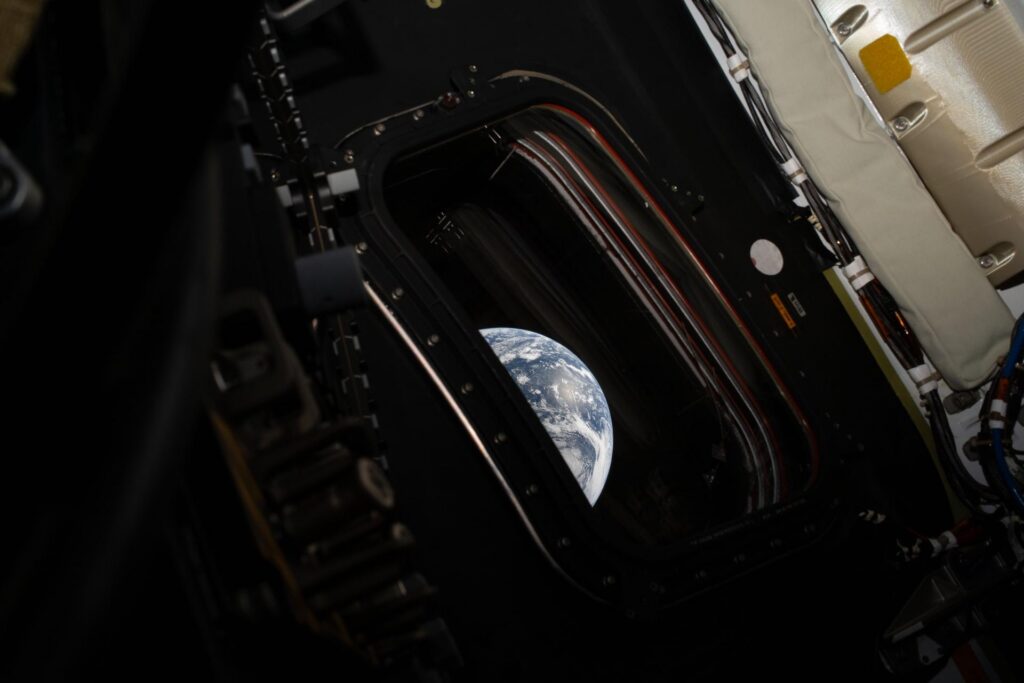
Since the engine burn went so well, NASA passed on the chance to carry out a “corrective” burn on Friday.
At their daily press briefing, NASA officials reported almost no significant problems. Howard Hu, Orion’s program manager, said NASA was monitoring an issue with the helium system that pressurizes Orion’s service module propulsion system to supply fuel and oxidizer to the engine. He added that Orion no longer needs that helium regulator for the rest of the mission, and that a redundant system is operating as expected.
Additional minor issues
There have also been a few “false alarms” from onboard environmental sensors. Hu noted these do not pose any threat to the crew but reflect conservative thresholds set for those systems. He described it as a “learning” that will be refined for the Artemis III mission, which could launch next year.
Credit:
NASA
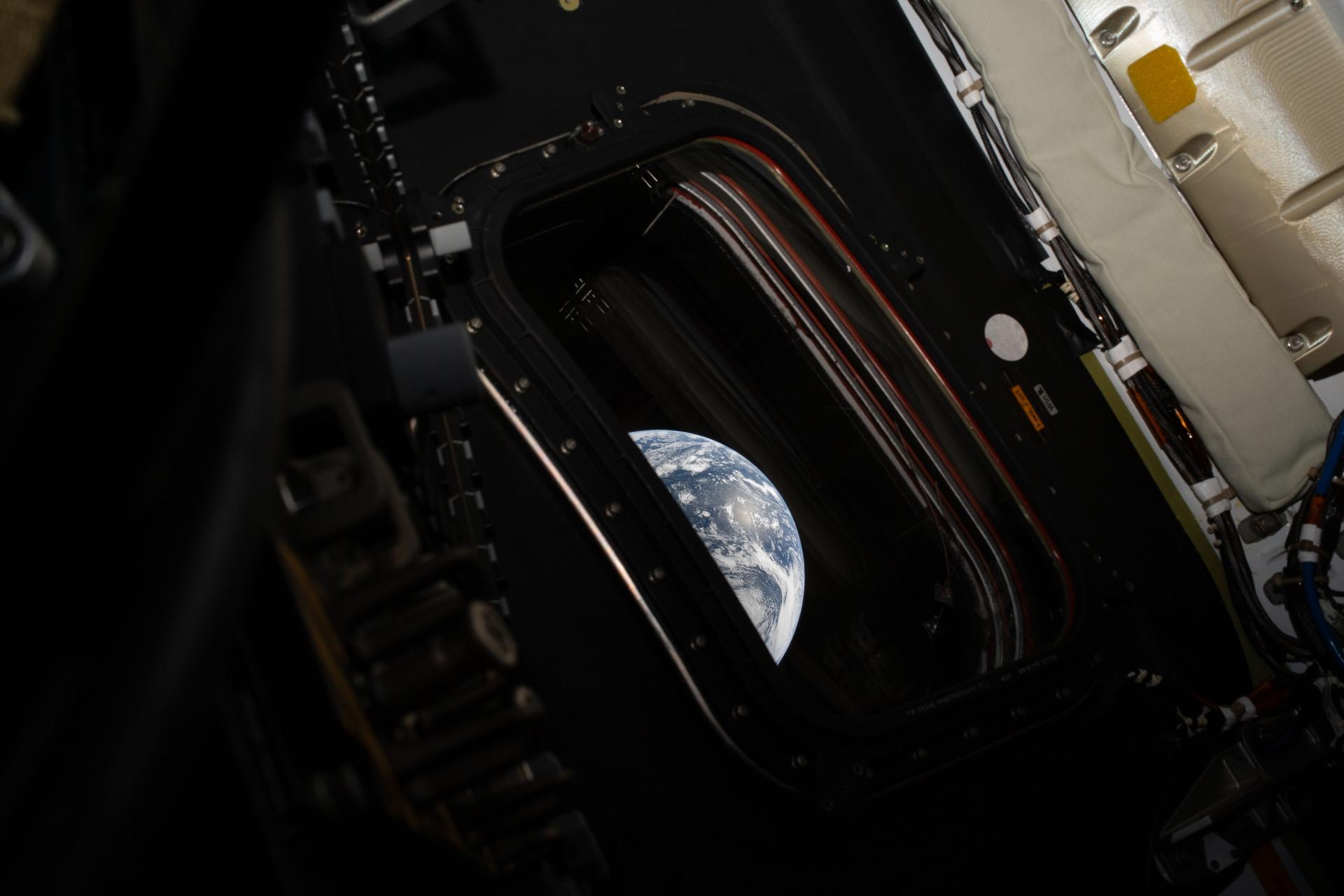
Another view of Earth taken from Orion.
Credit:
NASA
The only other notable issue for the crew was cabin temperature, which astronauts said felt a bit cool overnight. One of the mission’s flight directors, Judd Frieling, said the crew began with temperatures in the mid-70s, but after several “shell heaters” were turned off it became about 10° F colder. Multiple factors affect cabin temperature, and flight controllers adjusted the cabin atmosphere to a more comfortable level.
Humidity was also slightly below ideal for the carbon-dioxide removal devices. Those “scrubbers” perform better with higher humidity, and the crew has settled on a comfortable humidity level between “desert dry” and “Houston humid,” Frieling said.
In short, the crew is comfortable as they travel farther from Earth than anyone else has in half a century.
