
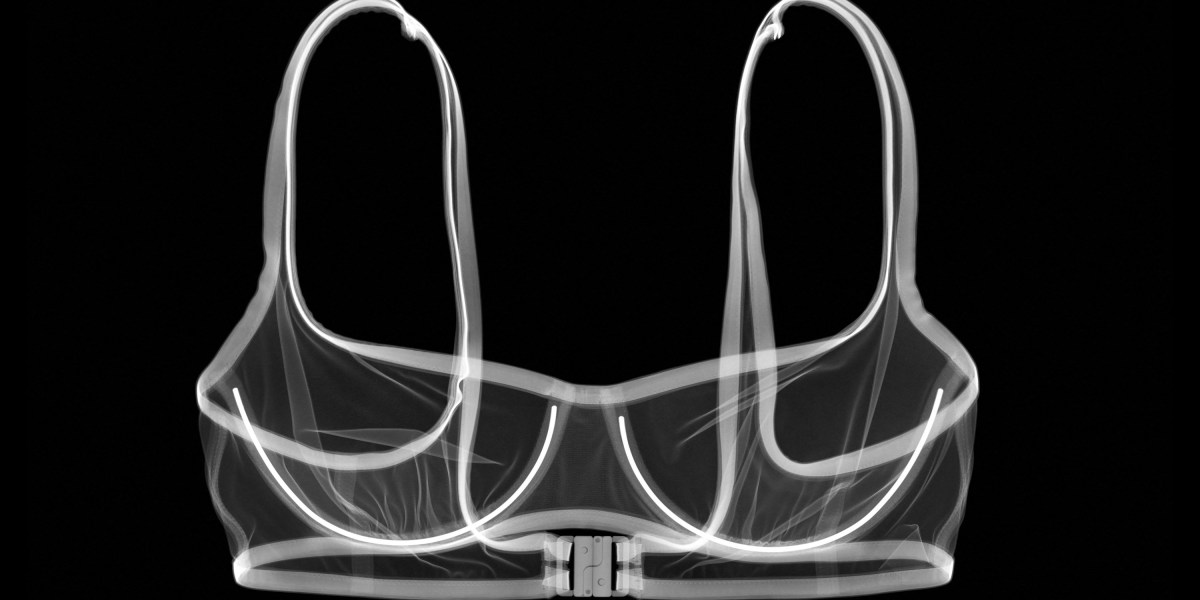

Two decades ago, Joanna Wakefield-Scurr experienced ongoing discomfort in her breasts. Her physician couldn’t identify the issue but recommended a well-fitting, supportive bra as a remedy. As a biomechanics professor, Wakefield-Scurr believed she could conduct some investigations to discover a scientifically supported solution. Now, twenty years on, her search is still ongoing. She currently heads an 18-member group at the Research Group in Breast Health at the University of Portsmouth in the UK. Their findings indicate that the most effective sports bras for high-impact activities are those featuring underwires, padded cups, adjustable underbands and shoulder straps, as well as hook-and-eye clasps. These bras can lessen breast movement by up to 74% compared to not wearing one at all. However, movement isn’t the only factor that may be significant.
An uncommon biological phenomenon
Very few anatomical structures protrude from the body without the support of cartilage, muscle, or bone—hence, there hasn’t been an extensive historical body of research to draw from. Wakefield-Scurr’s laboratory was the first to discover that during running, the movement of the torso causes breasts to oscillate in a three-dimensional manner—swaying side-to-side and up-and-down, alongside moving forwards and backwards. In one hour of gentle jogging, breasts can bounce about 10,000 times.
A vital sports component
A bra that is excessively tight can restrict breathing. Conversely, one that is overly loose can induce discomfort in the back, shoulders, and neck. Discomfort can also arise from the delay between the movement of the torso and the breasts, resulting in what is scientifically referred to as “breast slap.”
The laboratory’s studies have revealed that the physical unease caused by poorly fitting bras, paired with the embarrassment of excessive movement, is among the primary obstacles to exercising for women and that possessing a good sports bra encourages them to be more inclined to run.
An unresolved issue
Some bras are designed to intentionally compress the breasts. Others provide encapsulation and support for each breast individually. However, researchers remain uncertain about whether it is more biomechanically crucial to completely minimize breast motion, to slow their movement speed, or to mitigate breast slap. Will women continuously have to decide between the comfort of a stretchy bra and the support of a tighter one?
Wakefield-Scurr expresses enthusiasm about new materials she is experimenting with that adjust their tightness or looseness based on movement. She is collaborating with fabric producers and clothing brands to test their offerings.
With an increasing number of women participating in high-impact sports, the necessity to comprehend what constitutes an effective bra expands. Wakefield-Scurr asserts that her lab struggles to meet the rising demand. Their resources are fully utilized.
Sara Harrison is a freelance writer covering topics in science, technology, and health.
