

Electric vehicles are becoming more affordable and increasingly prevalent globally. However, significant obstacles remain in certain markets, particularly in various African nations.
Several areas on the continent continue to struggle with inadequate grid and charging facilities, and those with extensive electricity availability often encounter reliability problems—an issue for EV users who need a consistent supply of electricity to recharge and navigate.
Nonetheless, there are indicators of advancement. I recently completed an article regarding the economic rationale: A recent investigation published in Nature Energy concluded that by 2040, owning EVs—ranging from scooters to minibuses—could be less expensive than gasoline vehicles in Africa.
The key takeaway about EVs in Africa is that each of the 54 nations faces significantly varying requirements, challenges, and situations. There are also numerous reasons for optimism regarding the future of EVs, such as developing policies, an expanding grid, and local manufacturing growth.
Even the most advanced EV markets globally cannot match Ethiopia’s decisively pro-EV policies. In 2024, the nation became the first globally to prohibit the import of non-electric personal vehicles.
The rationale is chiefly economic: Fuel prices are high there, and the country initiated the construction of Africa’s largest hydropower facility in September 2025, creating a new source of low-cost, plentiful clean energy. This nearly $5 billion endeavor has a capacity of five gigawatts, effectively doubling the peak power available in the country’s grid.
A significant portion of Ethiopia’s vehicle market is oriented toward used cars, with many drivers still opting for older gasoline models. However, this policy shift could stimulate the EV market’s growth.
Other nations in Africa are also encouraging drivers to transition to electric options. Last year, Rwanda prohibited new registrations for commercial gasoline motorbikes in the capital city, Kigali, fostering the adoption of EVs as a substitute. Motorbike taxis represent more than half of the vehicles on the streets, marking a significant change for local transport.
Electric two- and three-wheelers are a promising sector for EVs globally: In 2025, EV sales accounted for approximately 45% of new purchases in this category. (In the case of cars and trucks, this figure was around 25%.)
African local markets are starting to gain momentum. Some assembly of electric two-wheelers is already underway in Morocco, Kenya, and Rwanda, according to Nelson Nsitem, lead Africa energy transition analyst at BloombergNEF, a consultancy in the energy sector.
Spiro, an electric motorbike firm based in Dubai, recently secured $100 million in investment to broaden its activities in Africa. The company now assembles motorcycles in Uganda, Kenya, Nigeria, and Rwanda, and by October, had over 60,000 bikes deployed along with 1,500 operational battery swap stations.
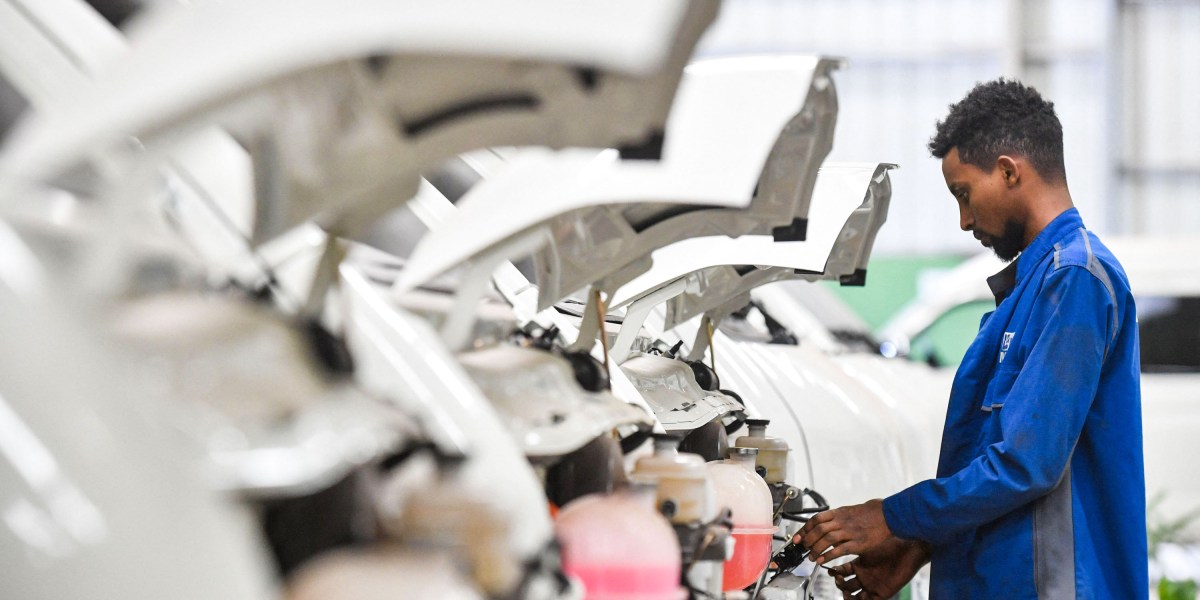
Production and assembly of larger EVs and their batteries are also expected to grow. Gotion High-Tech, a Chinese battery manufacturer, is in the process of building Africa’s first battery gigafactory. This $5.6 billion initiative is projected to produce 20 gigawatt-hours of batteries every year, commencing in 2026. (This amount is sufficient for hundreds of thousands of EVs annually.)
Chinese EV manufacturers are exploring emerging markets like Southeast Asia and Africa as they work to extend beyond an overcrowded domestic market. BYD, the largest EV producer globally, is aggressively expanding in South Africa with plans to establish as many as 70 dealerships in the nation by year-end. This will provide more options for consumers in Africa interested in electric vehicles.
“High-quality, affordable vehicles are entering the market thanks to economies of scale in China. These nations will greatly benefit from this trend,” states Kelly Carlin, a manager at the Rocky Mountain Institute’s program focused on carbon-free transport, an energy think tank. “It’s revolutionary,” he adds.
This article is sourced from The Spark, MIT Technology Review’s weekly climate newsletter. To subscribe and receive it every Wednesday, sign up here.
