
During the 2010s, tech firms spent time persuading consumers that an 8K display would eventually be desirable.
In 2012, Sharp showed an 8K TV prototype at CES in Las Vegas. In 2015, the first 8K TVs went on sale in Japan for 16 million yen (about $133,034 at the time), and in 2018, Samsung launched the first 8K TVs in the US, with entry prices around $3,500. By 2016, the Video Electronics Standards Association (VESA) had issued an 8K-support specification (DisplayPort 1.4), and the HDMI Forum followed with HDMI 2.1. By 2017, Dell offered an 8K computer monitor. In 2019, LG introduced the first 8K OLED TV, reinforcing the industry’s claim that 8K TVs were “the future.”
LG
Still, 8K never established itself as necessary or practical.
TV makers are abandoning 8K
LG Display has stopped producing 8K LCD and OLED panels, FlatpanelsHD reported today. Earlier this month, an LG Display representative told FlatpanelsHD the panel supplier is “taking a comprehensive view of current display market trends and the trends within the 8K content ecosystem.”
“As our technical readiness is already complete, LG Display is fully prepared to respond immediately whenever the market and customers determine that the timing is right,” LG Display’s representative said.
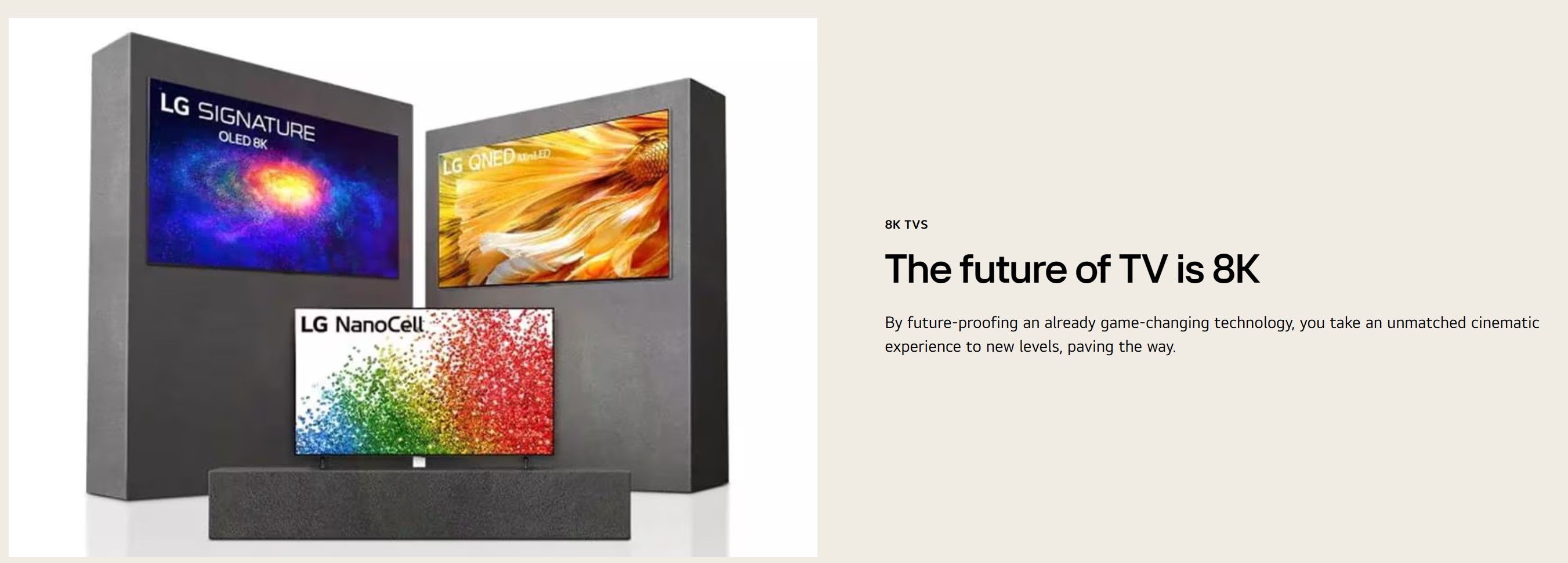
LG Electronics was the first — and remains the only — company to market 8K OLED TVs, beginning with the 88-inch Z9 in 2019. In 2022, it reduced the entry price for 8K OLED by $7,000, offering a 76.7-inch model for $13,000.
FlatpanelsHD cited anonymous sources saying that LG Electronics will not restock the 2024 QNED99T, the last LCD 8K TV it released.
LG’s retreat follows other brands stepping back from 8K. TCL, which last shipped an 8K TV in 2021, said in 2023 it wasn’t building more 8K sets because demand was weak. Sony discontinued its remaining 8K models in April and seems unlikely to return, as it plans to sell majority ownership of its Bravia TV business to TCL.
