
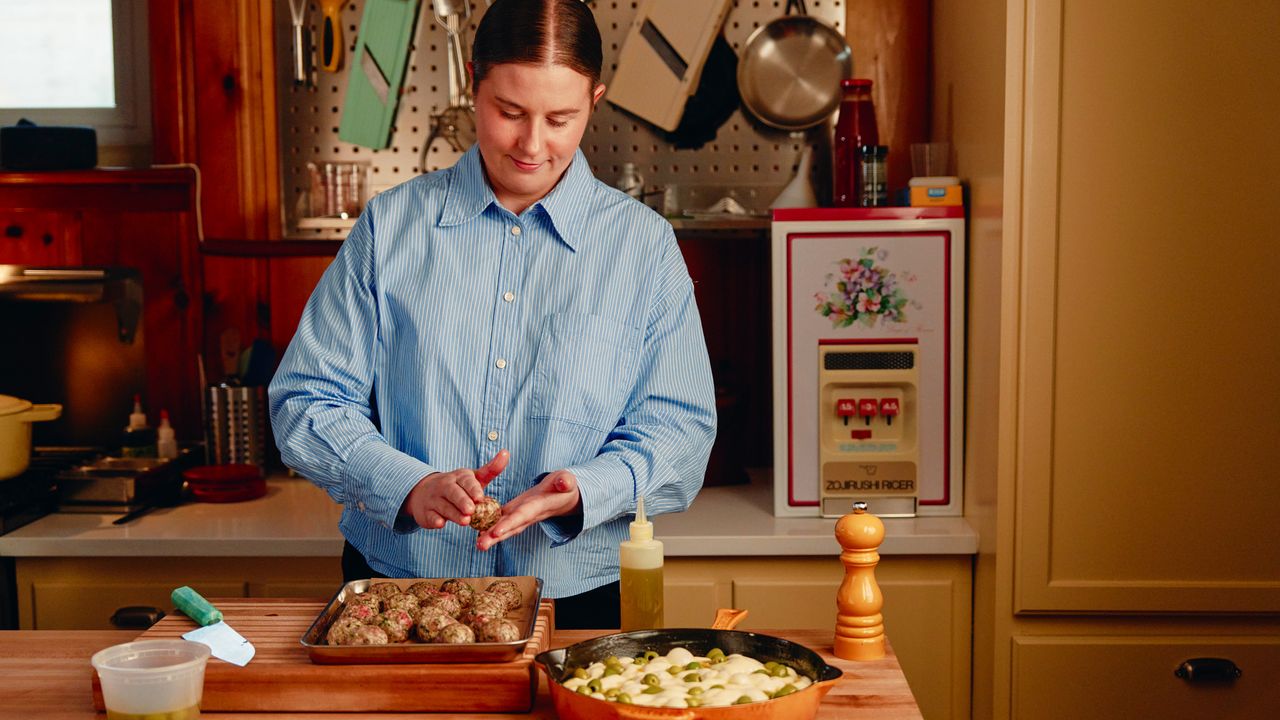

You’ve probably watched Hailee Catalano whip up shimmering pans of pasta and generous platters of roasted chicken, tomatoes, or pork chops for her vast audience. She cooks according to the seasons, attributing this as an unintentional nod to the foods she grew up with. “It’s just recently that I’ve come to understand that sentiment is deeply rooted in and shaped by the Italian American culture of my upbringing,” she states.
Her upcoming 2025 cookbook, By Heart: Recipes to Hold Near and Dear, details Catalano’s family-oriented Midwest origins, her experience in restaurant environments, and her unexpected rise to over 2 million fans on TikTok and Instagram. A brief browse through the book shows that Catalano’s recipes transcend mere biography—she is pioneering a fresh approach to personal cooking. One where mortadella joins an egg-and-cheese sandwich, and adobong mani—Filipino fried garlic peanuts, which Catalano first encountered during a visit to her partner’s family in the Philippines—are transformed into porcini herb snacking peanuts. Her cuisine draws from her experiences, not solely her heritage.
We spoke with Catalano about her culinary beginnings, her experiments with Italian American fusion, and her preferred pasta types.
Despite your strong connections to Italian American cuisine, you’re not afraid to mix it up: substituting fennel for cauliflower in your giardiniera, for example. What would you say to someone who emphasizes authenticity too much?
Hailee Catalano: When I create a recipe, I aim to evoke the essence of the original while making it accessible for everyone to recreate using readily available ingredients. I strive to maintain the heart of the dish or the ingredient. That’s the evolution of so-called authentic Italian American cuisine. Things evolve over time, and we must adapt with them. We’re not here to obliterate anything, just to ensure it resonates with contemporary times and tastes.
On that note, how many times in a week do you indulge in pasta?
HC: This week, I think I’ve had it for five consecutive days. I could genuinely enjoy pasta every day. I often ask Chuck [Cruz], my partner, “Do you feel the same way about pasta?” He responds, “No, not really.” My comfort food is simply pasta with any kind of red sauce. Chuck’s is rice mixed with tomatoes and fish sauce. Essentially, it’s the same dish, just in a different presentation.
Do you two ever try out combinations of Italian American and Filipino dishes?
HC: Recently, we crafted a recipe inspired by the Filipino dish arroz caldo, which is a chicken and rice porridge type. We made a pastina variation of it to mimic the porridgy texture. But we topped it with all Filipino ingredients, including fish sauce and fried garlic—we added a sprinkle of Pecorino cheese as well.
Many perceive Italian American cooking as uniform, yet it can diverge in numerous ways.
HC: There are extensive regional variations within Italian American cuisine too. In Chicago, during our large family gatherings with catered meals, there were always massive trays of baked mostaccioli. I’ve never encountered that on a menu on the East Coast. Or chicken Vesuvio—braised chicken and potatoes with white wine, garlic, and oregano. I believed that was a common dish for everyone, but I soon found out it’s distinctly a Chicago specialty.
Lastly, the public demands to know: What is your top pasta shape?
HC: For short pasta, rigatoni is my favorite, but honestly, I simply adore spaghetti. Is that unusual?
