


Ferocious microbe
The damage to his eye appeared to originate from inside his own body, carried by his bloodstream—potentially the same agent behind the liver mass, lung nodules, and brain lesions. One diagnosis matched those findings exactly: hypervirulent Klebsiella pneumoniae, or hvKP.
Classical K. pneumoniae normally lives in the human intestinal tract and is familiar to clinicians. It often lurks in health care environments and infects vulnerable patients, typically causing pneumonia or urinary tract infections. hvKP, however, is a very different entity. It’s a beefed-up, more aggressive form. First described in Taiwan in the 1980s, it was notable not for preying on hospitalized patients but for devastating otherwise healthy people in community settings.
Infection with hvKP—even in people without other health problems—is characterized by metastatic spread. The bacterium disseminates through the body, commonly beginning in the liver where it forms a pus-filled abscess. It then travels through the bloodstream, seeding the lungs, brain, soft tissue, skin, and the eye (endogenous endophthalmitis). Viewed together, the man’s presentation was a classic clinical picture of hvKP infection.
Still, proving hvKP is present is challenging. Mucus from the man’s respiratory tract grew a Klebsiella species, but there isn’t a definitive diagnostic test that cleanly separates hvKP from the classical form. Since 2024, researchers have proposed a strategy that looks for the presence of five virulence genes located on plasmids (small, circular DNA elements separate from chromosomal DNA that can replicate independently and be shared between bacteria). However, the method isn’t foolproof—some classical K. pneumoniae can also carry those five genes.
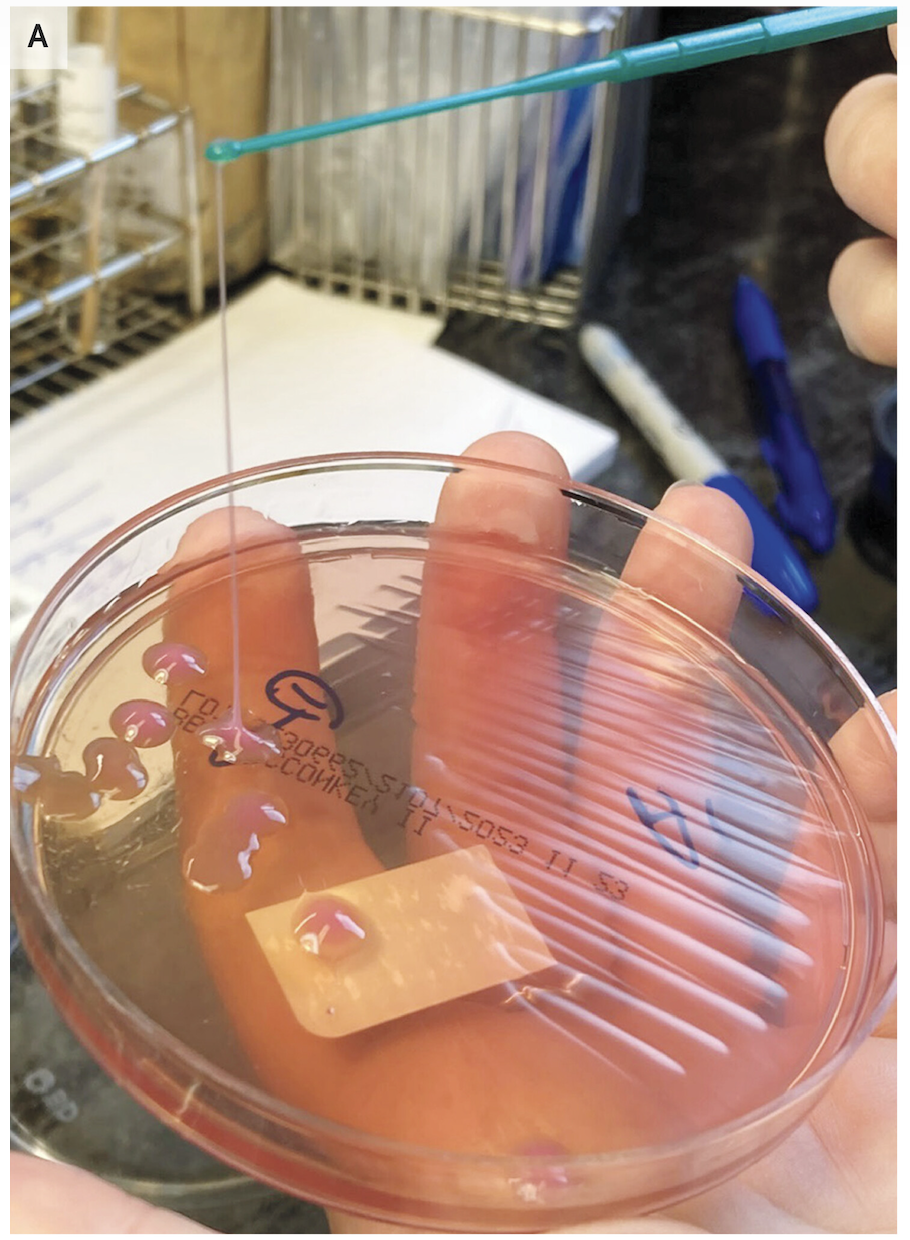
A far simpler bedside method is the string test, which gauges how mucoid the bacteria are—hvKP tends to be sticky. For this test a clinician grows a colony on a petri dish, touches it with an inoculation loop, and lifts; if the attached string of material stretches more than 5 mm, the result is considered positive for hvKP. This is, of course, an imprecise test.