
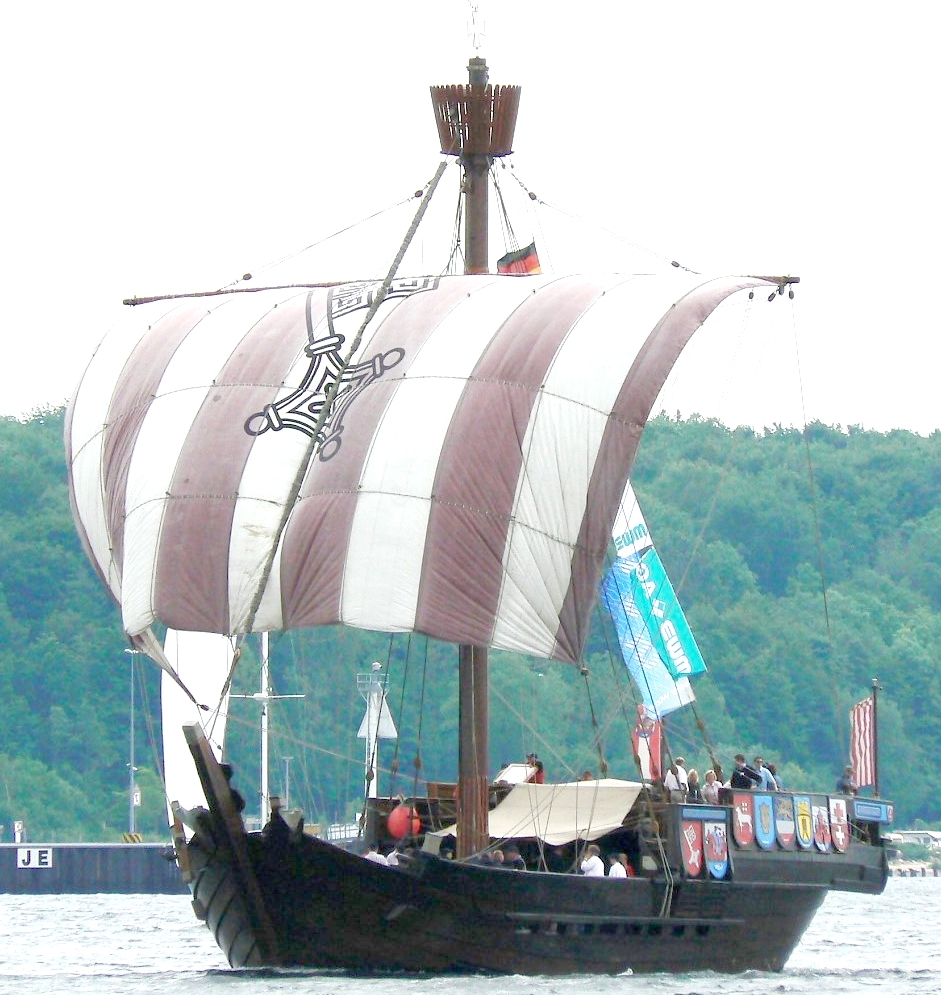
“It suggests notable comfort and order aboard,” said Uldum. “Sailors could now enjoy hot meals similar to those ashore, rather than the dried and chilled provisions that had long dominated life at sea.” Plenty of preserved meat and hard biscuits would still be staples for sailors for centuries, of course, but when conditions and time allowed, the crew of Svaelget 2 could at least come together for a warm meal. The galley would have been a fairly new feature of shipboard life in the early 1400s—and it quickly became indispensable.
Where did the cargo go?
One clue that often indicates a wreck site, even when everything else has decayed into the sea, is ballast stones. Empty merchant ships carried stones in their holds to keep the vessel steady; without that weight an empty hull would ride high and be prone to capsizing, which is usually undesirable. (Modern merchant ships use water in dedicated tanks for ballast.) But Uldum and his team did not find ballast stones on Svaelget 2, implying the cog was likely fully loaded with cargo when it went down.
Yet the cargo itself is conspicuously missing. Cogs were constructed to transport bulk goods—items like bricks, grain and other staple foods, cloth, salt, and timber. Those goods would have been stored in an open midships hold and lashed with ropes and chains (some of which remain on the wreck). But barrels, planks, and bolts of fabric float. As the ship sank and seawater rushed into the hold, it would have swept the cargo away.
Some of it may have washed up on nearby or even distant beaches, becoming unexpected finds for local residents. The remainder probably sank to the seafloor, scattered far from the wreck and its intended destination.
