
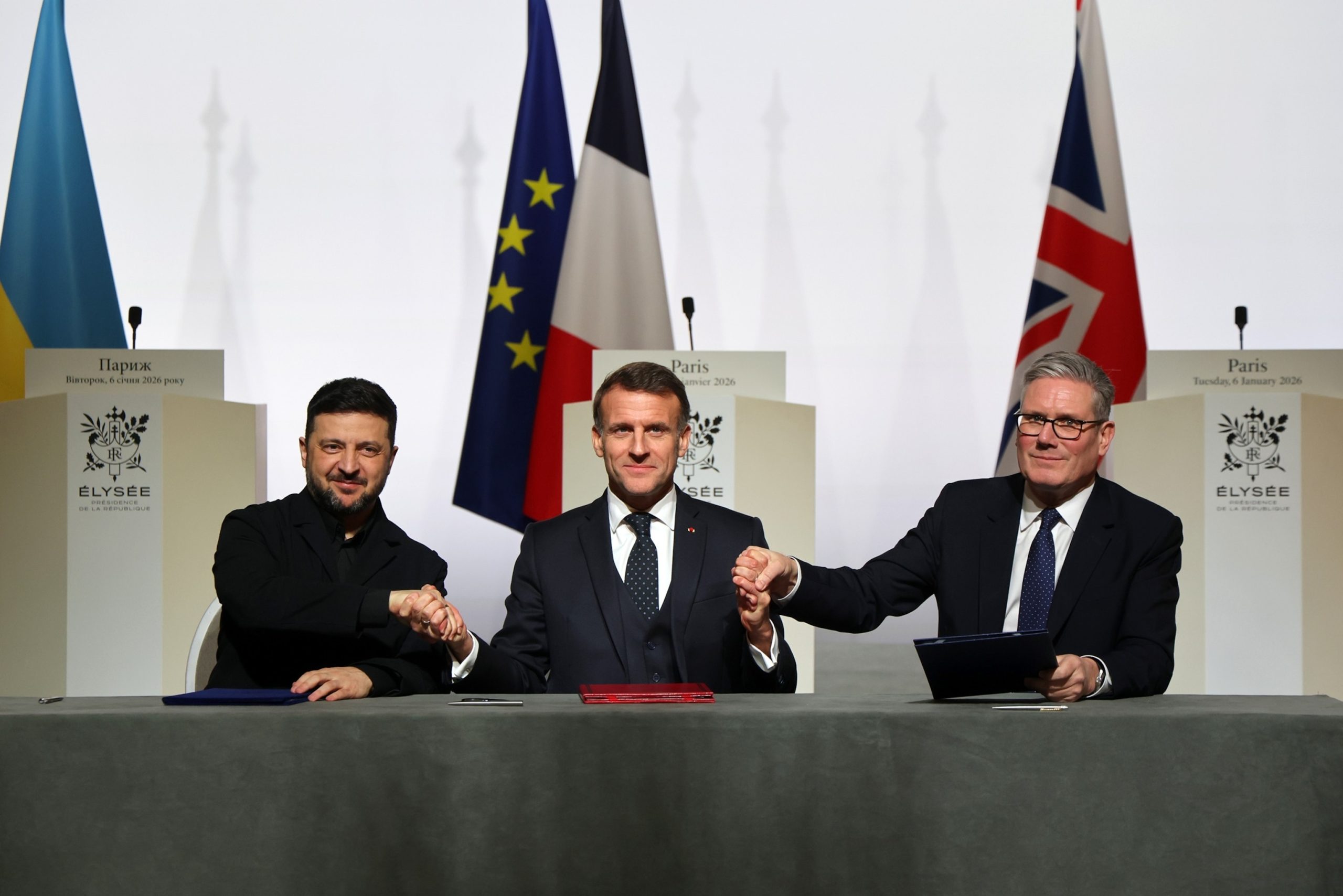
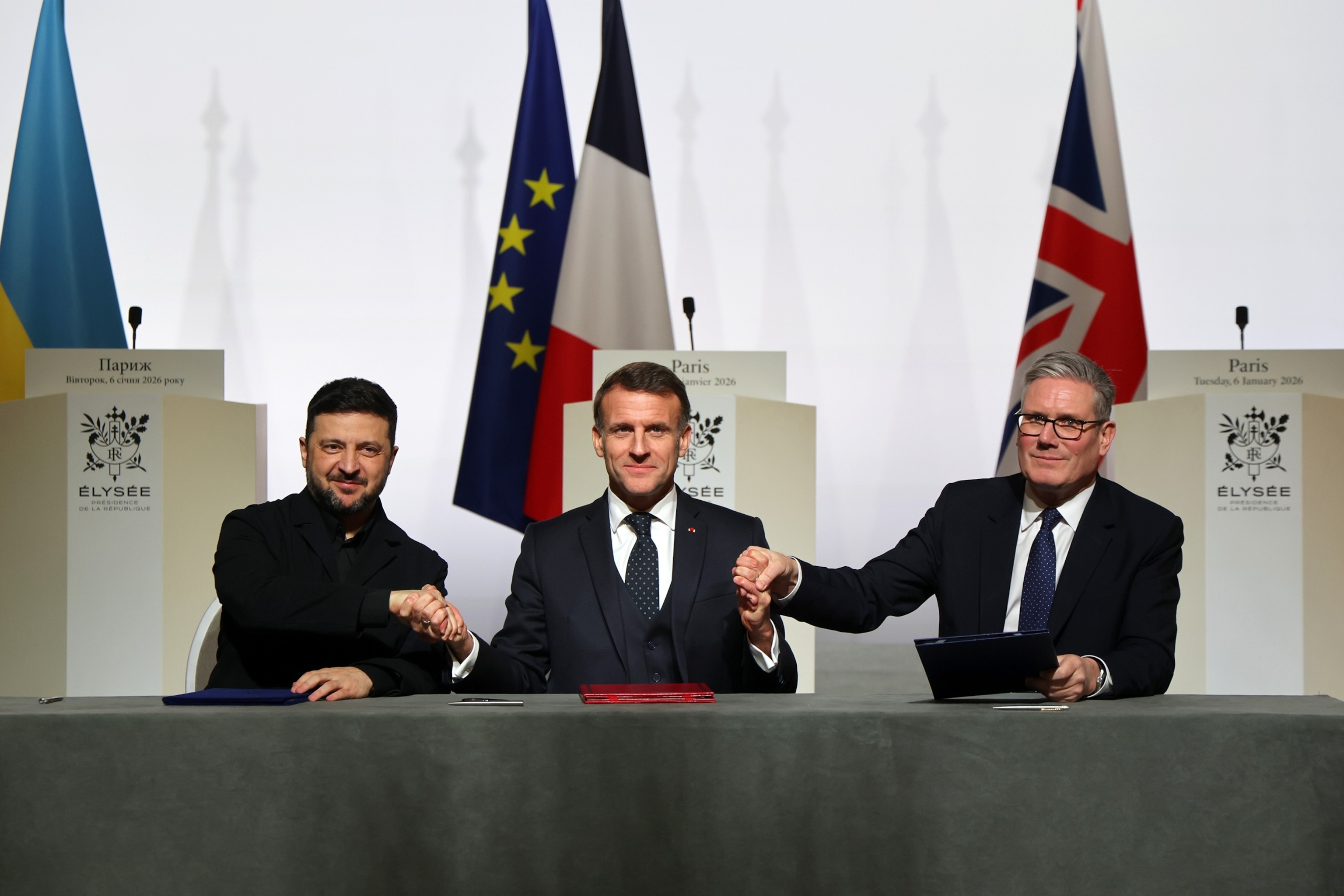
UK Prime Minister Sir Keir Starmer has declared that the UK and France have formally agreed on a plan to send troops to Ukraine if a peace agreement is reached with Russia.
Following discussions with allies in Paris, he stated that the UK and France would set up “military hubs across Ukraine” to prevent any future invasions, while later remarks from French President Emmanuel Macron indicated that thousands of troops might be sent.
The allies largely concurred on comprehensive security assurances for Ukraine and suggested that the US would spearhead the oversight of a ceasefire. However, the crucial topic of territorial issues remains under negotiation.
Russia has consistently warned that any foreign military presence in Ukraine would be considered a “legitimate target”.
Moscow has yet to respond to the declarations made in the French capital.
Russian President Vladimir Putin initiated a large-scale invasion of Ukraine in February 2022, and Russia presently controls approximately 20% of Ukrainian land.
Leaders and high-ranking officials from the “Coalition of the Willing” participated in the discussions held in Paris on Tuesday.
At a joint press conference following the meeting, Starmer stated: “We have signed a declaration of intent regarding the deployment of forces to Ukraine should a peace settlement be reached.
“This is a crucial aspect of our promise to support Ukraine over the long term.
“It lays the groundwork for the legal structure under which British, French, and allied forces could operate within Ukraine, safeguarding its airspace and waters, and revitalizing its military for the future.”
The UK Prime Minister further mentioned that London would be involved in any US-led verification efforts relating to a potential ceasefire.
Senior US negotiator Steve Witkoff remarked that “durable security assurances and solid economic commitments are vital for lasting peace” in Ukraine – addressing a core demand from Kyiv.
Witkoff stated that the allies had “largely completed” their discussions on establishing security protocols “so that the people of Ukraine understand that when this conflict concludes, it concludes for good”.
Jared Kushner, US President Donald Trump’s special envoy and son-in-law, noted that post-agreement, Ukrainians need assurance that “real backstops” exist to guarantee war will “not be repeated”.
At the same time, President Macron remarked that Ukraine’s allies had made “significant progress” during the talks.
He claimed that “robust” security guarantees for Kyiv had been agreed upon in the event of a potential ceasefire.
Ukrainian President Volodymyr Zelensky indicated that a “substantial advancement” had occurred in Paris, but emphasized that he would only regard efforts as “sufficient” if they led to the cessation of the conflict.
What Ukraine refers to as security “guarantees” and what American officials have called security “protocols” might offer Trump some flexibility in terms of committing to defend Kyiv in the event of a future Russian aggression – yet it is clear that Zelensky believes he and his European allies have obtained a significant concession from Washington.
There were few, if any, fresh insights regarding where the future ceasefire line might be established or which territories currently under Russian control Ukraine would be willing to concede.
That possibility remains challenging for many Ukrainians to accept, especially as Russia continues to strike cities and essential infrastructure across the country daily.
However, as winter descends and harsh winds blow in from the east, Zelensky understands that the only alternative to a ceasefire and forthcoming peace agreement is a grueling winter of warfare with inevitable casualties that will impact Ukraine far more severely than Russia.
The president of Ukraine evidently hopes that the assurance of American monitoring, the presence of a multinational force on Ukrainian territory, and increased weaponry for his military will persuade a sometimes-skeptical public that pursuing peace is the right course, supported by an expanding international coalition.
Yet, while closing the press conference in Paris, Zelensky acknowledged that Tuesday’s “milestone” did not automatically guarantee peace. Genuine progress still hinges on Russian cooperation, and Moscow has been notably reticent in recent days regarding diplomatic initiatives to conclude the war.
Putin is known to oppose the formation of a European-led international force in any contested regions and is likely reluctant to halt his troops’ gradual advances unless Russia’s wartime objectives are met.
Nevertheless, there is undoubtedly mounting pressure on both parties to make concessions and bring the conflict to a close.
Last week, Zelensky stated that a peace agreement was “90% finalized”. Settling the outstanding 10% would “shape the destiny of peace, Ukraine’s fate, and that of Europe as well.”
Issues surrounding territory and security guarantees remain at the forefront of the unresolved discussions among negotiators.
Putin has persistently cautioned that Ukrainian forces must pull back from all of eastern Donbas, or else Russia will claim it, dismissing any option for compromise regarding the cessation of hostilities.
Zelensky has thus far excluded the possibility of relinquishing any land but has indicated that Ukraine could withdraw its forces to a mutually agreed location – but only if Russia reciprocates.
Currently, Moscow holds about 75% of the Donetsk region and nearly 99% of the neighboring Luhansk region. Together, these two territories comprise the industrial area of Donbas.
The original US-led 28-point peace proposal, which was widely circulated in the media last year, was perceived by Kyiv and its European counterparts as disproportionately favoring Russia.
This sparked weeks of intense high-level diplomatic efforts – involving Ukraine, the US, and EU leaders trying to revise the draft.
Last month, Kyiv provided the US with an updated 20-point proposal – along with separate documents outlining potential security assurances and provisions for the reconstruction of Ukraine, as stated by Zelensky.