
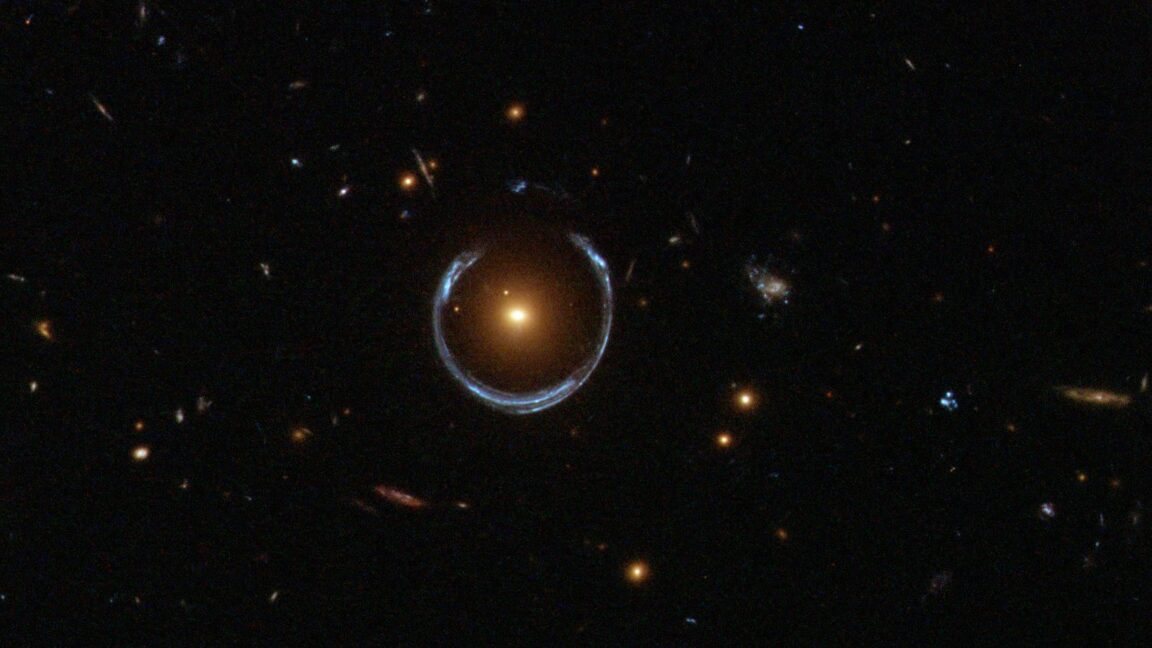
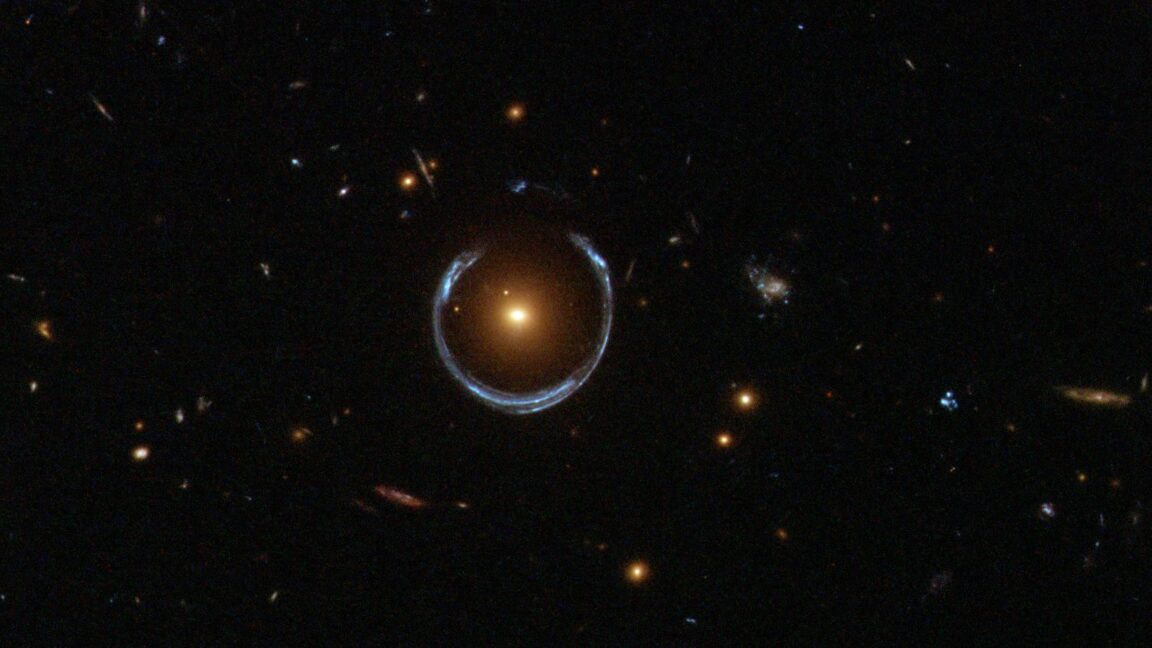
Most exoplanets found so far reside in fairly close orbits around their host stars, so we can observe them as they circle repeatedly. However, a small number have been detected via microlensing. That happens when a planet crosses the sightline between Earth and a background star, acting as a gravitational lens that warps the star’s light and makes it brighten briefly.
The important difference with microlensing versus other detection techniques is that the lensing body may lie virtually anywhere along the line between the background star and Earth. Consequently, many microlensing signals are produced by so-called rogue planets—objects not bound to any star, wandering through interstellar space. Recently, scientists combined microlensing with a favorable alignment of the Gaia space telescope to detect a Saturn-mass planet — the first located in the “Einstein desert,” which could offer clues about how rogue planets form.
Going rogue
Most planets discovered orbit stars and originated in the gas-and-dust disks that enveloped their host during its youth. Astronomers have photographed many such disks and even observed signs of planets coalescing inside them. How, then, does a planet become unbound from any star? There are two main pathways.
The first pathway is dynamical: gravitational encounters either between planets within a system or between that system and a passing star. Given the right conditions, such interactions can fling a planet out of its orbit and into interstellar space. Those ejected worlds should resemble ordinary planets, with masses spanning tiny rocky bodies to massive gas giants. The other route mirrors star formation: a region of collapsing gas begins to form an object but exhausts its material before reaching stellar mass. The result would likely be a hefty gas giant — perhaps with a mass between Jupiter’s and that of a brown dwarf.